0
0


MOSCOW: The Eurasian Economic Union, a trade bloc of former Soviet states, expanded to four nations on Friday when Armenia formally joined, a day after the union between Russia, Belarus and Kazakhstan began.
The Russian-dominated bloc has been politically controversial and its early days are being overshadowed by the sharp deterioration of Russia’s economy in recent months.
The union aims to create a single integrated market for the free movement of goods and services over a total population of more than 180 million people, something like the 28-nation European Union.
Unlike the EU, the bloc does not have a single currency, but is expected to try to establish one at some point. The former Soviet republic of Kyrgyzstan is expected to join by mid-year and Tajikistan is also a prospective member.
Moscow pushed hard for Ukraine to join, hoping its 45m people and large-scale heavy industries would be a key piece of the trading bloc.
But many Ukrainians detested the idea, seeing it as Russian President Vladimir Putin’s attempt to reconstitute the Soviet Union and exert more influence on their country. The issue was key to inciting protests that eventually drove Ukraine’s Russia-friendly President Viktor Yanukovych from office in February.
Ukraine has since signed an agreement to deepen ties with the EU.
Although the EEU is nominally only a trade bloc, its economic heft could be a “soft power” political lever for Moscow.
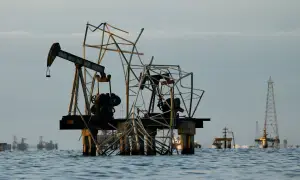
The bloc’s formation culminates nearly a decade’s drive by Russia, whose fortunes have changed sharply over the past year. Once an economy luxuriating in a cornucopia of oil and gas revenues, the collapse of world oil prices in 2014 has left Russia suddenly vulnerable.
Added to that is the effect of Western sanctions against Russia for its annexation of Crimea and its support for separatist rebels in eastern Ukraine.
Most painfully, the sanctions deny Russian businesses access to Western credit markets. The ruble also lost about 45 per cent of its value against the dollar in 2014.
The rouble’s decline in value is likely to have serious consequences for the other countries in the bloc.
“Russia’s economic troubles are already creating problems for currencies, inflation levels, remittances and trade patterns in the new economic bloc,” the US-based Stratfor analysis group wrote.
The problems are especially visible in Belarus, which has largely retained a Soviet-style command economy. As the Russian rouble tanked, Belarus feared a run on its own banks and imposed a 30pc fee on foreign currency transactions.
Kazakhstan, too, is largely dependent on revenues from hydrocarbons and raw materials and the worldwide decline in commodities prices could bite sharply. Armenia’s economy is comparatively underdeveloped and the benefits it can derive from the trade bloc may be undercut by the fact it is not contiguous with the other members.
Both Kazakhstan and Belarus appear worried about Russia’s dominance of the trade bloc for political reasons.
Published in Dawn, January 3rd, 2015
On a mobile phone? Get the Dawn Mobile App: Apple Store | Google Play