0
0
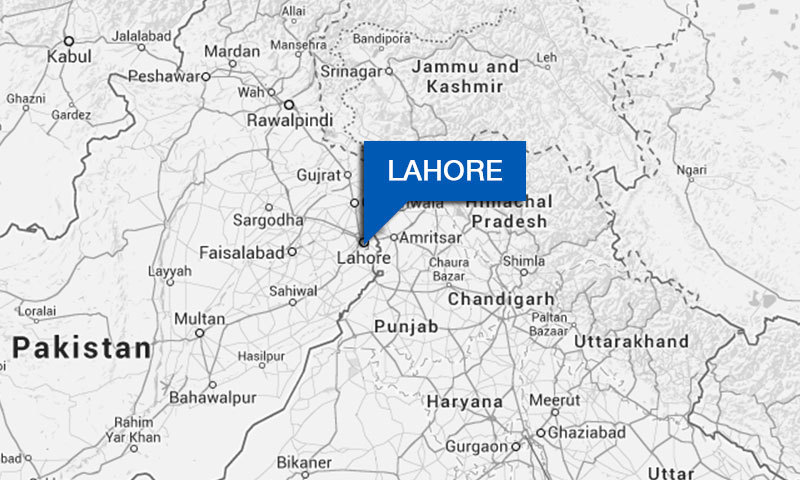

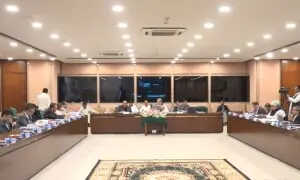
LAHORE: Constitutional framework has to be the basis for resolution of all political issues, and any tinkering with democracy will be fatal for the country, believed participants in a PILDAT Citizens Forum on ‘Quality of Democracy in Pakistan’.
The forum was held to ascertain public perception of current political crisis and quality of democracy in the country.
With former Punjab governor Shahid Hamid in the chair, those who joined the forum included Dr Huma Baqai from Institute of Business Administration (IBA), former interior minister Lt-Gen (retired) Moinuddin Haider, senior lawyer S. M. Zafar, Dr Niaz Murtaza, senior journalist Mujib-ur-Rehman Shami, former National Assembly speaker Ilahi Bukhsh Soomro, ex-diplomat Ashraf Jahangir Kazi, PILDAT president Ahmed Bilal Mehboob and others.
Denouncing the call for civil disobedience given by Imran Khan as unconstitutional, Mr Hamid said Mr Jinnah left All-India Congress when it passed a resolution for civil disobedience. He also said the call was against Article 260 of the Constitution which enjoined each citizen to maintain the safety, stability, welfare and integrity of Pakistan.
The demand for the prime minister’s resignation was also termed unconstitutional by him. He said Nawaz Sharif could neither be forced out by a few army generals, like what happened in 1999, nor by a few thousand people who had gathered in Islamabad.
He said as per Prime Minister's Salary, Allowance and Privileges Act, 1975, the premier could avail a leave up to three months which, he said, would be conducive to defusing the current political deadlock.
Mr Haider said the 2013 elections were largely free and fair without any systematic rigging, as PILDAT had assessed. He, however, said some local aberrations could not be denied.
He said continuity of democracy was the only way forward for Pakistan; however, dividends of democracy in terms of better governance should also reach the public.
Mr Shami said while those protesting on the streets of Islamabad might have genuine grievances, the issues must be resolved within the ambit of political process. He warned against undermining the power of the vote and the Constitution through resorting to sit-ins and demonstrations.
He warned if Constitution was undermined, the country would have to pay a very heavy price for it.
He argued that in the sport of cricket, a small violation could lead to a player being banned for life, whereas the disregard for Constitution did not seem to have any repercussions of the similar sort.
Mr Kazi said Pakistan’s democracy had some basic flaws that must be resolved before expecting its strengthening.
He believed that only the strengthening of the governance system could contribute significantly towards strengthening the democratic process.
Dr Murtaza said better democracy could only be achieved through a continuation of the system and a manifestation of patience by all the stakeholders.
He said that revolutions could never immediately lead to good governance but the strengthening of the democratic processes and a patient adherence to them could.
Three tiers of democracy – national, provincial and local governments – are necessary for the success of the system, believed Azam Nazeer Tarar, Pakistan Bar Council (PBC) member. Lamenting low rate of criminal conviction hovering between 7pc and 9pc, he said how governance could improve when criminals were almost certain of not being convicted.
Vice-chairman and members of PBC, Lahore High Court Bar president, members of the Youth Parliament, academia and media participated in the dialogue on developments in democracy. The participants generally believed the current conflict should be resolved through political dialogue.
Published in Dawn, August 29th, 2014