0
0

ABOUT a couple of years ago, a news item appeared in a Karachi newspaper highlighting the sorry state of Persian in academic institutions. It mentioned that at that time no college in Karachi offered Persian as an optional subject at intermediate level since there was no student interested in learning. Moreover, there was no teacher available to teach Persian in any intermediate college. It was heartbreaking to read the article because Persian constitutes a large part of our rich literary and cultural heritage.
“The real patrons and benefactors of Persian in the sub-continent were Mughals,” said Dr Syed Abdullah in his book Farsi zaban-o-adab. “Under them, Persian became the official language and a huge number of books were penned in Persian.” When the sun set on Mughal glory the successive regimes and rulers, such as Sikhs and Marathas, adopted Persian as their official language. In Punjab and Bengal, too, Persian was taught at schools. Under the British Raj, Persian reigned supreme in the beginning but later on it was systematically replaced according to Dr Abdullah.
Persian has been an integral part of our cultural, spiritual and literary traditions. Our best poets, such as Ghalib and Iqbal, wrote in Persian as well. Many of our sources on history and treatises on mysticism are in Persian. Persian immensely influenced so much so that nearly half of Urdu vocabulary is either directly borrowed from Persian or is an altered form of Persian usage. Without knowing some basic Persian, the desire of mastering Urdu may remain elusive.
Similarly, Arabic is a language that has lent its script to Persian and Urdu. Urdu’s script is basically a Perso-Arabic one with some adaptations and innovations. Just like Persian, Arabic words, phrases and expressions abound in Urdu. Not only in our literature but in our everyday conversations we use countless Arabic words and phrases. Unless one knows the basics of these Arabic words and phrases, the claim of knowing good Urdu remains questionable. Especially those offering Urdu as major at master’s level must have some basic knowledge of grammars and literatures of Persian and Arabic.
It was for the very same reason that most of our universities made the teaching of Arabic and Persian a compulsory part of their syllabi approved for MA Urdu. What these syllabi lacked, however, was Hindi: a language that is Urdu’s sibling as both share the same basic morphological and syntactical structure and a large vocabulary derived from Prakrit and Sanskrit. Interestingly, about 99 per cent of Urdu verbs, just as is the case with Hindi, have their roots in Sanskrit and Prakrit and the remaining one per cent consist of the ones made up with Arabic and Persian roots.
As for adjectives and nouns, Urdu favours the ones borrowed from Arabic and Persian while Hindi has a penchant for the ones with Prakrit and Sanskrit roots, though nouns and adjectives borrowed from Arabic and Persian are quite commonly used in Hindi. Similarly, the usage of nouns and adjectives derived from Prakrit or Sanskrit is quite common in Urdu. In other words, anyone interested in undertaking a major in Urdu learning Hindi is as essential as Arabic and Persian.
It was heartening to note that when the Higher Education Commission (HEC) last year proposed new syllabi for the four-year BS Urdu programme, it addressed that lacuna and recommended that Hindi be also taught in the BS Urdu programme. However, the committee for the revision of syllabi recommended teaching of Hindi as well as Arabic and Persian only in the general courses taught in the third semester (second year). It would have been much better if the committee had recommended the study of these three languages with courses taught at major level (third or fourth year) instead.
Nevertheless, HEC’s committee of experts included the study of Hindi in the proposed syllabi. But what has come as a surprise is Punjab University’s decision to offer Arabic and Persian to the students doing MA Urdu only as optional courses. Till last year, Persian and Arabic were taught as compulsory courses to the students of MA Urdu at Punjab University Oriental College (where classes for MA Urdu are held). Considering HEC’s recommendations, it seems quite strange that Punjab University has taken a different course of action.
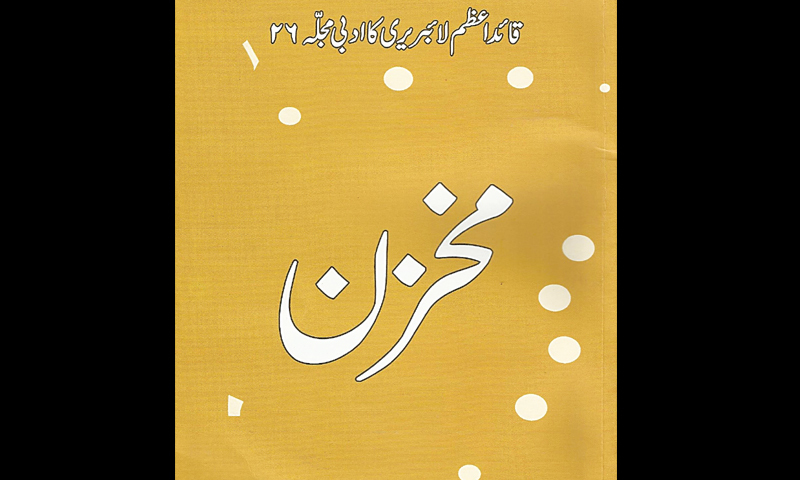
Punjab University’s decision about relegating Persian and Arabic to optional level has been discussed in the latest issue of the periodical Makhzan, published by Lahore’s Quaid-e-Azam Library, in the editorial Pesh raft aur paspai (Progress or Retreat), penned by Dr Firaqi.
Beginning with the historical background of Persian in the subcontinent, Firaqi sahib stresses the importance of learning Persian and Arabic for anyone studying Urdu as a major subject at a university.
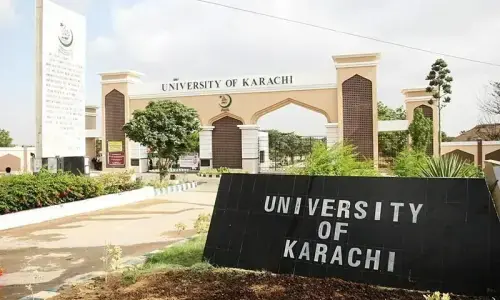
He then says that in the years just after the creation of Pakistan we were aware of the significance Persian and Arabic and many attempted to revive these languages even at the school level. But, “the hegemony of an alien language from across the seven seas endangered our linguistic and cultural existence.” He thinks it speaks of our ever-increasing cultural decline. Keeping these facts in view, writes Dr Firaqi, Punjab University had decided nearly a decade ago to introduce a compulsory course at MA Urdu level consisting of 50 marks each for Persian and Arabic for the students of Punjab University and its affiliated colleges. Bahawalpur University had already adopted this practice, which was later emulated by Sargodha University, while this practice has been in vogue at Karachi University since long.
Dr Firaqi then adds with a great sense of sorrow that in 2013 Punjab University Oriental College in a hurriedly convened meeting tried to axe Arabic and Persian from the syllabus. Faced with little resistance, it decided to relegate Persian and Arabic courses to the status of optional. This, he thinks, is perhaps the first step and subsequently Persian and Arabic would be banished altogether.
One hopes that Dr Firaqi’s editorial serves as a wake-up call for the authorities concerned.