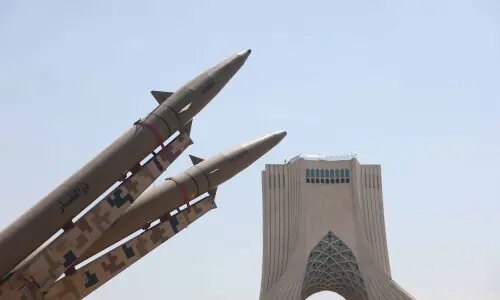
WASHINGTON: Despite superseding nuclear rivals India, a US study on worldwide nuclear materials security for 2014 said Pakistan is ranked 22nd out of 25 countries with weapons usable nuclear materials worldwide.
However, Pakistan has shown the most improvement recently among nine nuclear-armed states through a series of steps to update nuclear security regulations and to implement best practices.
The 2014 Nuclear Threat Initiative Nuclear Materials Security Index has ranked Pakistan above India in terms of nuclear safety.
India is ranked 23rd out of 25 countries with weapons-usable nuclear materials in the world while China is placed 20th on the index.
The NTI study predicts further improvement in Pakistan’s regulations for protection and threat prevention.
In the 2014 NTI Index, the scores of the nine nuclear-armed states remained mostly static, with some states' scores increasing or decreasing by a single point.
“Pakistan was a notable exception, with its score increasing by three points,” the NTI Index acknowledged in its latest assessment.
“Pakistan, which improved its score by three points compared with 2012, demonstrated the largest improvement of any nuclear-armed state. Pakistan is taking steps to update its nuclear security regulations and to implement nuclear security best practices.”
In particular, the assessment says, new regulations have improved its scores in the On-Site Physical Protection indicator.
Pakistan also participated in new bilateral and multilateral assistance, although its score for Voluntary Commitments was already high.
France, the United Kingdom, and the United States lead the nuclear-armed states in scoring.
The 2014 Nuclear Threat Initiative Nuclear Materials Security Index is the second edition of a unique public assessment of nuclear materials security conditions around the world, the organisation website said.
Developed with the Economist Intelligence Unit (EIU), the NTI Index was created to assess the security of nuclear materials around the world and to encourage governments to take actions and provide assurances about the security of the world's deadliest materials, it said.