1
1


PARIS: France’s foreign minister said Monday the European Union would likely lift some sanctions on Iran in December, as part of a hard-won deal that curbs Tehran’s nuclear programme.
Laurent Fabius also said Israel – which blasted Sunday’s agreement as a “historic mistake” – was not likely to launch any preventative strikes on arch-foe Iran, “because no one would understand” such a move “at this stage.”
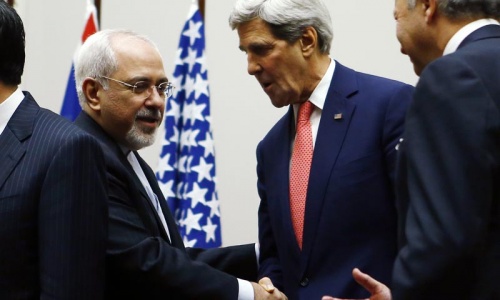
World powers sealed the agreement with Iran after four days of intense negotiations in Geneva, promising to ease some crippling US and EU sanctions on the Islamic state in return for limits on an enrichment programme the West suspects was aimed at developing an atomic bomb.
Speaking on Europe 1 radio, Fabius said that EU foreign ministers would gather together in “a few weeks” to put forward a proposal to partially lift some sanctions, which the 28-member body will have to approve.
“This lifting of sanctions is limited, targeted and reversible,” he said, adding that it would take place “in December”.
The deal, which lasts for six months only while a more long-lasting solution is negotiated, also gives UN atomic inspectors more access to key nuclear facilities in Iran.
Tehran has agreed that it will not enrich uranium over five per cent for the six-month period and will neutralise its entire stockpile of uranium enriched to 20 per cent, which is close to weapons-grade and therefore an area of top concern.
In return, the EU and United States will suspend sanctions on Iran’s petrochemical exports and gold and precious metals sector.
US trade restrictions on the country’s auto industry will also be suspended.
Altogether, Iran will receive some $7 billion (5.2 billion euros) in sanctions relief, Washington has said, and the powers have promised to impose no new embargo measures for six months if Tehran sticks to the accord.
But the raft of international sanctions that have hobbled the Iranian economy remain untouched.
Fabius said that Iran “commits to giving up the prospect of a nuclear weapon” as part of the interim deal.
“As much as Iran can move forward where civilian nuclear energy is concerned, it cannot do so for the atomic weapon,” he added.
The six powers involved in the negotiations – the United States, France, Britain, Russia, China and Germany – have hailed the deal as a key first step that wards off the threat of military escalation.