0
0
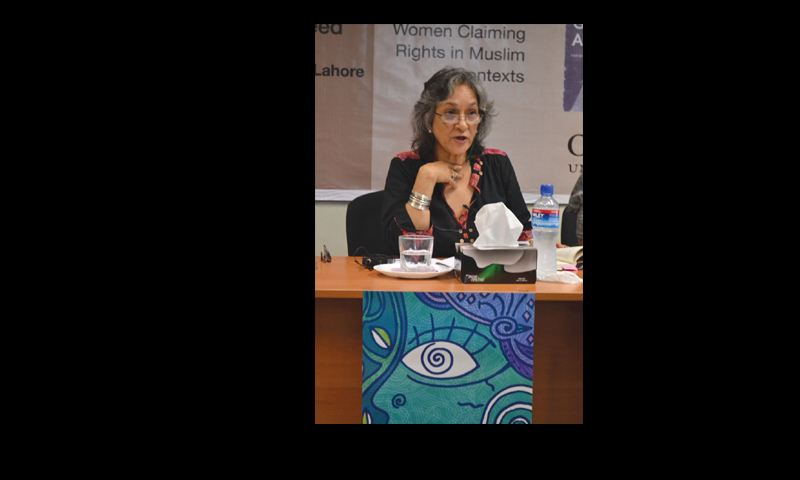

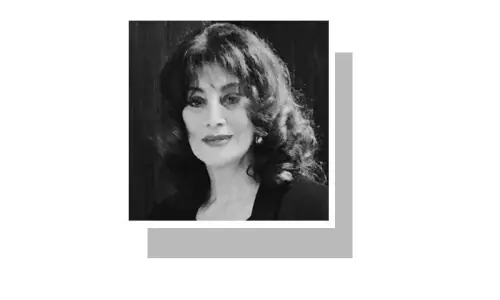
Shaheed highlighted that there is a “misconception in Muslim societies that the struggle for women’s rights is confined, historically and geographically, to European and North American locations.” She explained how, as an academic and an activist, she was offended by this ‘myth’ every time she came across it. Yet, it enjoys credibility that women’s rights in Muslim societies are an alien idea and whoever works for them is promoting some ‘foreign’ agenda. The misconception is not only confined to Muslim societies but also to some people in non-Muslim cultures that see Muslim women as passive and silent victims. So prevalent is this misconception that any example of brave Muslim women resisting patriarchal values, whether in the past or present, is brushed aside as an exception. Shaheed emphasised that this ‘myth’ has been repeated so often, in public as well as in our private lives, that we consider it reality.
Calling it a “dangerous myth,” Shaheed stressed for it to be “challenged, debunked, and laid to rest.” It is promoted by the opponents of gender equality in Muslim societies, she said. Without completely shattering it, the majority of women will keep fearing to speak out for their rights, afraid of being treated as the ‘other’, as someone who has imported these ‘problematic’ and ‘negative’ ideas from foreign cultures.
The main thesis of Great Ancestors, Shaheed said, is that the women living in Muslim societies have struggled for a more just society in every era and every region. The book provides around some 500 examples from the eighth to the mid-20th century where women living in Muslim contexts strived either for their individual rights or struggled for better conditions for women as a whole.
Shaheed’s aim was to bring forth an alternate reality, a reality that has been completely erased from our history textbooks. She has tried to rediscover the narratives of expanding the rights and personal spaces of women from numerous historical moments. The lives of our great ancestors narrated in the book can be a catalyst for rethinking ‘Muslim womanhood’ as a socially and historically constructed identity. It is essential for women living in Muslim societies to read their history for themselves. As Fatima Mernissi points out in her book The Forgotten Queens of Islam, women cannot count on anyone to read their history for them. In the book Mernissi gave several examples of female queens in Arab history, to the surprise of many. However, unlike The Forgotten Queens of Islam, Great Ancestors brings forth the stories of not only queens and powerful women but of women from all walks of life including poets, scholars, sufis, rulers, artists, and rights activists.
The question-answer session brought further vibrancy to the debate when a member of the audience questioned the utility of historical examples when Islamic texts are used by most religious scholars to undermine the project of gender equality. In response, Shaheed qualified that her book “is not about theology or the religion of Islam or even women’s lives in relation to Islam.” The purpose of the book, she said, is “to elucidate examples of women who defied culturally defined gender norms to assert their right to be different and to change their society.”
This further engaged the audience in a discussion on what is more important for bringing about social change: presenting facts, countering the established norms or challenging the prevalent theories through abstract arguments. To this, Shaheed underlined the importance of historical narratives by stating that history is not merely a collection of stories: “By telling us who we have been, history defines for a people a sense of self that funnels into and guides a sense of potential tomorrows.”