0
0

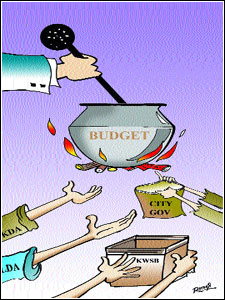 The next few weeks will be eventful for various tiers of government. Budget estimates shall be finalized and presented to the respective fora. While preparation of budget and its presentation to the respective houses may sound a fairly routine exercise, it provides an opportunity to review the past performance viz-a-viz the allocations made in different sectors and projects. Realistic estimation of budgetary allocations can thus be made as an outcome of this exercise.
A worth considering fact is that the prioritization of expenditures can be done on the basis of needs in different sectors. It is obvious that objective evaluation and analysis of the prevailing situation constitute the most effective justification to allocate budgetary amounts in the disbursement overlay. In the context of Karachi, this becomes an all the more important aspect since the city is currently managed and run without any development agenda or plan worth the name. At least, the preparation of the annual budget can provide a limited opportunity to review the targets and help evolve an agenda for the government as to how it wishes to address the various developmental needs of the city.
The budgetary allocation of the city needs to be framed on the basis of standing realities. As a precedent, the expenditure category in the city government’s budget comprises five sub-categories. These include establishment head that covers staff salaries and related expenditures; disbursement head that provides description of funds transfer to towns and union councils; maintenance, repair and contingency head for routine expenditure in different sectors; head for running the departments inherited from the government of Sindh and development head which addresses the financial allocations for the ongoing and newly planned schemes and projects.
In this overlay, the development related head is of vital importance due to its strategic nature and potential impact. A unique advantage possessed by the City District Government of Karachi is that it controls the former development authorities (KDA, MDA and LDA) and the defunct Karachi Water and Sewerage Board. While the snags related to the transition of these bodies remain, there is no denying the fact that the administration has been passed over to the city government.
This single advantage demands greater foresight from the City government to prepare developmental overlays in consonance with the actual needs of the citizens and the city. If the task of preparing a realistic allocation and estimation proposal is property handled co-financing from the upper tiers of government may result which has also happened in some cases in the past. It is thus vital to carefully re-visit the developmental needs of the city. It is also clarified that the details related to figures and arithmetic of allocations are beyond the scope of this piece that aims to put across only the conceptual basis of the budgetary allocations for development.
Water supply constitutes one of the most vital aspects. The city receives its major share of water from Indus through Kalri amounting to about 435 million gallons per day (mgd). The precarious Hub source is notional only when it is re-charged after some sizable rains. Small quantities of water are also received from the Dumlottee wells and Haleji source. According to safe estimates, the city is short of at least 175 mgd of water supply. Efforts are under way to construct a K-III bulk supply project through the Indus which is planned to add 100 mgd of water.
However the issues are many, all of which cannot be addressed by a single mega-project. Overall shortage of water, limited / scanty supply to low income areas, loss of supply pressure at the tail ends, meagre revenue recoveries, deteriorating water quality, water thefts/ leakages at all the levels of supply and inappropriate staffing in the water utility are the key issues. It shall be only viable if the forthcoming exercise of budgetary allocations takes notice of these issues according to their respective socio-economic and technical priorities. Contractual agreements based on public private partnerships in several loss laiden operations; desegregation of supply services; evolution and development of a proper regulatory framework and recovery of pending dues from the large-scale public and private clients are some of the key options.
Sanitation is another major area of concern. According to various KWSB reports, official sewerage system serves only 40 percent of the city. National storm water drains and old city mullahs act as the main collectors of sewerage which is disposed into the sea without any treatment. The three sewerage treatment plants installed in the city actually treat a fraction of total sewage. They function at a minuscule of their installed capacity. The KWSB has prepared an ambitious Greater Karachi Sewerage Plan at a cost overlay of over Rs12 billion.
However this system is not targeted to include the existing sewerage disposals and aims to superimpose a new system atop the old existing practice. A logical option is to improve the existing system in an environmentally friendly manner. By converting the existing drains into box culverts or covered outlets and developing sewerage treatment plants at the end of each outlet, a cost effective system can be worked out without any wastage of funds or unnecessary donor assistance. Urban public transport is another pressing area requiring an intervention.
At present, a large number of commuters use buses and minibuses for daily travel. Almost all of these buses are owned and operated by the informal sector operators. Absence of bus and minibus terminal spaces, road encroachments, absence of route permits for a sizable number of minibuses, extortions by the police, dilapidated road conditions, unavailability of credits at suitable mark up-rates, lack of appropriate fare structure and tariffs are few of the constraints. Many options are worth considering which can help resolve problems with a modest capital outlay.
For road improvement and expansion, a two pronged strategy may be useful. Such city roads with a medium to high utilization factor need maintenance-free re-development. The construction of Shaheed-e-Millat Road and part of Rashid Minhas Road is an example. Other road repairs may be undertaken on a priority worked out by the town administrations on their own. Mass transit projects are utmost vital given the volume of commuters. In the starting phase, the Karachi Circular Railway may be revived at a modest cost along the existing right of way. The consultants have calculated the cost of the project as Rs12 billion.
However it is high time that a practical step is initiated and the project is approved for initiation without further delay. Policy of encouraging the bus companies must be followed. Allocation of funds must be made for development of bus terminals which are an essential space for running a bus service. Similarly in order to facilitate the de-congestion in the inner city and to ease out the traffic volume on central city roads, Karachi Northern Bypass Project (KNBP) should be built with utmost urgency. This must be done in conjunction with the development of a warehousing district along Super Highway.
Warehousing is essentially needed for re-siting the chemical market, metal market, grains market and other storage and wholesale activities from the inner city areas close to the port. Most of the operators of these businesses wish to voluntarily re-locate along an appropriate site close to the outskirts of the city. Their operations are extremely hazardous being in the dense and congested old city and can give rise to accidents of unimaginable proportions.
Disposal of solid waste is a key city issue. Present state of waste disposal is absolutely dismal. According to several studies, the municipal authorities are able to lift only 30 percent of the total waste. Thus the remaining waste lies uncollected on the streets and littered all around. Recyclables are picked up at different sources by the waste pickers that are inter connected to recycling industry.
Hazardous waste from hospitals, industries and workshops also pose a serious problem. A number of options have been applied to address the waste management issue; however the net result remains the same. Several interventions are appropriate that have to be applied in the solid waste sector. The landfill site where the final disposal of the waste is done needs to be developed. If the waste pickers and recyclers are allowed to re-locate on the landfill sites and few basic infrastructural facilities are provided, the problems can be greatly addressed.
For transference of waste from the kachra kundis (secondary disposal points) to the landfill, the town administrations may consider the hiring of contractual services on the basis of franchise. They could retain their role as overseeing and regulating body that can help generate a useful service. This can rationalize the budget, allocation to a great extent. For example, the Gulshan-e-Iqbal town administration had to allocate as much as 10 per cent of the Rs360 million budget during the financial year 2001-02. Other municipal units also have to make corresponding investment.
Housing and settlements development is a key issue faced by the authorities and city dwellers alike. About half of the total urban population resides in squatter settlements which have crossed 568 in number. Most of the peri urban location along western and eastern edges of the city are dotted by squatters. Absence of appropriate housing initiatives, lack of effective land management and the ongoing connivance of several state functionaries with land grabbers is giving rise to this phenomenon.
Census results and several other housing studies show that the demographic pattern of the city is in a state of flux. Need for new housing stock is rising due to the breaking of joint family system into nuclear families, in-migration to the city, desire of tenant households to acquire their own abode and a constantly mounting backlog, most of which belongs to lower and lower middle income groups. Attempts of such development projects which caused large scale evictions and homelessness are also a case in point.
An example is Lyari Expressway Project. Land supply at affordable and favourable conditions, credit options for the needy/low income groups, regularization of such squatters which are not located in any environmentally hazardous land, creation of a viable land and housing information system, provision of infrastructure in an incremental and cost effective manner are a few areas which need to be addressed on priority.
It must be understood that healthy and appropriately settled communities foster peace and tranquillity in the city. By allocating funds for recruiting more security personnel and sophisticated weaponry will hardly make any difference. The focus of budget allocations and corresponding implementations should be on the creation of well-serviced settlements that are properly managed and maintained.
The current process of re-thinking about allocating the budget must also focus on the revival of planning process for Karachi. Presently the projects and programmer are all thought out in an isolated manner. Most of such attempts try to resolve one aspect of the problem but create hindrance for others due to absence of a coordinated framework at the city scale.
A small master planning office has been set up under the auspices of the City District Government but it lacks the necessary technical and managerial capacity as well as administrative clout to deal with the various stakeholders concerned with city development. A planning agency with adequate working independence and administrative authority to impose developmental control is utmost essential for the city. This agency must be charged to prepare a city vision and corresponding budgetary allocation proposals after establishing consensus from all the concerned stakeholders. Unless an ongoing planning process is established on firm footings, the prevailing ad hocism in the creation of project and budget allocations shall hardly cause any difference.