Mass demonstrations against the Turkish prime minister, Recep Tayyip Erdogan, should not be allowed to derail talks with Kurdish rebels, Britain's roving peace negotiator, Jonathan Powell, has said.
The former diplomat, who is lending his support to the process aimed at ending the 30-year conflict, said it would be a tragedy if civil rights confrontations with the Turkish government knocked the dialogue off course.
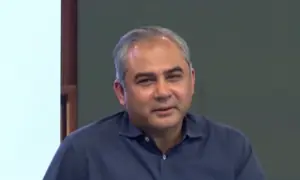
Powell, who was Tony Blair's chief of staff and helped to steer the Northern Ireland peace process to success, has met the head of Turkey's intelligence services, Hakan Fidan, and senior officials from the ruling Justice and Development party (AKP) in Ankara to share his experience as a negotiator.
In an interview with the Guardian and the Turkish newspaper Hurriyet, Powell said such initiatives required bipartisan support, including from opposition parties, and a “referee” to authenticate ceasefires.
“There are [often] spoilers, external factors,” Powell said. “I hope it doesn't happen here. Erdogan and Hakan Fidan deserve a lot of support. It would be a tragedy if [the demonstrations] had the effect of knocking the peace process off track.
“[Eventually] you get to the point where a peace process is irreversible. I don't know whether we have reached that stage [in Turkey]. Erdogan is a very strong leader. To make a peace process, you need a strong leader [on both sides].
“One thing political leaders worry about is the two audiences. Sometimes they only think of the supporters right in front of them but there's also the people they need to do the peace process with. It's very complicated for politicians. They need to get the tone right.”
Spokesmen for the Turkish government have accused the pro-Kurdish Peace and Democracy party (BDP) of trying to exploit the Gezi park issue to extract concessions, while the army said a machine gun attack on one of its helicopters last week was a breach of the ceasefire. Powell is on the council of experts of the London-based Democratic Progress Institute (DPI), which has hosted visits by members of the AKP, the pro-Kurdish Peace and Democracy party and the opposition Republican People's party.
Speaking at the DPI's office in London, Powell said: “You need bipartisan political support for a process ... It's [also] terribly important, if you have a ceasefire, to set up a mechanism to resolve disputes. We had the independent monitoring commission in Northern Ireland ... to check that everyone was obeying the ceasefire.” A peace deal would open the door to other developments, Powell believes, including allowing Turkey into the EU.
By arrangement with the Guardian