WASHINGTON: The United States and Britain on Monday pledged to forge ahead with diplomatic efforts to end the civil war in Syria, saying they had found common ground with Russia on how to proceed.
US President Barack Obama and British Prime Minister David Cameron vowed to increase pressure on the regime of Syria’s President Bashar al-Assad, and insisted that he could not be part of a democratic transition.
“Syria’s history is being written in the blood of her people, and it is happening on our watch,” Cameron told a joint press conference with Obama after they held about 90 minutes of talks in the White House’s Oval Office.
“The world urgently needs to come together to bring the killing to an end.
None of us have any interest in seeing more lives lost, in seeing chemical weapons used.” Cameron, fresh from a trip to Russia, one of Assad’s few remaining backers, said he believed Washington, London and Moscow had found “common ground” on the crisis, which has left tens of thousands dead.
Obama agreed, saying Russia had an “interest as well as an obligation” to work on resolving the crisis.
“If in fact we can broker a peaceful political transition that leads not only to Assad’s departure but a state in Syria that is still intact (...) and that ends the bloodshed, stabilizes the situation, that’s not just going to be good for us — that will be good for everybody,” the US leader said.Ahead of the talks, Cameron told National Public Radio that US Secretary of State John Kerry made a “real breakthrough” in talks with Russian President Vladimir Putin “when they agreed to an American-Russia peace conference.”
The British leader also said that Putin was “keen now to move from the generalities of having a peace conference to talking through the specifics of how we can make (this) work.” Obama has resisted directly arming the Syrian opposition but — with reports that Syria has used chemical weapons, which would cross a US a “red line” — is coming under increasing pressure at home and abroad to do so.
Obama said last week that Washington had a moral and national security obligation to stop the slaughter in Syria, but said he wanted more concrete evidence that chemical weapons had been used.
On Monday, he said: “We will continue work to establish facts around the use of chemical weapons in Syria, and those facts will help guide our next steps.” Cameron and Obama met amid indications that Assad’s regime may not be hustled swiftly out of power, as his army gained ground in the strategic central province of Homs.
The Syrian Observatory for Human Rights watchdog reported that the military, backed by the Lebanese Shiite group Hezbollah, seized much of the strategically vital Qusayr area, which connects the capital Damascus to the coast.
In southern Daraa, which nurtured the Syrian uprising against Assad, the army secured control of the town of Khirbet Ghazaleh, on the route between Damascus and the Jordanian border.
The Observatory said Monday that it has now documented the deaths of some 82,257 people since the beginning of the conflict in March 2011, including 34,473 civilians.
Reverberations meanwhile mounted from a string of deadly bombings in the Turkish town of Reyhanli, which the Ankara government blamed on Damascus.
Thousands of Turks took to the streets to urge their government to rethink its support for rebels fighting Assad, warning that the decision had provoked reprisals against Turkey, including the bombings, which killed 48 people.
Turkish Prime Minister Recep Tayyip Erdogan is due to meet Obama at the White House on Thursday, with Syria also topping their agenda.
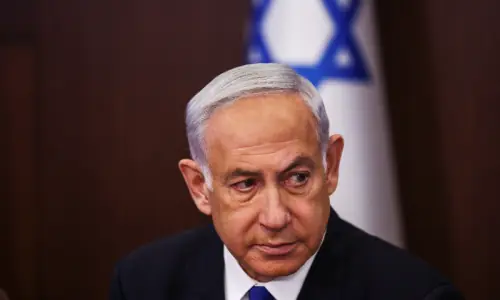
In another sign of accelerating diplomacy, the Kremlin said Israeli Prime Minister Benjamin Netanyahu will hold talks on Tuesday with Putin amid concerns Moscow plans to deliver advanced missiles to the Damascus regime.
UN Secretary General Ban Ki-moon will visit Russia on Friday to discuss Syria, Moscow said.
Arrangements for the peace talks sponsored by Moscow and Washington, which could take place later this month, meanwhile remain unclear.
Syrian opposition forces said they will consult with backers Saudi Arabia, Qatar and Turkey before deciding whether to take part in the talks.
“It is too early to decide whether or not we will take part, because the circumstances of this conference are not yet clear,” the opposition National Coalition’s acting head George Sabra said in Istanbul.—AFP