0
0

Administrative powers without financial autonomy are practically difficult to implement. At least on this count, the ECP has no worries. If anything, it is in a commanding position to execute.
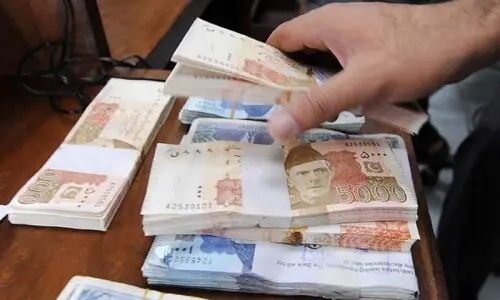
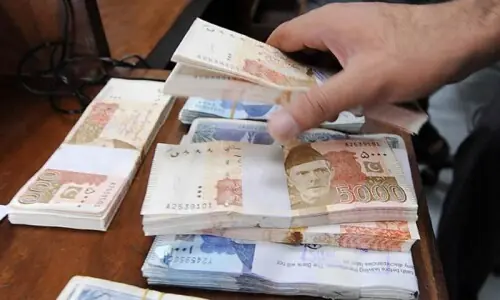
The ECP had asked the government for an exorbitant amount of Rs5.099 billion to ensure a free and fair general elections and the entire amount was approved, and the bulk of it was released ahead of time.
“The government has already released more than Rs4 billion out of the total allocations for the elections,” said an official of the ECP, adding that “the payment for the highest expenditure of Rs1 billion for the printing of ballot papers has almost been completed to the Printing Corporation of Pakistan”.
The budget for elections 2013 is three to four times higher than the two previous exercises. In 2008, it was worth Rs1.84 billion, while in 2002 it was Rs1.43 billion.
Officials said that apart from the inflationary impact, there has been a change in the whole mechanism of election process related to the expenditure.
“We have observed that previously a lot of expenditure was incurred by the district administration, like arranging vehicles and that too without cost, and this practice was rampant in the inner parts of the country. But things have improved this time,” said Islamabad Deputy Commissioner Amer Ali. “This time in various meetings we have only been asked by the returning officers to assist and cooperate in election process like any other department.”
The availability of adequate funds will not only allow the returning officers and the polling staff to execute their job efficiently, but somewhat independently too compared to the previous occasions when they used to be dependent on the local influentials or parties for support.
The cost of having the ballot paper printed was previously Rs534 million which has now hit the billion mark. “The ECP has prepared special ballot papers this time and the method of printing the ballot papers is also foolproof,” ECP Secretary Ishtiak Ahmed Khan said, adding that the ballot papers are being sent to relevant presiding officers under safe security cover of Pakistan Army, local Police and Rangers. “There are charges to be paid to ensure safe and secure transportation of the ballot papers,” he said.
The expenditures related to the armed forces has gone up to Rs500 million from Rs120 million five years ago. The other major expenditure this time is worth Rs1.26 billion which will take care of the election allowance and food charges of polling staff. In 2008, Rs425 million were spent under the head.
“This is because the stipend has been enhanced to Rs350 per day for the polling officers and assistant polling officers, while the daily food charges are Rs400 this time,” said an ECP official, adding that in 2008 the corresponding numbers were Rs150 and Rs200. These charges are given for three days.
Among other heads, Rs148 million have been allocated for stationary and other relevant material; Rs480 million for transportation of election material; Rs87.50 million for changing polling stations; Rs450 million for publicity/advertisements to encourage the voters to exercise their right; Rs76.88 million on indelible ink; and Rs750 million for the provincial election commissioners for disbursements as per their requirements.
“Each district has different requirements based on local conditions. For instance, the mode and charges for transportation varies in different environments,” the ECP official said, adding, “In major cities, staff and material can reach the polling station even in a hired taxi or private cars, but it is not possible in, say, Balochistan or the rugged mountains where special vehicles have to be hired.”
Apart from the direct election-related expenditure, more than Rs560 million have been spent in the last four years for ECP’s own capacity-building and other preparatory work for the general elections, including computerisation of the electoral rolls.
However, the ECP or any other government functionary did not spend anything on the ‘8300 SMS’ service which provides information regarding the exact name of a voter’s polling station. The latest service is being extensively used and both the telecom companies and the government are making something out of it.
The charge per SMS is two rupees. The government gets two-third of the income, while the remaining amount is being pocketed by the relevant cellular service provider.
The service received 20 million hits in the first 20 hours of its launch, and the officials expect between 50 and 60 million hits by midnight May 10.