The foreign ministers of Pakistan, Saudi Arabia, Turkiye and Egypt exchanged views on “evolving regional dynamics,” the Foreign Office (FO) said in a post on X on Saturday.
According to the FO, the meeting took place on the sidelines of the Antalya Diplomacy Forum in Turkiye. It included Deputy Prime Minister and Foreign Minister Ishaq Dar, Saudi Arabia Foreign Minister Prince Faisal bin Farhan, Turkiye Foreign Minister Hakan Fidan and Egyptian Foreign Minister Dr Badr Abdelatty.
In an effort to halt the US-Israeli war on Iran, the foreign ministers of the four countries had held two meetings ahead of the announcement of ceasefire, which is set to expire on April 22. The first meeting was held in Riyadh on the sidelines of a consultative ministerial meeting, while the second meeting was held in Islamabad.
On Saturday, the FO said that the foreign ministers “exchanged views on evolving regional dynamics, reaffirming the vital role of dialogue and diplomacy in promoting peace, stability and shared prosperity”.
“The foreign ministers expressed a shared commitment to advancing this partnership, deepening coordination and expanding collaboration across key areas of mutual interest,” it said.
Islamabad has been engaging in intense diplomatic efforts to end the Middle East war. It had hosted direct Iran-US talks in Islamabad on April 11, marking the highest engagement between the two sides since 1979. Both delegations departed the capital on Sunday after the talks ended without an agreement, but also without a breakdown. Reports have also emerged that a second round of talks could be held in Islamabad in the coming week.
On Saturday, Egypt’s Abdelatty said the country was working closely with Pakistan on a framework aimed at securing a lasting peace between the US and Iran.
He said Egypt, Turkiye, Pakistan and Saudi Arabia were coordinating a broader regional effort focused on preventing renewed escalation and laying the groundwork for a post-war security arrangement, stressing the importance of protecting Gulf states and stabilising energy markets, supply chains and food security.
After wrapping up visits to Saudi Arabia and Qatar, Prime Minister Shehbaz Sharif on Thursday arrived in Turkiye’s Antalya on the third leg of his tri-nation tour, according to the Prime Minister’s Office (PMO).
The PMO later said that Turkish Foreign Minister Hakan Fidan, paid a courtesy call on PM Shehbaz, and Deputy Prime Minister and Foreign Minister Ishaq Dar and Special Assistant to PM Tariq Fatemi were also present at the meeting.
“During their cordial conversation, Foreign Minister Fidan extended a warm welcome to PM Shehbaz and thanked him for his participation in the upcoming Antalya Diplomacy Forum. He said President Recep Tayyip Erdogan was looking forward to his meeting with the PM on the sidelines of the Antalya Diplomacy Forum,” the PMO said.
It added that PM Shehbaz thanked FM Fidan for the warm welcome and traditional hospitality.
“He said it was a pleasure for him to visit Turkiye, his second home. He was looking forward to the opportunity to participate in the Antalya Diplomacy Forum and said that he was looking forward to meeting Erdogan, on the sidelines of the Antalya Diplomacy Forum,” it said.
According to the Foreign Office (FO), the prime minister, accompanied by a high-level delegation, is undertaking official visits to Saudi Arabia, Qatar and Turkiye from April 15 to 18. Earlier in the day, he was in Qatar, where he met with Emir Tamim bin Hamad bin Khalifa Al Thani.
Antalya Governor Hulusi Şahin welcomed the premier and his delegation at the airport, the PMO said in an earlier statement, adding that Pakistan’s Ambassador to Turkiye Yousuf Junaid and other senior officials were also present.
It said that PM Shehbaz would attend the 5th Antalya Diplomacy Forum and was also expected to meet Turkish President Tayyip Erdogan and other world leaders.
PM meets Qatar’s emir
In his meeting with the Qatar’s emir, Shehbaz had stressed the importance of de-escalation and dialogue amid the ongoing regional situation. The meeting with the Qatari emir took place shortly after his arrival in Doha.
“I had a most warm and cordial meeting with my dear brother, Amir of Qatar His Highness Sheikh Tamim bin Hamad Al Thani, in Doha today,” PM Shehbaz said on X.
He stated: “We discussed the evolving regional situation, particularly in the Gulf region, and underscored the importance of de-escalation, dialogue, and close international coordination to ensure peace and stability.
“I reiterated Pakistan’s strong condemnation of attacks targeting Qatar and other regional countries, and conveyed our full solidarity with the brotherly people of Qatar,” the premier added.
The prime minister said he thanked Sheikh Tamim on behalf of the people of Pakistan for the “exceptionally warm and generous gesture of sending Qatar’s fighter jets to escort our aircraft as it entered Qatari airspace”.
“I am truly touched by this gesture, which also embodies the spirit of Qatar’s renowned hospitality and the strength of our enduring ties,” he remarked.
“We also reviewed our deep-rooted bilateral ties and reaffirmed our commitment to further strengthening cooperation in key areas including security, defence, and energy,” PM Shehbaz said.
He noted that the “extremely warm and productive exchanges were reflective of Pakistan’s longstanding ties with Qatar and the Gulf states”.
The meeting between PM Shehbaz and Sheikh Tamim at the emir’s palace lasted over an hour, during which they discussed the “latest regional and international developments, particularly in the Middle East”, according to a statement by the Prime Minister’s Office (PMO).
The Qatari emir welcomed the prime minister and his delegation, and expressed his “deep appreciation for Pakistan’s pivotal role in supporting efforts to de-escalate tensions in the region and promote diplomatic dialogue in a manner that serves regional security and stability”, the statement said.
“Both leaders underscored the importance of supporting de-escalation efforts and enhancing international coordination to ensure the security and stability of the region, particularly ensuring the maintenance of the smooth flow of energy supply chains,” it added.
The two leaders also reviewed bilateral relations between their countries and ways to further develop them, especially in the fields of security, defence, and energy, “in a manner that strengthens the partnership and opens new avenues for bilateral cooperation”.
PM Shehbaz and Sheikh Tamim also held a one-on-one meeting, during which they “exchanged views on current developments of mutual interest and emphasised the importance of continued coordination and consultation between the two countries, particularly in light of ongoing events and their implications for regional security and stability”, the statement noted.
The bilateral meeting was also attended by Qatar’s PM and Foreign Minister Sheikh Mohammed bin Abdulrahman bin Jassim Al Thani, Amiri Diwan Chief Abdullah bin Mohammed Al Khulaifi, and a number of senior officials.
On the Pakistani side, it was attended by Deputy Prime Minister and Foreign Minister Ishaq Dar, Information Minister Attaullah Tarar, Special Assistant to PM Tariq Fatemi, and other senior officials, the statement said.
Following the meeting, the Qatari emir hosted a luncheon in honour of the prime minister and the accompanying delegation.
In an earlier statement on X, the Prime Minister’s Office (PMO) said that the premier, along with his delegation, was welcomed by Qatar’s Minister of State for Foreign Affairs Sultan bin Saad bin Sultan Al Muraikhi.
Upon arrival, the Pakistani delegation was welcomed by a contingent of the Qatari Armed Forces, the PMO said, adding that the airport and the city had been decorated with Pakistani flags.
The PMO said PM Shehbaz and the Qatari emir were to “exchange views on Pakistan’s efforts towards regional and global peace”.
Saudi Arabia visit concludes
In an earlier statement, the PMO said that PM Shehbaz had departed for Doha after concluding his visit to Saudi Arabia.
Deputy PM Dar had also posted that the premier and his delegation were leaving Madina for Doha to hold the meeting with the emir.
During his visit to Saudi Arabia, the premier landed in Madina last night, where he and his delegation were welcomed by Madina Governor Prince Salman bin Sultan bin Abdulaziz Al Saud upon arrival.
According to the PMO, the prime minister visited the Prophet’s (PBUH) Mosque in Madina and offered prayers for the progress of the country and nation, as well as for peace and reconciliation around the world.
“The gates of the Prophet’s Chamber were opened for the prime minister and the delegation; the prime minister paid a special visit to the Prophet’s Chamber (peace be upon him) and presented salutations and blessings,” the statement said.
After reaching Jeddah on Wednesday, PM Shehbaz met with Saudi Crown Prince Mohammed bin Salman, the PMO said. Dar was also present at the meeting. Dar posted on X that the meeting was “marked by warmth, brotherhood, and a shared vision for a stronger Pakistan–Saudi Arabia partnership”.
According to the PMO handout, the meeting lasted two hours, during which the two leaders held detailed discussions on the “evolving regional situation”.
“The prime minister expressed full solidarity and support for the kingdom of Saudi Arabia in the wake of the recent regional escalation. He conveyed deep condolences over the loss of precious lives and said the people of Pakistan stand shoulder to shoulder with their Saudi brethren,” it said.
The statement said that PM Shehbaz also appreciated the “patience and restraint” shown by the kingdom. He also apprised the crown prince of “recent developments related to Pakistan’s peace efforts that led to the US- Iran ceasefire and the recently held round of historic talks between the US and Iran in Islamabad”.
The statement said that the crown prince appreciated the “constructive role” of PM Shehbaz and Chief of Defence Forces Field Marshal Asim Munir in the peace process.
“While exchanging views on bilateral issues, the prime minister expressed his sincere appreciation for the crown prince for the kingdom’s consistent support to Pakistan’s economic stability. The prime minister also highlighted that Pakistan and the kingdom enjoyed a unique relationship as they were both strategic defence partners under the Pakistan-Saudi Arabia Strategic Mutual Defence Agreement,” the statement said, adding that both leaders also expressed their shared commitment for continuing close cooperation on matters of mutual interest.
In its earlier statement, the FO said the visits to Saudi Arabia and Qatar were “in the bilateral context”. It added that the premier would meet the leadership there to “discuss ongoing bilateral cooperation as well as regional peace and security”.
In Turkiye, he will participate in the fifth Antalya Diplomacy Forum and present Pakistan’s position in the Leaders’ Panel along with other world leaders, the FO added.
Gulf countries — including Saudi Arabia — were facing Iranian attacks, which Tehran says were aimed at US and Israeli sites in response to the latter’s deadly large-scale strikes. Pakistan intensified efforts to act as a mediator between the United States and Iran to end the war that had engulfed the Middle East, leading to a fragile, temporary ceasefire and a first round of talks in Islamabad.
Last month, PM Shehbaz hailed Saudi Arabia for showing “remarkable restraint” during the ongoing hostilities and stressed the need for urgent de-escalation.
The State Bank of Pakistan (SBP) confirmed on Thursday that Pakistan has received $2 billion from the Kingdom of Saudi Arabia.
The central bank said the funds were received “in the value date of April 15, 2026”.
The development comes amid Prime Minister Shehbaz Sharif’s visit to Saudi Arabia to push diplomatic efforts to promote peace in the Middle East.
A day earlier, the kingdom pledged an additional $3bn in deposits for Pakistan and extended its existing $5bn facility for a further three years.
On Thursday, the Saudi Press Agencyalso reported that Saudi Arabia had extended the $5bn deposit with the central bank and announced an “additional $3bn deposit”.
“This assistance aims at supporting Pakistan’s economy and strengthening its resilience amidst evolving global economic challenges, and comes in accordance with the leadership’s directives to strengthen the bonds of brotherhood between the two countries, affirming the kingdom’s commitment to fostering the economic growth of Pakistan, which is expected to reflect positively on the living conditions of Pakistani citizens,” it said.
Finance Minister Muhammad Aurangzeb said earlier that the existing $5bn Saudi deposit would no longer be subject to the previous annual rollover arrangement and would instead be extended for a longer term.
Pakistan will reportedly return a $3.5bn loan to the UAE this month, putting pressure on its reserves and risking breaches of its International Monetary Fund (IMF) programme targets.
The development comes at a sensitive time for the country’s external account position, which is already under strain from rising global oil prices and economic spillovers linked to tensions in the Middle East.
According to official figures, Pakistan’s foreign exchange reserves stood at $16.4bn as of March 27, sufficient to cover close to three months of imports. However, the repayment requirement from the UAE has added fresh pressure on the country’s external buffers.
In March, Islamabad failed to secure an agreement with the UAE to roll over the $3.5bn facility, marking the first such failure in seven years and raising concerns about near-term financing gaps.
Pakistan’s foreign exchange position, though under pressure, remains part of a broader stabilisation effort under IMF-supported reforms.
Analysts say external financing risks remain a key vulnerability, particularly amid volatile energy prices and constrained global capital markets.
Prime Minister Shehbaz Sharif met with Saudi Crown Prince Mohammed bin Salman after he reached Jeddah on Wednesday alongside a high-level delegation on an official visit to the kingdom, the PM Office’s (PMO) said in a statement.
The statement added that Deputy Prime Minister and Foreign Minister Ishaq Dar was also present at the meeting.
Dar separately posted on X that the meeting was “marked by warmth, brotherhood, and a shared vision for a stronger Pakistan–Saudi Arabia partnership”.
“The prime minister reaffirmed our deep-rooted ties, built on faith, trust, and mutual respect, and explored avenues to further enhance cooperation across all sectors,” he added.
Dar further stated, “Saudi Arabia holds a special place in the hearts of Pakistanis, and we remain committed to strengthening this historic and fraternal relationship for generations to come.”
Earlier, a post on the PMO’s X account said the premier was received by the Deputy Governor of the Makkah Region, Prince Saud bin Mushaal bin Abdulaziz, Saudi Arabia’s Ambassador to Pakistan, Nawaf bin Saeed Al-Malki and Pakistan’s Ambassador to Saudi Arabia, Ahmad Farooq upon his arrival in the kingdom.
It added that while in Jeddah, PM Shehbaz would meet with the kingdom’s top leadership.
“The meeting will involve discussions on further strengthening bilateral relations between Pakistan and Saudi Arabia and an exchange of views on the regional situation,” the PMO said.
According to the PMO, apart from DPM Dar, Information Minister Attaullah Tarar and Special Assistant to the Prime Minister (SAPM) Tariq Fatemi, as well as other senior officials, are also part of the delegation.
Earlier, the Foreign Office (FO) said the prime minister, accompanied by a high-level delegation, would be undertaking official visits to Saudi Arabia, Qatar and Turkiye from April 15 to 18.
In its statement, the FO said the visits to Saudi Arabia and Qatar were “in the bilateral context”. It added that the premier would meet the leadership there to “discuss ongoing bilateral cooperation as well as regional peace and security”.
In Turkiye, he will participate in the fifth Antalya Diplomacy Forum and present Pakistan’s position in the Leaders’ Panel along with other world leaders, the FO added.
“Pakistan’s participation in the forum reflects its continued commitment to constructive diplomacy, multilateral cooperation, and meaningful engagement with the international community on issues of global importance,” the FO statement said.
On the sidelines of the forum, PM Shehbaz was “expected to hold bilateral meetings with President Recep Tayyip Erdoğan and other key world leaders”.
Gulf countries — including Saudi Arabia — were facing Iranian attacks, which Tehran says were aimed at US and Israeli sites in response to the latter’s deadly large-scale strikes. Pakistan intensified efforts to act as a mediator between the United States and Iran to end the war that had engulfed the Middle East, leading to a fragile, temporary ceasefire and a first round of talks in Islamabad.
Last month, PM Shehbaz hailed Saudi Arabia for showing “remarkable restraint” during the ongoing hostilities and stressed the need for urgent de-escalation.
On March 9, PM Shehbaz held a “restricted meeting” with Crown Prince Mohammed bin Salman, according to a statement by the PM’s spokesperson.
During the meeting, the prime minister expressed Pakistan’s “full solidarity and support for the Kingdom of Saudi Arabia in these challenging times”, and both leaders agreed to work together for regional peace and stability.
Pakistan and Saudi Arabia have long shared a multifaceted relationship rooted in strategic military cooperation, mutual economic interests, and shared Islamic heritage. These ties have encompassed economic assistance and energy supplies, with Riyadh being a significant source of financial aid and oil for Islamabad.
Earlier today, the finance ministry announced that Saudi Arabia has pledged an additional $3 billion in deposits for Pakistan and has extended its existing $5bn facility for a further three years.
The ministry further stated that the existing $5bn Saudi deposit would no longer be subject to the previous annual rollover arrangement and would instead be extended for a longer term.
On April 11, the Saudi defence ministry confirmed that Pakistan has sent a military force and fighter jets to Saudi Arabia to boost security under a joint defence cooperation agreement between the two countries.
In September of last year, PM Shehbaz and Crown Prince Mohammed bin Salman signed a “Strategic Mutual Defence Agreement” in Riyadh, pledging that any attack on either nation would be treated as an act of aggression against both.
Saudi Arabia has pledged an additional $3 billion in deposits for Pakistan and has extended its existing $5bn facility for a further three years, Finance Minister Muhammad Aurangzeb announced in Washington.
Pakistan will reportedly return a $3.5bn loan to the UAE this month, putting pressure on its reserves and risking breaches of its International Monetary Fund (IMF) programme targets.
He added that the existing $5bn Saudi deposit would no longer be subject to the previous annual rollover arrangement and would instead be extended for a longer term.
The finance minister made the announcement while speaking to media representatives in Washington, DC, on the sidelines of the World Bank–IMF Spring Meetings 2026, where he shared key details on Saudi financial support for Pakistan and the government’s external financing strategy.
According to the finance czar, the support from the kingdom comes at a “critical time” for Pakistan’s external financing needs and would help “reinforce foreign exchange reserves and strengthen the country’s external account”.
Aurangzeb reiterated the government’s commitment to maintaining reserves in line with its market obligations and targets under the IMF-supported programme, including the goal of building reserves to around $18bn — equivalent to roughly 3.3 months of import cover — by the end of the fiscal year.
The finance minister noted that Pakistan had successfully repaid $1.4bn in debts last week, including a Eurobond, terming it a “non-event”, and reaffirmed the government’s commitment to meeting all upcoming external obligations and maturities on time.
He said the country’s external financing plan was clearly laid out and was being implemented in a responsible and disciplined manner.
Aurangzeb recalled his “detailed meeting” with his Saudi counterpart Mohammed bin Abdullah al Jadaan last week in Islamabad, adding that the State Bank of Pakistan (SBP) governor and Pakistan’s envoy to Washington were also in attendance.
He noted that the government had “deliberately refrained from commenting publicly in the absence of formal communication, despite media reports and speculation, as such matters required clarity and joint understanding before being shared”.
Aurangzeb expressed gratitude to the leadership of Saudi Arabia, particularly Crown Prince Mohammed bin Salman, the finance minister and the Saudi vice finance minister, for their continued support and close cooperation, and appreciated the efforts made to bring the package to fruition.
The finance minister also acknowledged the role of Pakistan’s political and economic leadership in securing and operationalising the support. He thanked the prime minister, the field marshal, the deputy prime minister, the SBP governor, and others for their contributions and coordination.
Aurangzeb said that sentiment and confidence were currently of “critical” importance, noting that Pakistan was receiving strong appreciation from international financial institutions, including the IMF and the World Bank, as well as from institutional investors and counterparts in Washington.
He said the international community had particularly acknowledged Pakistan’s recent diplomatic and facilitative role in enabling dialogue between parties that had not held face-to-face talks for decades.
He added that this appreciation, along with Saudi Arabia’s timely financial support, had provided Pakistan with renewed momentum and confidence for the economy and the external account, including its commercial aspects.
The finance minister also stated that Islamabad was advancing its broader external financing agenda, including the recently announced Global Medium-Term Note (GMTN) programme and the planned inaugural Panda Bond issuance.
In his statement, the finance minister concluded by reaffirming the government’s commitment to macroeconomic stability, meeting external obligations, maintaining reform momentum and sustaining engagement with bilateral and multilateral partners.
He added that a more detailed interaction with the media would be held at the end of the visit.
A day ago, speaking on the sidelines of the IMF/World Bank annual spring meetings, Aurangzeb said the country could manage all debt repayments, and that its reserves remained at roughly 2.8 months of import cover.
Maintaining at least that level, he said, would be “an important aspect of our overall macro stability as we go forward”.
“We are looking at Eurobond, we are looking at Islamic sukuk, we are looking at dollar-settled rupee-linked bonds,” Aurangzeb said, adding that they expected to issue Eurobonds this year and are also exploring commercial loans.
Aurangzeb said while the country had not yet requested any additions or changes to its $7bn IMF programme due to the economic shocks of the war in the Middle East, it was a potential option.
Deputy Prime Minister and Foreign Minister Ishaq Dar on Sunday reaffirmed Pakistan’s resolve to continue supporting diplomatic efforts for sustaining dialogue and promoting peace.
His remarks came during telephonic conversations with the foreign ministers of Saudi Arabia, Egypt and Turkiye after the conclusion of US-Iran talks in Islamabad on early Sunday morning.
In a statement, the Foreign Office (FO) said that Dar had spoken with his Saudi counterpart, Prince Faisal Bin Farhaan, today and shared developments regarding the Islamabad Talks.
During the phone call, Dar “stressed the importance of all parties adhering to their ceasefire commitments,” the FO stated.
Underscoring Pakistan’s role in facilitating the dialogue, Dar reaffirmed the “resolve to continue supporting all diplomatic efforts and sustain dialogue to promote peace and stability in the region and beyond,” the FO said.
In his conversation with Egyptian Foreign Minister Badr Abdelatty, Dar briefed him on the Islamabad Talks and Pakistan’s continued efforts in facilitating engagement between the parties, the FO said.
“He emphasised that it is imperative for all the parties to uphold their commitment to the ceasefire,” it stated.
Dar also reiterated the need for continued dialogue and diplomacy to achieve peace and stability in the region and beyond, the FO said.
Dar also spoke to Turkish Foreign Minister Hakan Fidan, sharing developments regarding the Islamabad Talks and stressing the importance of all parties adhering to their ceasefire commitments, the FO said.
According to the FO,Fidan commended Pakistan’s role in facilitating the dialogue between Iran and the US.
“Both reaffirmed their support for all diplomatic efforts aimed at sustaining dialogue and promoting peace and stability in the region and beyond.”
Fidan also extended the invitation to Dar for the Antalya Diplomacy Forum, scheduled to be held later this month, the FO said.
The exchanges took place on the same day when talks between Washington and Tehran in Islamabad ended without any agreement. The talks, facilitated by Pakistan, were aimed at restoring peace more than a month after the US and Israel launched attacks on Iran on February 28, setting off a conflict that gave rise to a global fuel crisis.
Pakistan positioned itself as a facilitator in the peace process.
The day the conflict started, PM Shehbaz and Deputy Prime Minister and Foreign Minister Ishaq Dar began dialling Iranian and Gulf leaders and other regional players, stressing the need for dialogue and de-escalation.
On March 24, PM Shehbaz said Pakistan stood “ready and honoured” to host “meaningful and conclusive talks” between the US and Iran.
While Iranian media had initially reported Tehran’s rejection of the US proposal, Dar on March 26 confirmed that “indirect talks” were underwakay with istan relaying messages.
Subsequently, foreign ministers of Saudi Arabia, Turkiye and Egypt were in Islamabad on March 29 and participated in a quadrilateral moot focused on de-escalation efforts in the Middle East. Dar had also said after the quadrilateral moot that Iran and US had expressed confidence in Pakistan to facilitate talks and Islamabad would be honoured to host the dialogue “in the coming days”.
A day after the moot, Dar was in Beijing, where Pakistan and China issued a five-point initiative for restoring peace and stability in the Gulf and the Middle East.
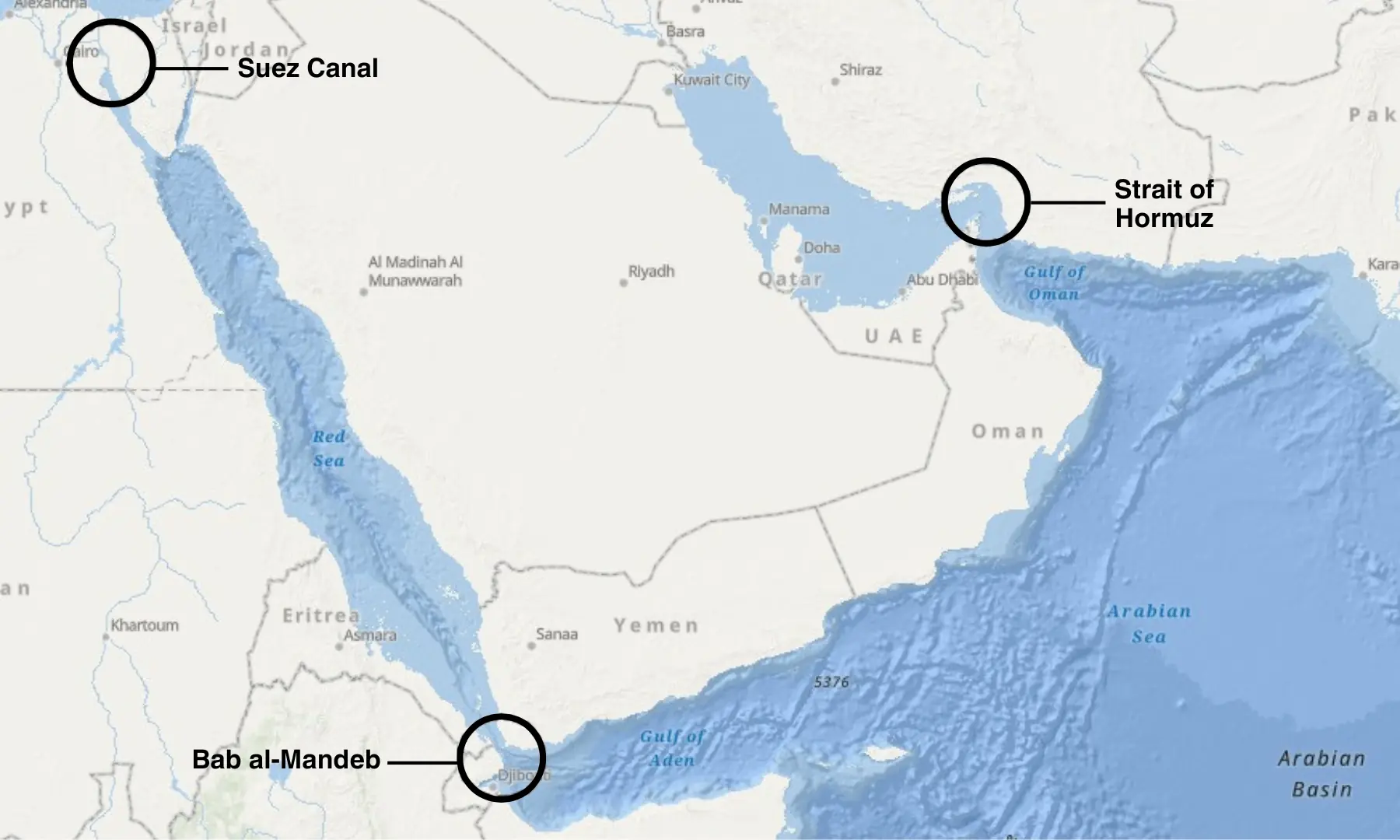
The threats of the war prolonging and intensifying escalated on April 5, when Trump, after making an expletive-laden post, issued an unusually precise deadline for Iran to agree to a ceasefire deal with Washington and allow traffic through the Strait of Hormuz — a key maritime corridor through which 20pc of the world’s oil and liquefied natural gas flowed before the Middle East war began.
“Tuesday, 8:00 P.M. Eastern Time,” he wrote, coupled with the warning of bombing Iran’s power plants and bridges on that day, increasing pressure to prevent a worsening situation.
Meanwhile, Iranian media reported that Tehran had conveyed its response to a US proposal for ending the war to Pakistan, again rejecting a ceasefire and emphasising the necessity of a permanent end to the war.
The Iranian response consisted of 10 clauses, including an end to conflicts in the region, a protocol for safe passage through the Strait of Hormuz, lifting of sanctions, and reconstruction, the agency added.
On the day of his deadline, Trump doubled down on his threats against Iran, alarming the world.
“A whole civilisation will die tonight, never to be brought back,” he wrote, prompting backlash from even within his country.
With hours left for the deadline to end, PM Shehbaz publicly requested Trump to “extend the deadline for two weeks”, noting that diplomatic efforts for a peaceful settlement of the ongoing war were “progressing steadily, strongly and powerfully”.
He also requested Iran to open the Strait of Hormuz for a corresponding period of two weeks.
Shortly thereafter, Trump took to his Truth Social platform to say that he had spoken with PM Shehbaz and CDF Munir.
“Subject to the Islamic Republic of Iran agreeing to the COMPLETE, IMMEDIATE, and SAFE OPENING of the Strait of Hormuz, I agree to suspend the bombing and attack of Iran for a period of two weeks,” Trump announced.
Subsequently, Iran’s FM Araghchi shared a statement on behalf of Iran’s Supreme National Security Council declaring that if attacks against the country were halted, it would cease its defensive operations.
Pakistan has sent a military force and fighter jets to Saudi Arabia to boost security under a joint defence cooperation agreement between the two countries, the Saudi defence ministry said on Saturday.
The Saudi ministry, in a statement, wrote that a military force and fighter jets from Pakistan had arrived at the King Abdulaziz Air Base in its eastern province.
It added that the Pakistani deployment was aimed at “strengthening the joint defence cooperation agreement signed between the two brotherly countries”.
“The Pakistani force consists of fighter and support aircraft belonging to the Pakistani Air Force, with the aim of enhancing joint military coordination, raising the level of operational readiness between the armed forces of the two countries,” it continued.
The planes were sent after Iranian strikes hit key energy infrastructure and killed a Saudi national, three sources, including a senior Pakistani government official, told Reuters.
They were “not there to attack anyone”, said the Pakistani official, who spoke on condition of anonymity.
An Iranian strike on Saudi Arabia’s sprawling Jubail petrochemicals complex on Monday had raised concerns in Pakistan that the kingdom might retaliate, potentially jeopardising the Iran peace talks, the three sources said.
The Pakistani deployment was aimed at reassuring Riyadh that Islamabad would help defend the kingdom from any further attacks, the sources said.
The Saudi government media office and Pakistan’s military did not respond to requests for comment.
Pakistan and Saudi Arabia have long shared a multifaceted relationship rooted in strategic military cooperation, mutual economic interests, and shared Islamic heritage. These ties have encompassed economic assistance and energy supplies, with Riyadh being a significant source of financial aid and oil for Islamabad.
In September of last year, Prime Minister Shehbaz Sharif and Saudi Crown Prince Mohammed bin Salman signed a “Strategic Mutual Defence Agreement” in Riyadh, pledging that any attack on either nation would be treated as an act of aggression against both.
Since the outbreak of the US-Israel war on Iran on February 28, Pakistan’s top civilian leadership has leaned on backchannel and direct telephonic diplomacy, using a steady stream of phone calls to position Islamabad as a bridge between Washington and Tehran.
From the first day of the conflict, Prime Minister Shehbaz Sharif began reaching out to Gulf leaders, condemning regional escalation and showing solidarity.
In the weeks that followed, both the premier and Deputy Prime Minister and Foreign Minister Ishaq Dar expanded that outreach, holding repeated conversations with counterparts in Tehran, Gulf capitals, and key regional players.
Here is a timeline of the calls made by Pakistan’s leadership since the conflict began.
Prime Minister Shehbaz Sharif emphasised Pakistan’s strong commitment to expanding its cooperation with Saudi Arabia in all spheres, particularly in trade, investment, and economic development, during a meeting with Saudi Finance Minister Mohammed bin Abdullah al Jadaan, according to a statement issued by the PM’s Office (PMO).
The statement said Jadaan, who was on a one-day visit to Islamabad, called on PM Shehbaz at the PM House on Friday evening.
Deputy Prime Minister and Foreign Minister Ishaq Dar and Chief of Defence Forces and Chief of Army Staff Field Marshal Syed Asim Munir also attended the meeting, it added.
“Welcoming the Saudi dignitary, the prime minister conveyed his respectful regards to … King Salman bin Abdulaziz al Saud, and Crown Prince Mohammed bin Salman bin Abdulaziz al Saud.
“The prime minister fondly recalled his recent warm and cordial telephone conversation with the crown prince. He expressed appreciation for the crown prince’s deep affection towards Pakistan as well as for the kingdom’s longstanding economic and financial support to Pakistan over the years, which had played a vital role in Pakistan’s economic stability,” the statement read.
It said PM Shehbaz reiterated that the people and government of Pakistan had “always stood shoulder to shoulder with their Saudi brothers and sisters at all times, and this was an abiding bond between both countries, that had grown stronger under the patronage” of Crown Prince Salman.
“The prime minister emphasised Pakistan’s strong commitment to expanding its cooperation with the kingdom in all spheres, particularly in trade, investment, and economic development,” it added.
The statement said the Saudi finance minister thanked PM Shehbaz and “reaffirmed the resolve of the kingdom to further strengthen the longstanding, deep-rooted fraternal bonds between Pakistan and Saudi Arabia, as envisioned by Crown Prince Salman”.
Pakistan has emerged as a key intermediary between Iran and the United States to secure a temporary ceasefire and host negotiations to end the war in the Middle East.
On Wednesday, Prime Minister Shehbaz Sharif said the US and Iran — and their allies — had agreed to a ceasefire “everywhere” following mediation by Islamabad.
PM Shehbaz said the two-week truce — which Washington and Tehran had announced early on Wednesday — would next lead to talks in Islamabad.
The announcements brought a sigh of relief to the world, which had been on its toes as US President Donald Trump’s April 8, 8pm ET deadline (5am PKT) for Iran to reopen the Strait of Hormuz was about to end.
Dawn takes a look at how Islamabad positioned itself as the peacemaker in the war, with its persistent efforts despite moments of dwindling hope of securing calm.
The initial contacts
The newly secured hope for sustainable peace is a result of intense diplomatic efforts by Pakistan, which was actively trying to prevent an escalation as tensions had begun building up earlier this year.
The day the conflict sparked, PM Shehbaz and Deputy Prime Minister and Foreign Minister Ishaq Dar began dialing Iranian and Gulf leaders and other regional players, stressing the need for dialogue and de-escalation.
PM Shehbaz and his government were quick to keep Saudi Arabia on board, with Dar revealing he had “shuttle communication with both Iranian and Saudi sides” in the war’s first week.
Pakistan and Saudi Arabia signed a “Strategic Mutual Defence Agreement” in September 2025, cementing longstanding ties but also restricting how far Islamabad could go in supporting Tehran.
On March 7, Chief of Defence Forces (CDF) Field Marshal Asim Munir visited Saudi Arabia to discuss Iranian attacks with the Saudi defence minister.
On March 12, PM Shehbaz visited Riyadh for a “restricted meeting” with Crown Prince Mohammed bin Salman.
The same day, the Foreign Office (FO) noted Pakistan was playing the role of a “bridge builder” — indicating that Islamabad was trying to strike a delicate balance and prevent the conflict from expanding further.
Regional efforts and the 15-point proposal
Pakistan, along with Saudi Arabia, Turkiye and Egypt, then stepped up their efforts, holding a “coordination” meeting on March 19 on the sidelines of a ministerial meeting hosted by Riyadh.
Then came back-channel diplomacy by Pakistan, Turkiye and Egypt, which were widely reported to have resulted in a pause in US strikes on Iran’s energy infrastructure.
As the momentum built, PM Shehbaz on March 24 offered that Pakistan stood “ready and honoured” to host “meaningful and conclusive talks” between the US and Iran, subject to their concurrence.
While Iranian media had initially reported Tehran’s rejection of the US proposal, Dar on March 26 confirmed that “indirect talks” were underway with Pakistan relaying messages.
At this point, the foreign minister of China, which is Iran’s largest trading partner, publicly endorsed Pakistan’s role as a mediator. Trump told AFP that Beijing helped get Iran across the line to the negotiating table.
As peace still seemed far and strikes on Iran’s industries sparked wider retaliation, the group of four that met in Riyadh reconvened to push for reducing tensions.
On March 29, Dar hosted a quadrilateral meeting with counterparts from Saudi Arabia, Turkiye and Egypt in Islamabad for discussions on de-escalation. Following the talks, he signaled that it could host direct talks between the US and Iran in the coming days.
Dar then flew to Beijing for further talks, where China and Pakistan issued a five-point initiative for restoring peace in the Middle East, calling for the immediate cessation of hostilities.
However, Iran’s Foreign Minister Abbas Araghchi was quick to clarify that Tehran’s leadership “never refused to go to Islamabad” for possible peace talks, breathing life into Pakistan’s mediation attempts. At the same time, Iran insisted its position hinged on the terms and conditions of any negotiations.
As per a Dawnreport, Pakistan had been relaying messages while building support for talks through parallel engagements with regional and global partners.
The threats of the war prolonging and intensifying escalated on April 5, when Trump, after making an expletive-laden post, issued an unusually precise deadline for Iran.
“Tuesday, 8:00 P.M. Eastern Time,” he wrote, coupled with the warning of bombing Iran’s power plants and bridges on that day, increasing pressure to prevent a worsening situation.
The final push
On the day of his deadline, Trump doubled down on his threats against Iran, alarming the world.
“A whole civilisation will die tonight, never to be brought back,” he wrote, prompting backlash from even within his country.
With hours left for the deadline to end, Pakistan publicly requested Trump to “extend the deadline for two weeks”, noting that diplomatic efforts for a peaceful settlement of the ongoing war were “progressing steadily, strongly and powerfully”.
He also requested Iran to open the Strait of Hormuz for a corresponding period of two weeks.
Meanwhile, Dar maintained regional communication, holding four phone calls with the foreign ministers of Morocco, Saudi Arabia, Turkiye and Egypt in a span of around half an hour.
Shortly thereafter, Trump took to his Truth Social platform to say that he had spoken with PM Shehbaz and CDF Munir.
“Subject to the Islamic Republic of Iran agreeing to the COMPLETE, IMMEDIATE, and SAFE OPENING of the Strait of Hormuz, I agree to suspend the bombing and attack of Iran for a period of two weeks,” Trump announced.
Subsequently, Iran’s FM Araghchi shared a statement on behalf of Iran’s Supreme National Security Council declaring that if attacks against the country were halted, it would cease its defensive operations.
“For a period of two weeks, safe passage through the Strait of Hormuz will be possible via coordination with Iran’s armed forces and with due consideration of technical limitations,” he added.
“We received a 10-point proposal from Iran, and believe it is a workable basis on which to negotiate. Almost all of the various points of past contention have been agreed to between the United States and Iran, but a two-week period will allow the Agreement to be finalised and consummated,” Trump said, leaving the door open for future dialogue.
‘Neutral’ Pakistan leverages ties with Iran, US
Throughout the conflict, Pakistan leveraged its working relationship with its neighbour Iran, close coordination with Gulf countries, and its recent positive trajectory in ties with the US.
“Pakistan has strong credentials as the only country in the region enjoying good relations with the US and Iran,” said the country’s former ambassador to Tehran, Asif Durrani.
Pakistan shares a 900-kilometre border with Iran, and also deep historical, cultural and religious links. It is also home to the world’s second-largest Shia population after Iran.
Iran was the first country to recognise Pakistan after its independence in 1947. Pakistan returned the favour for the Islamic republic after the 1979 revolution.
Pakistan also represents some Iranian diplomatic interests in Washington, where Tehran has no embassy.
When it comes to the US, Islamabad’s ties with Washington have witnessed major improvement, especially after the Pakistan-India ceasefire in May 2025 that Trump mediated.
Field Marshal Munir has built up a personal rapport with Trump.
On Iran, Trump said Pakistan knows the country “better than most”.
Personal relations have long helped boost bilateral ties shaped by shifting strategic interests that have at times been strained.
At the same time, neutrality makes economic sense for Pakistan, which relies on oil and gas imports through the Strait of Hormuz and wants to avoid getting dragged into another conflict on its doorstep.
Continued disruption would have worsened fuel supplies, driven up prices and forced further austerity measures for the cash-strapped government.
A permanent end to the war would not only boost regional stability but also Pakistan’s international standing.
The army’s top brass on Tuesday condemned attacks on Saudi Arabia’s energy infrastructure amid the ongoing US-Israeli war on Iran as “an unnecessary escalation”, according to the military’s media affairs wing.
The development came as Chief of Defence Forces and Chief of Army Staff Field Marshal Asim Munir presided over the 274th Corps Commanders’ Conference (CCC) at General Headquarters (GHQ) in Rawalpindi, according to a statement by Inter-Services Public Relations (ISPR).
It said that the forum appreciated the “hectic efforts” taken by the government to bring an end to the war in the Middle East, “echoing the call for restraint, dialogue, and de-escalation, reaffirming Pakistan’s commitment to principled diplomacy and constructive engagement”.
“The forum reiterated Pakistan’s role as a responsible regional stakeholder, actively contributing to peace and stability as a regional security stabiliser,” the statement said.
It added that the forum noted with “concern and vehemently condemned the latest attacks on Saudi Arabia’s petrochemical and industrial complex as an unnecessary escalation which spoils sincere efforts to resolve the conflict through peaceful means”.
The statement said the forum noted that the restraint and calibration exhibited by the kingdom, despite “grave provocations”, enabled mediation and diplomatic resolution.
However, it added that such “unwarranted aggressions have serious repercussions, to spoil the ongoing peaceful options and conducive environment”.
Earlier in the day, the Foreign Office had also condemned the attacks on Saudi Arabia’s energy facilities, terming the attacks as “a dangerous escalation” that undermined regional peace and stability.
It should be noted that Pakistan and Saudi Arabia signed a “Strategic Mutual Defence Agreement” in Riyadh last year, pledging that any attack on either nation would be treated as an act of aggression against both.
Meanwhile, ISPR said that the corps commanders’ conference also undertook a comprehensive review of the prevailing internal and external security environment, “reaffirming that all terrorist proxies operating on behest of Indian and other external sponsors, along with their facilitators and abettors, will be pursued and eliminated, relentlessly, and without exception”.
The statement said that the pace of Operation Ghazab lil-Haq, launched against the Afghan Taliban on February 26, would be maintained till the “culmination of terrorists’ safe heavens and use of the Afghan soil against Pakistan is decisively brought to an end”.
The forum also categorically rejected “persistent disinformation, baseless allegations, and false flag narratives attributed to India, noting that such tactics stand discredited internationally”.
“The forum expressed concern over continued human rights violations by Indian authorities in Indian Illegally Occupied Jammu and Kashmir, and noted the recent spate of fake encounters at various locations to cover up extrajudicial killings,” the statement said.
In his remarks, CDF Munir expressed his satisfaction and commended the armed forces for their unwavering professionalism, operational excellence, and steadfast commitment towards the defence of the country and sustained, intelligence-based counter-terrorism operations.
“He underscored that through the synergy of the government, armed forces, and the people, Pakistan continues to consolidate security gains, strengthen economic resilience, and enhance its regional and global standing,” the statement said.
He also directed commanders to maintain the highest standards of operational readiness, professionalism, and adaptability, expressing full confidence in the armed forces’ ability to counter all forms of threats and to ensure the sovereignty and territorial integrity of Pakistan, it added.
At the outset of the meeting, the forum offered Fateha for the martyrs of the armed forces, law enforcement agencies, and innocent civilians who laid down their lives in defence of the motherland.
“Paying solemn tribute to their unmatched sacrifices, the Forum reaffirmed that their legacy remains the bedrock of Pakistan’s national security,” the statement said.
Pakistan on Tuesday condemned Iranian missile and drone strikes on Saudi Arabia’s energy facilities, terming the attacks as “a dangerous escalation” that undermined regional peace and stability.
In a statement, the Foreign Office (FO) said, “The government of Pakistan expresses its deep concern and unequivocal condemnation of the missile and drone attacks carried out by the Islamic Republic of Iran last night against energy facilities in the Eastern Region of the kingdom of Saudi Arabia.”
The statement said that Pakistan also mourned the loss of life resulting from these attacks and “strongly deplores the damage inflicted on vital infrastructure”.
The statement also conveyed Pakistan’s condolences to the families of the victims, adding that the country firmly stood in solidarity with the government and people of the Kingdom of Saudi Arabia during this difficult time.
“The government of Pakistan considers these attacks a serious violation of Saudi Arabia’s sovereignty and territorial integrity and a dangerous escalation that undermines regional peace and stability,” the FO said.
“Pakistan reaffirms its unwavering support for the Kingdom’s security,” the statement concluded.
PM speaks to Saudi crown prince
Separately, Prime Minister Shehbaz Sharif said on X that he spoke with Saudi Crown Prince Mohammed bin Salman and “conveyed Pakistan’s unwavering solidarity with the Kingdom of Saudi Arabia”.
“Condemned today’s attack on the Al Jubeil oil facility. We stand shoulder to shoulder with our Saudi brothers and sisters,” he said.
“Appreciated the kingdom’s restraint under the wise and sagacious leadership of his royal highness the crown prince and reaffirmed Pakistan’s commitment to advancing peace efforts for de-escalation in the region,” he said.
A separate statement by the Prime Minister’s Office said, “During their warm and cordial conversation, the two leaders discussed the ongoing hostilities in the region.”
“The prime minister lauded the wisdom and sagacity of the Saudi leadership in exercising maximum restraint during the ongoing crisis, and stated that Pakistan was working assiduously for the success of the peace efforts, in partnership with other countries. He also apprised the crown prince on latest developments in Pakistan’s mediation efforts to de-escalate the Middle East crisis,” the PMO handout said.
“The crown prince appreciated Pakistan’s peace efforts, aimed at restoring peace and stability in the region,” it added.
Later, Deputy Prime Minister and Foreign Minister Ishaq Dar discussed evolving regional developments with his Saudi counterpart, Prince Faisal bin Farhan Al-Saud, the FO said.
It added that Dar shared the latest developments in Pakistan’s efforts to promote “dialogue and diplomatic engagement in pursuit of peace and stability in the region”.
Attack on Saudi Arabia
The kingdom has come under attack from hundreds of Iranian missiles and drones since the US and Israel launched the war on Iran on February 28, most of which were intercepted, authorities have said.
Early on Tuesday, Saudi Arabia’s defence ministry said that it had intercepted ballistic missiles towards its eastern region, with debris falling near energy facilities. However, it had not specified who launched the projectiles.
Meanwhile, a witness who requested anonymity told AFP on Tuesday that overnight attacks on Saudi Arabia hit a petrochemical complex in a sprawling industrial area in the eastern city of Jubail, hours after similar installations in Iran were struck.
“An attack caused a fire at the SABIC plants in Jubail. The sounds of explosions were very loud,” the source said, referring to the Saudi Basic Industries Corporation.
Jubail in eastern Saudi Arabia is home to one of the world’s largest industrial cities, where steel, gasoline, petrochemicals, lubricating oil and chemical fertilisers are produced.
The source later told AFP that workers in affected areas had been evacuated from their living quarters.
Bahrain, Saudi Arabia and the United Arab Emirates issued simultaneous public safety alerts on Tuesday, while the bridge that connects Saudi Arabia to Bahrain was briefly closed as a precautionary measure following warning alerts.
It should be noted that Pakistan and Saudi Arabia signed a “Strategic Mutual Defence Agreement” in Riyadh last year, pledging that any attack on either nation would be treated as an act of aggression against both.
Last month, Deputy Prime Minister and Foreign Minister Ishaq Dar disclosed that Pakistan’s diplomatic intervention helped deter heavier Iranian strikes on Saudi Arabia.
Amid the ongoing conflict, Chief of Defence Forces and Chief of Army Staff Asim Munir met Saudi Defence Minister Khalid bin Salman Al Saud while PM Shehbaz met the Saudi crown prince.
In the latter meeting, the premier expressed Pakistan’s “full solidarity and support” for Saudi Arabia “in these challenging times” and agreed to work together for regional peace and stability.
ISLAMABAD: Pakistan is set to host the foreign ministers of Saudi Arabia, Turkiye and Egypt from March 29-30 for “in-depth discussions” on a variety of issues, including efforts to reduce the ongoing tensions in the region amid the US-Israeli war on Iran.
In a press release issued on Saturday, the Foreign Office said that at the invitation of Deputy Prime Minister and Foreign Minister Ishaq Dar, Saudi Arabia’s FM Prince Faisal bin Farhan Al Saud, Turkiye’s FM Hakan Fidan, and Egypt’s FM Dr Badr Abdelatty will visit Islamabad from March 29 to March 30.
“During the visit, the foreign ministers will hold in-depth discussions on a range of issues, including efforts to de-escalate tensions in the region,” the FO said, adding that the visiting dignitaries will also call on Prime Minister Shehbaz Sharif.
“Pakistan highly values its relations with the brotherly countries of Saudi Arabia, Turkiye, and Egypt,” the FO statement underscored.
“The visit will provide an opportunity to further strengthen Pakistan’s cooperation and coordination with these countries across multifaceted areas of mutual interest,” it noted.
Announcing the same on X, FO Spokesperson Tahir Andrabi said the “distinguished leaders will engage in comprehensive discussions on a wide range of regional and international issues — focusing on efforts to promote peace and de-escalation”.
Late on Saturday, the Egyptian and Turkish FMs arrived in Islamabad.
Originally planned in Turkiye, the talks were shifted to Islamabad due to Pakistan’s growing role in the Iran-US dialogue process and the possibility that it may also host those negotiations.
The venue change reflects Islamabad’s deep involvement in ongoing diplomatic efforts, which made participation in a meeting in Turkiye less feasible.
This shift has intensified the speculation that an Iran-US meeting is likely to happen in Islamabad in a few days.
PM Shehbaz on Tuesday had formally pitched Islamabad as a potential venue for negotiations between Iranian and US officials, “subject to concurrence by the US and Iran”.
Intensified diplomacy
The four-country mechanism was formed on March 19 on the sidelines of a gathering of 10 Arab and Muslim states in Riyadh earlier this month.
While initial accounts framed the meeting around defence cooperation, officials now say the current diplomatic track effectively emerged from that interaction.
Following the Riyadh meeting, Egyptian intelligence opened channels with Iran’s Islamic Revolutionary Guard Corps (IRGC), after which Pakistan moved to the forefront of the evolving diplomatic engagement.
Maintaining that pro-active diplomatic approach, Dar on Friday held separate telephonic conversations with the Egyptian and Turkish foreign ministers on the evolving regional situation. They all had underscored the importance of dialogue and collective efforts to promote peace, according to FO.
Dar also spoke with United Nations Secretary-General António Guterres, adding that the latter “extended his full support for Pakistan’s ongoing diplomatic efforts in pursuit of peace and stability in the region”.
Speaking to FM Dar on Friday, his Chinese counterpart Wang Yi had said that Beijing endorsed Pakistan’s role in talks and had conveyed to Tehran to join the negotiations as it was an opportune time with the US under pressure in the war, according to diplomatic sources.
The same day, in a phone call with Prime Minister Shehbaz Sharif, Kuwait’s Crown Prince Sheikh Sabah Al Khaled Al Hamad Al Sabah “fully endorsed” Pakistan’s mediation efforts, the premier’s office said.
Pakistan has taken centre-stage in a process to mediate between the US and Iran, being carried out in collaboration with Ankara and Cairo.
Dar confirmed on Thursday that “US-Iran indirect talks are taking place through messages being relayed by Pakistan”.
He further said a 15-point US framework had been shared and was under Iranian deliberation, while the “brotherly countries of Turkiye and Egypt” are supporting the effort.
Following reports of the US sending its proposal, Iranian media had quoted an official as outlining five conditions under which Tehran would agree to end the ongoing conflict.
Prime Minister Shehbaz Sharif on Wednesday hailed Saudi Arabia for showing “remarkable restraint” during the ongoing Middle East hostilities and stressed the need for urgent de-escalation.
He made the remarks during a phone call with Saudi Crown Prince Mohammed bin Salman, wherein the two discussed Iran’s retaliatory attacks sparked by the US-Israel military actions on February 28.
A statement issued by the Prime Minister’s Office (PMO) about the phone call early this morning termed their conversation “warm and cordial”.
“While appreciating the leadership of the Kingdom for demonstrating remarkable restraint in the current crisis, the prime minister reassured His Royal Highness that Pakistan would always stand by the Kingdom and the brotherly people of Saudi Arabia, just as they had always supported Pakistan, through thick and thin,” the PMO stated.
It further said that the prime minister “reiterated Pakistan’s strong condemnation of the recent attacks on Saudi Arabia and expressed, once again, Pakistan’s complete solidarity and unequivocal support for the kingdom and its people, in these challenging times”.
The prime minister called for an immediate end to hostilities and a return to normalcy so that the regional situation could be stabilised. “He called for unity and harmony in the ranks of the Ummah, which was needed more than ever before,” PMO noted.
PM Shehbaz also briefed the Saudi crown prince on Pakistan’s “constructive diplomatic outreach to all parties urging de-escalation and resolution of differences through dialogue and diplomacy”.
“The crown prince deeply appreciated Pakistan’s peace efforts. Both leaders agreed to maintain their close coordination between the two countries, at all levels,” the PMO said.
The premier conveyed his heartfelt Eidul Fitr greetings to the crown prince, to the Custodian of the Two Holy Mosques, His Majesty King Salman bin Abdulaziz Al Saud, and to the brotherly people of Saudi Arabia.
These sentiments were “most graciously reciprocated by” the crown prince, the PMO statement added.
PM Shehbaz also posted on social media platform X about their conversation.
Reiterating the details, he said: “Appreciating the Kingdom’s restraint, I stressed the urgent need for de-escalation, an end to hostilities, and unity in the ranks of the Ummah.”
He further said, “We agreed to remain in close coordination.”
The conversation between the prime minister and the Saudi crown prince comes amid Pakistan’s intensified efforts to act as a mediator between the United States and Iran to end the ongoing war that has engulfed the Middle East.
On Tuesday, a day after a proposal was floated to hold Iran-US talks in Islamabad, Prime Minister Shehbaz Sharif formally pitched the federal capital as a potential venue for negotiations between Iranian and US officials.
The move followed reports that Pakistan, Turkiye and Egypt had talked the US out of attacking Iranian energy infrastructure — a move that many fear would mark a dangerous escalation in the already-deadly conflict raging in West Asia.
On March 9, PM Shehbaz held a “restricted meeting” with Crown Prince Mohammed bin Salman, according to a statement by the PM’s spokesperson.
During the meeting, the prime minister expressed Pakistan’s “full solidarity and support for the Kingdom of Saudi Arabia in these challenging times”, and both leaders agreed to work together for regional peace and stability.
Deputy Prime Minister and Foreign Minister Ishaq Dar arrived in Riyadh on Wednesday for a meeting with the foreign ministers of regional countries, where he will advocate for a “swift end” to the conflict in the Middle East, according to the Foreign Office (FO).
The conflict began with US-Israeli strikes on Iran on February 28. In retaliatory strikes, Iran has targeted US assets and bases in Gulf countries. Amid the hostilities, the FO has termed Pakistan’s role a “bridge builder”.
In a statement, FO said Dar had arrived in Riyadh, where he is set to “participate in the Consultative Ministerial Meeting of Foreign Ministers from Arab and Islamic countries, hosted by Saudi Arabia”.
Upon arrival, Dar was received by Pakistan’s Ambassador to Saudi Arabia, Ahmed Farooq and representatives of the Saudi Arabian Foreign Ministry, FO said.
In a separate statement earlier in the day, the FO said that Dar was travelling to Riyadh at the invitation of Saudi Foreign Minister Faisal bin Farhan Al Saud.
It said Dar would attend the meeting with foreign ministers of regional countries from March 18 to 19, during which he will “express complete support for the territorial integrity, sovereignty, and political independence of all brotherly countries in the region, and call for an end to all attacks on their territory”.
According to the FO, Dar will reiterate “Pakistan’s call for a swift end to the ongoing conflict” and call for a return to “dialogue and diplomacy”.
The foreign minister is also expected to highlight Pakistan’s diplomatic outreach efforts and its “desire to continue playing a pivotal role towards resolving the prevailing grave security crisis being faced by the region”.
According to a Reuters report, Turkish Foreign Minister Hakan Fidan is also attending a meeting in Riyadh today to discuss regional developments.
This will mark the third visit from the Pakistani side to Saudi Arabia amid ongoing tensions in the Middle East.
On March 7, Chief of Defence Forces (CDF) and Chief of the Army Staff (COAS) Field Marshal Asim Munir met with Saudi Defence Minister Khalid bin Salman Al Saud to discuss Iran’s attacks on Saudi Arabia.
On March 12, Prime Minister Shehbaz Sharif held a “restricted meeting” with Saudi Crown Prince Mohammed bin Salman, PM’s spokesperson for foreign media Mosharraf Zaidi said.
The statement said the premier expressed Pakistan’s “full solidarity and support” for Saudi Arabia “in these challenging times”, and agreed to work together for regional peace and stability.
Saudi Arabia has been one of the regional countries that have come under attack in Iran’s retaliatory campaign.
PM Shehbaz and Dar have been holding phone calls with dignitaries from relevant countries since the war began, repeatedly calling for de-escalation.
On Monday, Iran’s Foreign Minister Abbas Araghchi thanked the government and people of Pakistan for extending their “strong solidarity and support” with Iran and its people, who he said were facing aggression from the United States and Israel.
PAKISTAN’S diplomatic balancing act may not prevent it from being drawn into the escalating conflict, which has already sucked in Saudi Arabia and other Gulf nations. Iran, under attack by America and Israel, has targeted not only US military bases in the Gulf but also oil installations in the region. Tehran asserts that these bases are legitimate targets because they are used to launch attacks against it.
Although these countries have not yet directly responded to the Iranian strikes, they have effectively become a part of America’s war that does not seem to be ending soon. The widening conflict is not only threatening their security but also resulting in massive financial losses for them.
These countries are caught in a war not of their choosing. According to Western media reports, countries in the Gulf Cooperation Council, which includes Saudi Arabia, the UAE, Qatar, Kuwait, Oman and Bahrain, attempted to prevent the US from launching this war due to awareness of its implications. However, these nations, which host over a dozen military bases with more than 50,000 American troops, were unable to stop President Donald Trump’s war of choice. They also did not categorically denounce America’s aggressive actions against Iran or the killing of its leader.
The GCC countries have established special relations with the Trump administration and are committed to investing billions of dollars in the US. These nations, along with Israel, are also members of Trump’s controversial Board of Peace, formed under his personal leadership and established just weeks before the US-Israeli attack on Iran. It is believed that the BoP served as a cover for America’s imperialist ambitions. The attack on Iran placed these countries in a difficult position, as they are also bound in security pacts with the US.
Bound by a defence pact with Saudi Arabia, Pakistan is in a precarious position.
Iran’s robust retaliation and blockade of the Strait of Hormuz that carries a fifth of global crude oil supplies have drastically altered the situation. This has effectively halted oil and gas exports, which are critical to Gulf economies. Experts estimate that between $700 million and $1.2 billion in oil revenue are being lost daily. Additionally, Gulf airlines are incurring billions of dollars in losses due to airspace closures.
Airports have been regularly targeted by Iranian missiles, affecting flight operations. Tourism and investments have significantly declined as the war continues, further frustrating the GCC countries. Although most missiles and drones fired by Iran are successfully intercepted, it comes at a steep cost. The interceptors and air defence systems are costing these countries up to $2bn and they are in short supply. Many of these nations feel unprotected by the US.
More concerning is a recent report in The New York Times. Senior US administration officials said Trump has been receiving advice from Saudi Crown Prince Mohammed bin Salman “to keep hitting Iran hard”. If accurate, this reflects the growing hostility between Iran and the Saudi kingdom. This could further the agendas of the US and Israel in the Middle East. Such a situation poses serious dangers to the region.
The Gulf Arab states may not have backed the US in going to war with Iran. However, many now appear to be urging the Trump administration to neutralise Iran’s military capability to protect the Gulf’s oil lifeline and economies, according to media reports. Meanwhile, the Trump administration is reportedly pressing Gulf states to join its efforts against Iran to seek legitimacy for its military actions.
Trump’s close aide Senator Lindsey Graham recently questioned whether the US should honour a long-sought defence pact with Saudi Arabia. He cited the kingdom’s refusal to join military operations against Iran as a challenge to justifying the partnership.
In a statement on social media, he said, “Hopefully, Gulf Cooperation Council countries will get more involved as this fight is in their backyard.” The post concluded with a veiled warning: “If not, consequences will follow,” he reportedly stated. While expressing support for US military action, it remains unclear if Gulf Arab countries will actively join the conflict.
Meanwhile, Trump has announced the deployment of 2,500 US Marines, marking a new and dangerous phase in the conflict, which has now entered its third week. The decision to send additional troops to a region where 50,000 American personnel are already stationed raises serious concerns about the possibility of the US initiating a ground operation in Iran. Marine Expeditionary Units can rapidly deploy ground detachments of troops and vehicles.
Earlier, Secretary of State Marco Rubio hinted at the potential for ground troops to recover a highly enriched uranium stockpile that could be used by Iran to build nuclear weapons. “People are going to have to go and get it,” he stated before Congress. Rubio did not give more details, but there have been media reports of discussions regarding a special forces operation inside Iran. Any such action could plunge the region into a prolonged conflict.
All this places Pakistan, which is bound by a defence pact with Saudi Arabia, in a precarious position. Islamabad has so far maintained a delicate balance in this ongoing conflict; while criticising missile attacks on Gulf countries, it has also condemned the US-Israeli aggression against Iran. However, this tightrope act may not continue if Saudi Arabia is drawn into a direct confrontation with Iran.
Pakistan has pledged to assist Saudi Arabia if the kingdom’s sovereignty or territorial integrity is threatened. The prime minister recently travelled to the kingdom with the chief of defence forces to discuss the regional situation with the Saudi leadership, following the US-Israeli strikes on Iran and the latter’s counterattacks on Gulf countries. Details of a ‘restricted’ meeting between the Pakistani leadership and the Saudi crown prince remain unclear.
This country has troops in Saudi Arabia for the kingdom’s security. If the kingdom or other GCC members enter into a direct conflict with Iran, the current situation would change. Pakistan shares a 900-kilometre border with Iran. Any conflict could have political repercussions for Pakistan, which is also affected by US-Israeli actions across the border.
Foreign Office (FO) spokesperson Tahir Andrabi said on Thursday that Pakistan was playing the role of a “bridge builder” during the ongoing US-Israeli war on Iran.
The war began as the US and Israel launched strikes on Tehran on February 28, which also resulted in the assassination of Iranian Supreme Leader Ayatollah Ali Khamenei. In retaliatory strikes, Iran has targeted US assets and bases in Gulf countries, against which a resolution was adopted in the United Nations Security Council on Wednesday.
Meanwhile, Pakistan has been calling for de-escalation, with Prime Minister Shehbaz Sharif and Deputy Prime Minister and Foreign Minister Ishaq Dar holding phone calls with dignitaries from relevant countries over the past few days.
On Thursday, Andrabi gave a round-up of the phone calls during his weekly press briefing. During the question-answer bit, a reporter mentioned that Dar had previously spoken about Islamabad “shuttling communications between Tehran and Riyadh to try to ease tensions”.
“Has that been Pakistan’s role between Tehran and any other country?” the FO spokesperson was asked.
In response, Andrabi said: “ As regards the communication that we may have between Iran, Saudi Arabia, and other Gulf countries – yes, we have had an open channel of communication.”
He then recounted the phone calls that PM Shehbaz and Dar had held with dignitaries in other countries, saying “there is a level of exchange of communication”.
“We are playing the role of a bridge builder. Our principal position on issues regarding sovereignty, international law and the UN Charter, and on dialogue and diplomacy, is respected in all regional capitals. So, this allows us to exercise a channel of communication between the relevant capitals,” he added.
Responding to other questions on this matter, he reiterated that Pakistan had “undertaken a high-level exchange between relevant states”, and added that Islamabad’s engagements with the US also continued.
“There are various levels of engagement. You may recall that the foreign secretary had a telephone conversation with the US under secretary of state. Various other levels of diplomatic engagement continue with the US, and we will keep you updated on these developments as and when they happen,” Andrabi said.
He also mentioned that Pakistan had been “in touch with the State Department through our embassy in Washington. The US embassy here is also in touch. So, yes, these dialogues are ongoing”.
The FO spokesperson also said that PM Shehbaz had held a phone call with Iranian President Masoud Pezeshkian on Wednesday and exchanged Ramazan greetings.
“The prime minister offered condolences on the martyrdom of Ayatollah Ali Khamenei,” he said, adding that in a follow-up to his letter to Mojtaba Khamenei — who has been elected the new supreme leader of Iran — the prime minister congratulated the Iranian president on Mojtaba’s assumption of this “onerous responsibility”.
PM Shehbaz expressed hope that Iran would enjoy peace, stability, dignity, and prosperity in the years ahead, Andrabi added.
The FO spokesperson was also asked about Pezeshkian’s post on X on Wednesday, in which the Iranian president outlined the conditions for ending the war.
“The only way to end this war — ignited by the Zionist regime and the US — is recognising Iran’s legitimate rights, payment of reparations, and firm international guarantees against future aggression,” Pezeshkian said in his post.
Andrabi said that “we took note of it as an ongoing discourse”.
“This is what diplomacy is, that you discuss all these issues. The audience of the tweet from the Iranian side is international, and everybody is aware of these conditionalities.
“So, of course, when you talk about a situation, all issues are discussed. As regards in what precise way these issues are discussed, these are, you know, part of diplomatic exchanges, and frankly, I am not privy to any of those at this stage,” he added.
The matter of the disruption of traffic through the Strait of Hormuz, which has triggered a fuel crisis, also came up during the briefing, on which Andrabi said: “I can confirm that we were in touch with Iran with respect to the passage of Pakistani ships through the Strait of Hormuz.”
‘Afghanistan features in dialogue with China’
Andrabi also clarified that a delegation visiting Afghanistan, reportedly to hold talks with the Afghan Taliban, was not an “official effort”.
“I would not try to, sort of, underestimate or minimise the importance of this visit, but let me tell you that this visit certainly is not part of any official efforts. These individuals, the leader of the delegation, and their visit to Afghanistan – all details we are not aware of. They are in a non-official capacity from our perspective,” he said.
In response to a query about China reportedly “shuttling between Kabul and Islamabad” amid tensions remaining high, Andrabi acknowledged that Dar had held a phone call with Chinese Foreign Minister Wang Yi, stating that “Pakistan and China cherish a long-standing strategic partnership, founded in mutual trust and deep respect”.
“We enjoy unanimity of views on all issues, including with respect to Afghanistan. As you know, we are engaged in a dialogue process on Afghanistan. Afghanistan features both in our bilateral dialogue as well as in our trilateral dialogue framework,” he added.
He also confirmed that Chinese Ambassador Yue Xiaoyong was visiting Pakistan and hoped to have “productive discussions with the Chinese side on our shared concerns, particularly on terrorism emanating from Afghanistan”.
But, he expressed a lack of knowledge about any Turkish delegation visiting Pakistan, reportedly to broker a ceasefire between Islamabad and Kabul.
Prime Minister Shehbaz Sharif held a “restricted meeting” with Saudi Crown Prince Mohammed bin Salman on Thursday, PM’s spokesperson for foreign media Mosharraf Zaidi said in a post on X after the premier landed in Jeddah.
The statement said the premier expressed Pakistan’s “full solidarity and support” for Saudi Arabia “in these challenging times”, and agreed to work together for regional peace and stability.
The prime minister’s visit comes amid intense hostilities in the Middle East, where Gulf countries — including Saudi Arabia — are facing Iranian attacks, which Tehran says are aimed at US and Israeli sites in response to the latter’s deadly large-scale strikes.
The statement shared by Zaidi said Deputy Prime Minister and Foreign Minister Ishaq Dar and Chief of Army Staff and Chief of Defence Forces Field Marshal Asim Munir were also present on the occasion.
“At the outset, the prime minister conveyed his respectful regards and best wishes to the custodian of the two Holy Mosques, King Salman bin Abdulaziz Al Saud, and expressed profound appreciation for the kingdom’s longstanding support to Pakistan,” the statement read.
It added that the prime minister expressed Pakistan’s “full solidarity and support for the kingdom of Saudi Arabia in these challenging times”.
“Both leaders had an in depth exchange of views on the recent developments in the region and agreed to work together for regional peace and stability,” it further stated, adding that PM Shehbaz assured the Saudi crown prince that Pakistan would always stand firmly with Saudi Arabia and strive for their mutual desire for peace in the region.
Earlier, state-run PTV News repoted that the premier was received at the Royal Terminal of Jeddah’s King Abdulaziz International Airport by Deputy Governor of Makkah Region Prince Saud bin Mishal bin Abdulaziz, Pakistan’s Ambassador to Saudi Arabia Ahmad Farooq, Pakistan’s Consul General in Jeddah Syed Mustafa Rabani and other diplomatic staff.
It said that the visit would only last for a few hours, where PM Shehbaz would meet Saudi Crown Prince Mohammed bin Salman.
Previously, the Prime Minister’s Office (PMO) said the premier was undertaking the visit at the invitation of the Saudi crown prince.
It added that the prime minister and the Saudi crown prince would “exchange views on the ongoing tensions in the region, the regional security situation and bilateral relations between the two countries”.
“This visit is highlighting Pakistan’s positive role in the diplomatic arena, and Pakistan will continue to play this role,” the PMO affirmed.
Addressing a weekly press briefing, FO Spokesperson Tahir Andrabi stressed PM Shehbaz’s visit should “also be seen in the broader context of Pakistan’s efforts to advocate and facilitate an early cessation of hostilities and violence in the region, with the aim of paving the way for dialogue and diplomacy”.
He noted that throughout the current wave of conflict, Pakistan has “been urging three points to our interlocutors”.
One of them being “respect for the sovereignty and territorial integrity and a commitment to refrain from use of force within each other’s sovereign territory”, the FO spokesperson said.
“[Secondly,] upholding international law and the principles enshrined in the UN charter and the third point is resuming dialogue, engagement to pursue a peaceful, negotiated resolution to the crisis,” he added.
On Wednesday, Zaidi said that Pakistan would be there for Saudi Arabia “before it is needed”.
On March 7, a week after the war erupted with US-Israeli strikes on Iran, Field Marshal Asim Munir visited Saudi Arabia to meet with Defence Minister Khalid bin Salman Al Saud.
The two “discussed the gravity of the security situation accruing from Iranian drone and missile attacks on the Kingdom”, the military’s media affairs wing said.
They also discussed joint measures needed to halt such attacks within the framework of the “Strategic Mutual Defence Agreement” signed by Pakistan and Saudi Arabia last year.
Days before the CDF’s visit, Deputy PM and Foreign Minister Ishaq Dar disclosed that Pakistan’s diplomatic intervention helped deter heavier Iranian strikes on Saudi Arabia.
‘Don’t like our friends getting into quarrels’
In an interview with Bloomberg TV, the premier’s spokesperson was asked about whether Pakistan would come to Saudi Arabia’s aid “militarily or otherwise” amid war in the Middle East.
Zaidi replied: “The question is not whether Pakistan might come to Saudi Arabia’s aid. Both countries, even before the strategic mutual defence agreement, have operated on a principle of being there for the other before they need the other.
“So, there is no question that we might; we will. No matter what, no matter when.”
He stressed that Pakistan was striving to ensure that things did not escalate to a point where “any of its closest partners are further embroiled in a conflict that potentially undermines stability and prosperity”.
Responding to a question about Pakistan’s engagements with Iran, Zaidi had underscored that Islamabad was “very conscious of its responsibility as a close ally and friend” to the countries involved.
“We don’t like our friends getting into quarrels with each other, and we certainly don’t like innocent people dying needlessly,” Zaidi said.
Asked how close Pakistan was to “providing military aid to Saudi Arabia”, Zaidi said that it would be “speculative and irresponsible” to comment on that.
“As I said to you right at the top, there is no question of if and when. Whatever is needed from Pakistan vis-à-vis Saudi Arabia, Pakistan will be there before it is needed [and] similarly for Saudi Arabia,” he said.
Prime Minister’s Spokesperson for Foreign Media Mosharraf Zaidi on Wednesday said that Pakistan would be there for Saudi Arabia “before it is needed”, adding “no matter what, no matter when”.
In an interview with Bloomberg TV, Zaidi was asked about whether Pakistan would come to Saudi Arabia’s aid “militarily or otherwise” amid war triggered in the Middle East following US-Israeli strikes on Iran.
“The question is not whether Pakistan might come to Saudi Arabia’s aid. Both countries, even before the strategic mutual defence agreement, have operated on a principle of being there for the other before they need the other. So, there is no question that we might; we will. No matter what, no matter when,” he said.
He maintained that the “real question” was what Pakistan was doing to make sure that things did not escalate to a point where “any of its closest partners are further embroiled in a conflict that potentially undermines stability and prosperity, not just for the region at large but especially for the Pakistani people”.
He recalled Chief of Defence Forces and Chief of the Army Staff Field Marshal Asim Munir’s recent visit to Saudi Arabia. He stated that Pakistan remained in touch with both the Saudi and Iranian leadership.
“Our prime minister and field marshal have a great relationship with US leadership,” he added.
“In the past six to seven days, there has been a whole series of conversations and one of the things I think Pakistan admires is the way in which Saudi Arabia and other Gulf states have resisted being drawn in,” he said.
On that note, he further said that there had been “all kinds of appeals from some people in the US or other places” pushing for GCC countries to get “actively involved”; however, he said the countries have resisted so far.
“That is part of what Pakistan wants to see,” he stressed.
Asked how close Pakistan was to “providing military aid to Saudi Arabia”, Zaidi said that it would be “speculative and irresponsible” to comment on that.
“As I said to you right at the top, there is no question of if and when. Whatever is needed from Pakistan vis-à-vis Saudi Arabia, Pakistan will be there before it is needed [and] similarly for Saudi Arabia,” he said.
He said that Saudi Arabia “has already made arrangements to support Pakistan’s supply chain stability and in terms of oil, diesel and crude”.
“I think both countries are tied to each other, formally and informally, and there’s no question of whether there would be any kind of if,” he said.
Pakistan and Saudi Arabia have long shared a multifaceted relationship rooted in strategic military cooperation, mutual economic interests, and shared Islamic heritage. These ties have encompassed economic assistance and energy supplies, with Riyadh being a significant source of financial aid and oil for Islamabad.
In September of last year, Prime Minister Shehbaz Sharif and Saudi Crown Prince Mohammed bin Salman signed a “Strategic Mutual Defence Agreement” in Riyadh, pledging that any attack on either nation would be treated as an act of aggression against both.
Last week, Deputy PM and Foreign Minister Ishaq Dar disclosed that Pakistan’s diplomatic intervention helped deter heavier Iranian strikes on Saudi Arabia.
CDF Munir had also met Saudi Defence Minister Khalid bin Salman Al Saud last week to discuss the ongoing Middle East conflict and Iran’s attacks on Saudi Arabia.
‘Don’t like our friends getting into quarrels’
During the interview, Zaidi was also asked about Pakistan’s engagements with Iran. In his response, he said that Pakistan was “very conscious of its responsibility as a close ally and friend” to the countries involved.
He said that there had been several conversations between Dar and Iranian Foreign Minister Abbas Araghchi over the past two weeks.
“These conversations and others are the reasons why you have seen conciliatory efforts that Iran has made towards Gulf countries,” the spokesperson said.
“We don’t like our friends getting into quarrels with each other, and we certainly don’t like innocent people dying needlessly,” Zaidi said.
He said that there was always a “pathway” to any conflict that was “achievable through dialogue”.
“We don’t believe there is ever a time, especially in this context, where Iran should be attacking the Gulf countries and where the people of Iran should have to endure the cruel bombing campaign that they are enduring currently,” he said.
Fuel situation ‘stable to good’
The premier’s spokesperson was also asked about how Pakistan was tackling the global fuel crisis triggered by the situation in the Middle East.
In his response, he said, “Things are stable to good”.
He noted that the increase in petrol and diesel prices in the country hit consumers “really hard”.
Zaidi said that the task for Pakistan at the moment was to ensure that “no matter what the price … the Pakistani consumer should not have to face any kind of cataclysmic or dangerous shortage of fuel supply”.
“What we have done is mitigate against the risk of prolonged crisis by taking difficult decisions right at the top,” he said, adding that Pakistan was “one of the first countries” to raise fuel prices “in anticipation of what was about to happen”.
He noted that the prime minister, the field marshal and the national leadership had received “a lot of flak” for the decision. However, Zaidi stressed that the measures that “cushioned Pakistan in terms of our supply chain certainty”.
“Because our oil marketing companies and the people responsible for maintaining stocks have the cushion they need to make sure the different supply chains they have to pursue,” he said.
He noted that the alternative supply chains could lead to fuel reaching Pakistan in “18, 19 or 20 days” rather than the usual “five to six days”.
“That really creates a gap,” he added.
Zaidi also spoke of the other recent austerity measures introduced by the government, including a four-day work week, work from home and a “substantial reduction in government usage of cars”.
“Every crisis is an opportunity for change,” he added.
‘Pakistan not escorting ships through Strait of Hormuz’
Zaidi was also asked whether Pakistan could potentially provide escorts through the Strait of Hormuz, a key Gulf waterway through which a fifth of global crude passes, but has come to a halt since the war broke out.
He dismissed the idea, stating that “first and foremost, Pakistan is responsible for its own territory, and that includes our maritime naval domain”.
“As you already know, Pakistan Navy has been providing escorts through the shipping lanes in Pakistani waters,” he said, adding that if there was “any kind of expansion, it would be in a multilateral forum and I have not heard any discussion so far”.
“The Strait of Hormuz is tricky, and we are nowhere near making any sort of support missions for such escorts at this time,” he said.
He said the government was ensuring the safety of Pakistan’s waters for the “past three days”.
Chief of Defence Forces (CDF) and Chief of the Army Staff (COAS) Field Marshal Asim Munir met with Saudi Defence Minister Khalid bin Salman Al Saud in Saudi Arabia on Saturday to discuss the ongoing Middle East conflict and Iran’s attacks on Saudi Arabia.
A statement by the Inter-Services Public Relations (ISPR) issued on Saturday said that the CDF visited the Kingdom and met with the defence minister.
The two “discussed the gravity of the security situation accruing from Iranian drone and missile attacks on the Kingdom”, as well as joint measures needed to halt them within the framework of the strategic mutual defence agreement signed by Pakistan and Saudi Arabia last year.
According to the statement, it was emphasised that unprovoked aggression undermined efforts for regional security and stability and foreclosed options for the peaceful settlement of disputes.
“Both sides expressed hope and desire that brotherly country Iran would manifest prudence and sagacity to avoid any miscalculation and strengthen the hands of friendly countries seeking peaceful settlement of the crisis,” the ISPR added.
Earlier, Al Saud had posted on social media platform X about the meeting. He urged Iran to “exercise wisdom and avoid miscalculation”, following repeated missile and drone launches at the kingdom.
After meeting with Pakistan’s military chief, the Saudi minister posted on X: “We discussed Iranian attacks on the Kingdom and the measures needed to halt them … We stressed that such actions undermine regional security and stability and expressed hope that the Iranian side will exercise wisdom and avoid miscalculation.”
The two countries have long shared a multifaceted relationship rooted in strategic military cooperation, mutual economic interests, and shared Islamic heritage. These ties have encompassed economic assistance and energy supplies, with Riyadh being a significant source of financial aid and oil for Islamabad.
On Tuesday, Deputy Prime Minister and Foreign Minister Ishaq Dar disclosed that Pakistan’s diplomatic intervention helped deter heavier Iranian strikes on Saudi Arabia, amid ongoing missile and drone barrages targeting United States military bases and allied facilities across the Gulf.
A day later, Pakistan formally requested that Saudi Arabia provide an alternative oil supply route through Yanbu to maintain its fuel supply chain in the wake of the closure of the Strait of Hormuz following the US-Israeli attack on Iran.
In September of last year, Prime Minister Shehbaz Sharif and Saudi Crown Prince Mohammed bin Salman signed a “Strategic Mutual Defence Agreement” in Riyadh, pledging that any attack on either nation would be treated as an act of aggression against both.
On Sunday afternoon, protesters in Islamabad pressed shoulder to shoulder, most of them dressed in black, and chanted slogans that rippled through the crowd. “Death to America, death to Israel,” they shouted in unison. Among them was also Kazim Hussain, who clutched a portrait of Ayatollah Khamenei.
The student, also an activist affiliated with Shia group Imamia Students Organisation (ISO), believes that the crisis unfolding in Iran was not a distant geopolitical conflict playing out beyond Pakistan’s western border. For him, it is deeply personal and emotionally moving.
“This is not just an attack on Iran. It concerns all Shia Muslims,” he said, raising his voice above the chants as the crowd marched toward the US embassy. “The death of Ayatollah Khamenei will not end the movement. It has strengthened it.”
Kazim’s words reflect a growing wave of anger and grief within Pakistan’s Shia community following the assassination of Iran’s supreme leader amid escalating attacks by Israel and the United States, as well as Tehran’s retaliatory strikes on Israel and Gulf states.
The demonstration in Islamabad and other parts of the country, which was carried out hours after Khamenei’s assassination was confirmed by the Iranian state media, turned deadly soon after it commenced. At least 22 protesters, most of them Shia, were killed in violent demonstrations outside the US consulate in Karachi, the US embassy in Islamabad and Skardu.
But beyond the emotional outpour and charged sentiments lies a consequential question for Pakistan: what could prolonged instability in Iran mean for our own fragile security landscape?
Islamabad and Tehran share a 900-kilometre border that has long been vulnerable to militant activity, smuggling networks, and sectarian spillover. Pakistan is also home to an estimated 15 to 20 per cent Shia population, one of the largest outside Iran. Many in this community look to Tehran’s clergy and leadership for religious guidance and, at times, political support.
Experts and Pakistani security officials warn that instability in Iran could increase cross-border movement by armed groups and inflame sectarian tensions within Pakistan’s already polarised society.
For a country already battling insurgencies in Balochistan and Khyber Pakhtunkhwa, facing a hostile Taliban-led government in Afghanistan that Islamabad accuses of sheltering Pakistani militant groups, and grappling with deep internal divisions, instability in a neighbouring state carries tangible security risks.
Pakistan’s precarious balancing act
Pakistan has historically navigated a careful equilibrium between Iran, Saudi Arabia, and the United States. Each relationship carries strategic and economic weight for Islamabad.
Saudi Arabia is a key source of financial support and employment for millions of Pakistani workers. Iran carries both geopolitical and religious significance, particularly since the 1979 Islamic Revolution brought Shia clerical leadership to the forefront of regional politics. Meanwhile, the United States plays a significant role in Pakistan’s access to international financial institutions.
A defence pact signed last year between Pakistan and Saudi Arabia stipulates that an attack on one will be treated as an attack on the other. Saudi Arabia was struck by Iran in the current conflict, further complicating Islamabad’s diplomatic calculus.
Amid the latest escalation, Pakistan’s Foreign Ministry condemned what it described as “unwarranted attacks” on Iran, calling them a threat to regional stability, but stopped short of naming the United States or Israel. It also criticised Iran’s retaliatory strikes on Saudi Arabia, the United Arab Emirates, and other Gulf states.
The government’s position has drawn criticism from some Shia groups. Senator Allama Nasir Abbas, who leads Majlis Wahdat Muslimeen — a major Shia political party — said that the government should issue “an explicit condemnation” of Israel and the United States and formally affirm “Iran’s right to defend its sovereignty”.
The sentiment is echoed not just in the Shia power corridors but also among the public. “Pakistan cannot stay silent when our religious leadership is under attack,” said Ali Raza, a protester in Islamabad. “By refusing to clearly name those responsible, the government is turning its back on its own people.”
For their part, Pakistani officials insist that foreign policy decisions cannot be driven by sentiment; they must be guided by security, stability, and long-term strategic consideration.
“We understand the emotional response on the streets,” said a senior Pakistani security official in Islamabad. “But the state must act in accordance with national interests amid a changing geopolitical situation.”
‘Vulnerable’ sectarian landscape
Pakistan’s sectarian landscape has long been vulnerable to external shocks. Analysts and officials frequently characterise domestic Sunni-Shia tensions as intertwined with broader geopolitical rivalries between Tehran and Riyadh.
Although sectarian violence between the two communities has declined in most parts of the country over recent years, some exceptions remain. Case in point: Kurram, a former tribal district in Khyber Pakhtunkhwa, where sectarian tensions continue to intersect with long-standing land disputes between Sunni and Shia tribes.
Security officials maintain that the state retains the capacity to contain unrest in major urban centres in the short term. However, they caution that sustained instability in the Middle East could stretch domestic security resources, particularly if demonstrations were to become prolonged and coordinated across cities.
A senior Shia community figure noted that Khamenei was viewed not merely as Iran’s leader but as a symbolic authority for Shia communities worldwide, and that developments affecting Iran resonate deeply among Shia youth in Pakistan.
Meanwhile, analysts warn that prolonged instability in Iran could revive patterns previously observed during the Syrian conflict, when marginalised individuals were drawn into foreign battlefields
“If Iran’s regime collapsed and different centres of power began fighting for control, or even if it remains unified but faces prolonged mass unrest, Pakistan could once again see its Shia communities, especially those on the margins, recruited to fight, as happened in Syria,” said Adam Weinstein, deputy director of the Middle East program at the Quincy Institute in Washington.
“This war will also complicate US-Pakistan relations as Pakistan’s sizeable Shia population and much of the broader public are likely to view it as imperial overreach,” he added.
Security officials also express concern about the potential revival of cross-border recruitment networks. During the Syrian conflict, Pakistani Shia fighters were mobilised under the banner of the Zainebiyoun Brigade to defend Shia holy sites from the militant Islamic State’s (IS) attacks.
A renewed regional confrontation involving Iran could create opportunities for militant actors, particularly with anti-Shia tendencies, to exploit sectarian polarisation.
Although Lashkar-i-Jhangvi, the major anti-Shia militant group, has been significantly weakened following the deaths and arrests of many of its senior leaders, security assessments indicate that some former members have aligned themselves with the Islamic State Khorasan Province (ISKP), continuing attacks under a new organisational banner.
A suicide bombing at a Shia mosque last month near Islamabad, killing 31 worshippers, claimed by the ISKP, highlighted the operational capacity of transnational jihadist networks.
A Lahore-based police officer monitoring sectarian groups said that periods of heightened tension between Iran and its adversaries often lead local actors in Pakistan to interpret international developments through sectarian narratives.
Such framing, he warned, creates openings for banned organisations or splinter factions in Pakistan to mobilise supporters.
Border instability and the Balochistan factor
Security officials and analysts caution that escalating instability in Iran could create “ungoverned spaces” along the 900-kilometre frontier with Pakistan. The rugged, mountainous border has long served as a conduit for separatist militancy, jihadist networks, and entrenched smuggling routes, making it acutely vulnerable to spillover unrest.
The risks are most acute in Balochistan. Gripped by a decades-long separatist terror movement, the province maintains deep ethnic and tribal linkages with Iran’s neighbouring Sistan and Baluchestan Province. Families straddle the border, and local economies depend heavily on both formal and informal cross-border trade.
Michael Kugelman, a senior fellow at the Atlantic Council, wrote on X that a “new war in Iran could badly disadvantage Pakistan as it faces an all-out conflict with Afghanistan,” potentially leading to unrest spilling over into Balochistan, emboldening separatist groups such as the Baloch Liberation Army (BLA), and forcing Islamabad to manage instability along both its northwestern and southwestern borders.
“And this would all play out amid a dangerously tense eastern border with India, with relations in a deep freeze less than a year after their worst conflict since 1971,” he added.
Relations between Islamabad and Tehran have remained strained for years. Pakistani officials have long accused Iran of turning a blind eye to BLA militants targeting security forces and Chinese-funded infrastructure.
Some analysts warn that renewed turmoil in Iran could also provide further space and impetus to certain factions affiliated with the terrorist BLA, such as the one led by Herbayar Marri, which calls for “Greater Balochistan”, a cross-border parcel of land threatening the territorial integrity of both Islamabad and Tehran.
The instability is already being felt in the Makran region of Balochistan, bordering Iran, home to the Chinese-operated deep-sea port of Gwadar. Local district authorities have advised residents to avoid travel to Iran and stay out of Iranian territorial waters, citing “volatile security conditions”.
For these scattered settlements, the border is an economic lifeline. With Karachi roughly 700km away and Quetta nearly 900km away, Iranian markets fill critical supply gaps. Affordable Iranian fuel sustains transport and small industries, while essential goods, including flour, cooking oil, and household staples, flow across the border. When crossings close, the disruption is immediate: shuttered shops, idle blue Zambad pickup trucks, and mounting uncertainty.
“Our survival is tied to what happens across that border,” said Abid Ashraf, a trader engaged in cross-border commerce in Makran. “If Iran is unstable, we do not just lose business, we lose the means to live.”
The future
The death of Iran’s supreme leader threatens to redraw the Middle East’s power map, leaving Pakistan bracing for a multi-front security crisis and a systemic test of its borders.
Security officials and regional analysts outline three trajectories. In the most contained scenario, Tehran restores order swiftly, enabling Islamabad to sustain its uneasy balancing act, managing limited protests and diplomatic pressure without systemic disruption.
In the second, a period of sustained unrest without full state collapse could sharpen sectarian tensions inside Pakistan and revive militant recruitment pipelines. This would strain Islamabad’s ties with Washington and Riyadh while security forces remain overstretched along the Afghan border.
And the most destabilising outcome involves state fragmentation, creating power vacuums along the shared border. Combined with existing tensions with Afghanistan’s Taliban authorities, Pakistan would confront simultaneous instability on two western fronts.
Much will depend on Pakistan’s ability to contain the spillover — and on whether regional actors opt for restraint over escalation.
Header image:A Shia supporter of the Imamia Student Organisation holds a portrait of Iran’s Supreme Leader Ali Khamenei and Iran’s national flag, during a protest against Israel and the US strikes on Iran, in Karachi, Pakistan, February 28, 2026. — Reuters
The Foreign Office (FO) on Saturday regretted the “breakdown of talks and outbreak of hostilities in the Middle East”.
The statement came after United States and Israel launched strikes on Iran, plunging the region into a renewed military confrontation. Subsequently, several Gulf Arab states said they were targeted by Iranian missiles after Tehran pledged to retaliate against the strikes.
In a statement, the FO said, “Pakistan regrets the breakdown of talks and outbreak of hostilities in the Middle East. Pakistan condemns the unwarranted attacks against the Islamic Republic of Iran. These attacks come at a time when diplomatic efforts were underway to reach a peaceful and negotiated solution.”
The ministry maintained that such a course of action “will undermine the peace and stability of the entire region, with far reaching consequences”.
Pakistan also “strongly condemned” the attacks by Iran against the brotherly countries of Saudi Arabia, Bahrain, Jordan, Kuwait, Qatar, and the United Arab Emirates (UAE).
“[Pakistan] … stands in solidarity with all these brotherly countries and underscores the need to exercise maximum restraint,” the ministry said, adding the unprovoked attacks constituted “blatant violations of the sovereignty of the brotherly Gulf states”.
The FO also said that Pakistan condemned the unfortunate death of a Pakistani national in the UAE during the “dastardly attack” and urged all sides to “refrain from any further actions that may undermine the security and territorial integrity of other regional countries”.
PM speaks to Saudi prince, UAE president, Qatari emir
Separately, Prime Minister Shehbaz Sharif spoke to Saudi Arabia’s Crown Prince Mohammed bin Salman bin Abdulaziz Al Saud.
According to the Prime Minister’s Office, the premier strongly condemned the serious regional escalation that had taken place as a result of the Israeli attack on Iran, followed by the “regrettable attacks on other Gulf countries”.
“While assuring the Saudi leadership of Pakistan’s full solidarity and support in the current situation, the prime minister said that Pakistan would always stand with its Saudi brothers and sisters, at all times to come, and under all circumstances,” the statement said.
“The prime minister said that Pakistan was ready to play a constructive role at this difficult time and prayed that the blessings of the holy month of Ramadan would bring peace to the region at the earliest,” it said.
PM Shehbaz also took to X and said, “Pakistan stands in full solidarity with Saudi Arabia and our brotherly Gulf countries in this perilous time. We remain ready to play a constructive role for peace and pray that the blessings of Ramadan bring calm and stability to our region.”
He also spoke to UAE President Sheikh Mohamed bin Zayed Al Nahyan. According to the PMO, he strongly condemned the “the serious regional escalation” resulting from the Israeli attack on Iran earlier today, followed by the “regrettable attacks against the UAE as well as in other Gulf countries”.
The premier also expressed his sadness at the tragic demise of a Pakistani national in the missile attack on Abu Dhabi, the statement said.
“He assured the UAE leadership of Pakistan’s solidarity and support in the current crisis and said that Pakistan would always stand with its Emirati brothers and sisters, consistent with the close fraternal bonds between both countries, that had withstood the test of time,” the statement added.
PM Shehbaz also posted about the conversation on X.
In a subsequent post, he said he had also spoken to Qatari Emir Sheikh Tamim bin Hamad Al Thani on the phone “to express Pakistan’s strong solidarity with the brotherly people of Qatar”.
“We strongly condemn the serious regional escalation from the Israeli attack on Iran earlier today, which was followed by the regrettable attacks against Qatar as well as in other Gulf countries.
“I reaffirmed Pakistan’s full solidarity with the brotherly State of Qatar. Pakistan will continue to support all efforts for peace and stability in the region,” PM Shehbaz said.
Dar speaks to counterparts from Iran, Saudi Arabia, UAE and Qatar
Further, Deputy Prime Minister and Foreign Minister Ishaq Dar “strongly condemned the unwarranted attacks against Iran” in a phone call he received from the Iranian Foreign Minister Abbas Araghchi.
According to the FO, the two leaders “reviewed the evolving situation in Iran and the wider region”.
The statement said Dar “strongly condemned the unwarranted attacks against Iran” and called for an immediate halt to escalation through “urgent resumption of diplomacy to achieve a peaceful, negotiated resolution to the crisis”.
Meanwhile, Dar also spoke to Saudi Arabia’s Foreign Minister Faisal bin Farhan Al Saud.
“Both leaders expressed deep concern over the unfolding regional developments, and agreed to remain in close contact on the evolving situation,” the FO said.
He also spoke to his United Arab Emirates counterpart, Abdullah Bin Zayed al Nahyan.
“Both leaders exchanged views on the evolving regional situation, expressed serious concern over recent developments, and agreed to remain in close contact,” the Foreign Office said.
The foreign minister also spoke to his Qatari counterpart, Mohammed bin Abdulaziz Al-Khulaifi, and the two “exchanged views on the evolving regional situation and agreed to stay in close contact”.
“Both leaders conveyed serious concern about the ongoing attacks in the region, including those on Qatar, and underscored the urgent need for de-escalation,” an FO statement said.
Travel advisory for Pakistani nationals
Separately, the FO also issued a travel advisory for Pakistani nationals.
“For their safety and security, Pakistani nationals are advised to avoid all non-mandatory travel to the Islamic Republic of Iran,” it said.
“Pakistani nationals currently residing in Iran must exercise caution, remain vigilant, minimize non-essential travel, and stay in regular contact with the Pakistani Missions,” it said.
It also provided the following numbers for missions in Iran:
Deputy Prime Minister and Foreign Minister Ishaq Dar discussed the “evolving regional situation” in a phone call with Saudi Foreign Minister Faisal bin Farhan Al Saud, the Foreign Office (FO) said on Saturday.
“The two leaders discussed the evolving regional situation, forthcoming international engagements, and agreed to remain in close contact,” the FO said on X.
Dar had also held a phone call with the Saudi foreign minister last month, shortly after landing in Beijing. According to the FO, the pair “deliberated on the recent situation in the region” during the phone call.
This was the second call between the two in the same week. On December 30, 2025, the two had exchanged views on “the current regional situation and recent developments”.
Both nations have a multifaceted relationship rooted in strategic military cooperation, mutual economic interests, and shared Islamic heritage. These ties have encompassed economic assistance and energy supplies, with Riyadh being a significant source of financial aid and oil for Islamabad.
Pakistan and Saudi Arabia also signed a landmark mutual defence agreement in September 2025, which outlined that an attack on one party would be treated as an attack on both.
Pakistan, Saudi Arabia and Turkiye have prepared a draft defence agreement after nearly a year of talks, Defence Production Minister Raza Hayat Harraj confirmed on Wednesday.
His confirmation follows a statement by the Turkish foreign minister about the potential deal earlier today.
Harraj told Reuters the potential deal between the three countries was separate from a bilateral Saudi-Pakistani accord announced last year.
A final consensus between the three states is needed to complete the deal, he said.
“The Pakistan-Saudi Arabia-Turkey trilateral agreement is something that is already in pipeline,” Harraj said in an interview.
“The draft agreement is already available with us. The draft agreement is already with Saudi Arabia. The draft agreement is already available with Turkey. And all three countries are deliberating. And this agreement has been there for the last 10 months.”
Asked at a press conference in Istanbul earlier today about media reports on negotiations between the three sides, Turkish Foreign Minister Hakan Fidan said talks had been held but that no agreement had been signed.
Fidan pointed to a need for broader regional cooperation and trust to overcome distrust, which he said created “cracks and problems” that led to the emergence of external hegemonies or wars and instability stemming from terrorism, in the region.
“At the end of all of these, we have a proposal like this: all regional nations must come together to create a cooperation platform on the issue of security,” Fidan said.
Regional issues could be resolved if relevant countries would “be sure of each other,” he added.
“At the moment, there are meetings, talks, but we have not signed any agreement. Our President (Tayyip Erdogan)’s vision is for an inclusive platform that creates wider, bigger cooperation and stability,” Fidan said, without naming Pakistan or Saudi Arabia directly.
Bloomberg, citing people familiar with the matter, reported last week that Turkiye was seeking to join the Pak-Saudi defence pact signed in September 2025.
The report said Turkiye viewed the pact “as a way of strengthening security and deterrents when there are questions over the reliability of the US, which has strong military ties with all three countries, and President Donald Trump’s commitment” to the North Atlantic Treaty Organisation (Nato).
Saudi Arabia brings financial clout, Pakistan has nuclear capability, ballistic missiles and manpower, while Turkiye has the military experience and has developed a defence industry, Bloomberg quoted Nihat Ali Ozcan, a strategist with Ankara-based think tank TEPAV, as saying.
Asked about reports of Istanbul eyeing such a pact, Defence Production Minister Raza Hayat Harraj told BBC Urdu: “From a strategic point of view, Turkiye, China, Saudi Arabia and Azerbaijan are close friendly countries of Pakistan, and there is a close relationship with them in terms of strategic policy.”
Prime Minister Shehbaz Sharif and Saudi Crown Prince Mohammed bin Salman had signed a “Strategic Mutual Defence Agreement” in Riyadh, pledging that any attack on either nation would be treated as an act of aggression against both.
Prime Minister Shehbaz Sharif confirmed on Wednesday that several countries were “actively” engaged in talks with Pakistan for its fighter jets.
In recent weeks, reports had surfaced of Pakistan being in talks with several friendly countries for a deal on the JF-17, a light combat aircraft jointly developed by Pakistan and China and produced in Pakistan.
Addressing a federal cabinet meeting, PM Shehbaz recalled Pakistan’s victory in a war last year — ostensibly a reference to the four-day military conflict with India in May 2025 — and said the demand for Pakistan’s fighter jets had increased since then.
“There are several countries that are actively engaged in talks with Pakistan on this, and this will boost our defence production and benefit our economy,” the premier added.
Earlier, Defence Production Minister Raza Hayat Harraj also told BBC Urdu that Pakistan is engaged in discussions with “multiple” countries for the sale of JF-17 Thunder fighter jets.
“These negotiations are taking place and they take some time. Many countries have shown interest in these aircraft,” the minister was quoted as saying in an interview with BBC Urdu, published on Tuesday.
“I cannot take the name of any country. Neither can I tell on what level our negotiations are with any country,” he told the British broadcaster.
“When these jets are exported, then the world will know which countries have bought them,” the report quoted him as saying.
He stressed that such matters were a country’s “jealously guarded secrets”.
Harraj further said, “Firstly, we must ensure that we only sell [JF-17s] to those who are our friendly countries. So they are not used against us.”
He added that China is on board whenever Pakistan signs such a deal with any country.
The defence production minister highlighted that the jets were battle-tested during the four-day conflict with India last year: “The entire world’s air forces saw these jets’ performance during that time and praised it.”
The minister termed the price of the jet “an important” aspect, detailing that while the average value of such planes around the world was $250-350 million, the JF-17 Thunder was cheaper.
Asked about the exact value, he told BBC Urdu, “Its value is around $40-50m; this depends on the jet’s features, and the price can also be higher than this.”
When enquired about whether China also received a share from the sale, Harraj was quoted as saying, “A lot of matters are discussed on the table. China is definitely included in them; it should be and it is their right.”
‘Production capacity a secret’
On a question about Pakistan’s production capacity, especially considering the interest of several countries, the minister told BBC Urdu, “This is a question related to our national defence. These are our secrets, let them remain secrets.”
He stressed that producing such “state-of-the-art” jets was a time-consuming task.
According to the minister, “some portion of the jet is readied in Pakistan, and some portion is readied in China”.
Einar Tangen, a senior fellow at China’s Centre for International Governance Innovation (CIGI), told BBC Urdu that “technology” involved in the jet was likely controlled by China. Therefore, any sale pact would be a joint agreement, with Beijing being a “senior partner”.
“China might even increase Pakistan’s defence production, but all this will be in Beijing’s control,” the expert was quoted as saying.
Earlier this month, the air chiefs of Pakistan and Bangladesh held detailed discussions on the “potential procurement” of JF-17s.
Pakistan Air Force (PAF) Air Chief Marshal (ACM) Zaheer Ahmed Babar Sidhu also visited Iraq this week, where he met with the air chief, who expressed a “keen interest” in the fighter aircraft.
Recently, Reuters, citing two Pakistani sources, reported that Islamabad and Riyadh were in talks to convert about $2 billion of Saudi loans into a JF-17 deal.
Indonesia’s Defence Minister Sjafrie Sjamsoeddin also visited Pakistan last week, holding meetings with the army chief and ACM Sindhu. The military’s media wing said that the minister expressed Jakarta’s desire to further expand defence ties with Islamabad.
Defence cooperation with KSA, Turkiye
According to BBC Urdu, Harraj refrained from disclosing details about the Pak-Saudi defence pact signed in September 2025.
“This is a defence agreement between the field marshal, the prime minister and the Saudi government. I cannot tell any more than this,” he explained.
Last week, Bloombergreported that Turkiye was seeking to join the pact.
“From a strategic point of view, Turkiye, China, Saudi Arabia and Azerbaijan are close friendly countries of Pakistan, and there is a close relationship with them in terms of strategic policy.”