0
0

UNITED NATIONS: The UN General Assembly is expected to adopt the first global treaty on the conventional arms trade on Tuesday after the 193 member states failed to reach consensus on it last week, diplomats said.
After 10 days of arduous talks, Iran, Syria and North Korea on Thursday blocked the accord to regulate the $80 billion annual industry despite widespread support from Western, African and Latin American states.
Kenya, with the backing of 63 other countries — including the United States, Britain and France — proposed that the General Assembly take up a resolution containing the blocked text.
If adopted, the treaty would then be open for signature.
The vote requires a simple majority, which practically guarantees adoption of the accord. The General Assembly session is set to start at 10:00 am (1400 GMT).
Once adopted, every country would be free to sign and ratify the treaty. It will take effect after the 50th ratification, which could take up to two years.
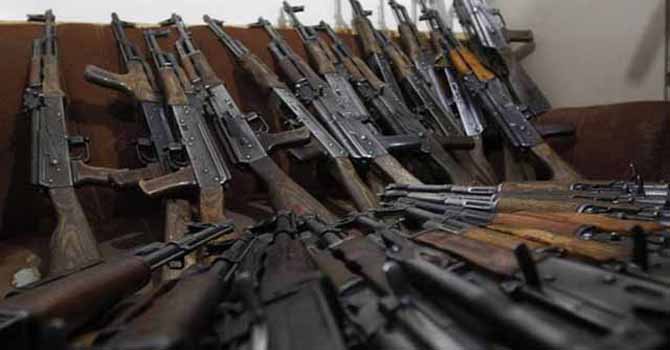
The first major arms accord since the 1996 Comprehensive Nuclear Test Ban Treaty would cover tanks, armored combat vehicles, large-caliber artillery systems, combat aircraft, attack helicopters, warships, missiles and missile launchers, as well as small arms and light arms.
It would aim to force countries to set up national controls on arms exports. States would also have to assess whether a weapon could be used for genocide, war crimes or by terrorists or organized crime before it is sold.
The United States — the world's biggest arms dealer — is ready to sign the treaty but its ratification by the US Congress is not assured.
Assistant US Secretary of State for International Security Tom Countryman predicted Thursday that other countries would join the objectors in voting against the treaty at the General Assembly.
But he added: “We think an overwhelming majority of states will vote in favor. I am happy to vote the opposite direction of such states as Iran, North Korea and Syria on this text.” Two major players in the arms trade market — Russia and India — have left others guessing how they would vote and could very well not sign the treaty.
Moscow, a major exporter of weapons, has said there are “omissions” in the treaty and “doubtful” provisions, such as the failure to control arms transfers to non-state groups.
Russia is particularly worried about weapons getting into the hands of Chechen rebels.
New Delhi, a major buyer, also heavily criticized the text.