Under a sunny sky and amid a cool breeze, the courtyards and gardens of the Alhamra Arts Centre were filled with chatter on Sunday as people mingled with authors, artists and academics on the second (and last) day of the Lahore Literary Festival.
“You feel like a rock star here,” commented British author William Dalrymple on the celebrity-like treatment writers get at literature festivals.
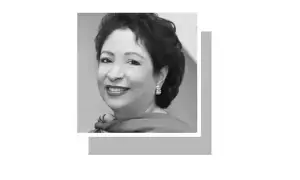
The impression gets strengthened by the sheer number of people trying to cram into already packed sessions of the festival. The morning started off with a session entitled ‘Commonwealth, Nationalism and Globalism’ –moderated by Muneeza Shamsie where Nadeem Aslam, Moni Mohsin, Jeet Thayil and Shehan Karunatilaka were panelist.
It started with Shamsie commenting on how some of the best of writing in the pre-colonial world was coming from migrant literature, black literature and the colonies. Shamsie asked the panel how one could write to cater to South Asian and international audiences alike, which steered into a conversation about writing in English. Mohsin spoke about how the (English) language was utilised in an international way but was localised too.
“We have taken ownership of a colonial language and made it our own,” said Mohsin, adding that by telling stories in English one can easily see how the language had changed, adapted and grown around the world.
Karunatilaka, Sri Lankan author of ‘Chinaman: The Legend of Pradeep Mathew’, said he never had an international audience in mind, adding that often when foreign countries are portrayed in popular culture one sees the protagonist “leaving in a helicopter, looking down at the mess he is leaving behind.” Therefore for Karunatilaka it was important to tell the story of the “little guy waving from down below.” Because his characters already spoke in English, the storytelling in the language was natural, he added.
As the discussion wrapped up, the panel seemed to agree that perception was a large part in forming the reception and opinion for their novels. Author Nadeem Aslam, who was a crowd favourite, going by the applause he received after every answer, said his book ‘The Wasted Vigil’ was received as a “dark book” in the West while in the East it was seen as a “beautiful book”.
“Here we know our darkness doesn’t define us. We have colour in us too. These are the challenges we know we have to negotiate,” he said.