QUETTA: Shia leaders on Friday publicly questioned Pakistani army chief General Ashfaq Kayani over security in the country after the previous day’s bombings aimed at the minority sect killed at least 102 people in Quetta, the capital of Balochistan province.
“I ask the army chief: What have you done with these extra three years you got (in office). What did you give us except more death,” Maulana Amin Shaheedi, a central leader of the Majlis-i-Wahdat-i-Muslimeen, told a news conference.
Most of Thursday’s deaths were caused by twin attacks aimed Hazara Shias in Quetta, where members of the sect have long accused the state of turning a blind eye to extremist militant death squads.
The leaders were so outraged at the latest bloodshed that they called for the military to take control of the city to shield them and said they would not allow the 82 victims of twin bomb attacks to be buried until their demands were met.
The burials had been scheduled to take place after Friday prayers but the leaders said the bodies would remain in place until Shias receive promises of protection.
Shaheedi said scores of bodies were still lying on a road.
“They will not be buried until the army comes into Quetta,” he said.
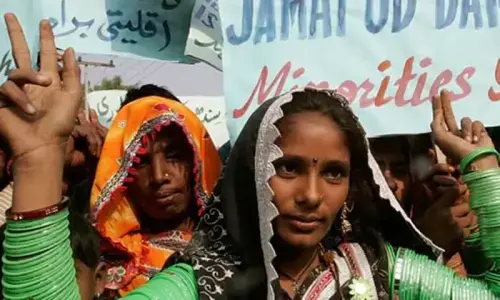
Violence against Pakistan’s Shia Muslims is rising and some communities are living in a state of siege, a human rights group said on Friday.
“Last year was the bloodiest year for Shias in living memory,” said Ali Dayan Hasan of Human Rights Watch. “More than 400 were killed and if yesterday’s attack is any indication, it is just going to get worse.”
The banned extremist group Lashkar-e-Jangvi (LeJ) claimed responsibility for the attack in a predominantly Shia neighbourhood where the residents are ethnic Hazaras, a majority of whom are Shias who first migrated from Afghanistan in the nineteenth century.
The LeJ has stepped up attacks against Shias across the country but has zeroed in on members of the sect who live in resource-rich Balochistan province.
“The LeJ operates under one front or the other, and its activists go around openly shouting, ‘infidel, infidel, Shia infidel’ and ‘death to Shias’ in the streets of Quetta and outside our mosques,” said Syed Dawwod Agha, a top official with the Balochistan Shia Conference.
“We have become a community of grave diggers. We are so used to death now that we always have shrouds ready.”
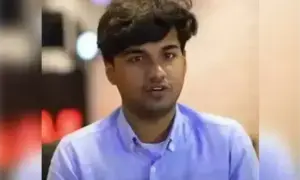
Among the dead in Quetta was Khudi Ali, a young activist who often wore a T-shirt with fake bloodstains during protests against the rising violence against Shias.
Ali’s Twitter profile said: “I am born to fight for human rights and peace.”
The roughly 500,000-strong Hazara people in Quetta, who speak a Persian dialect, have distinct features and are an easy target, said Dayan.
“They live in a state of siege. Stepping out of the ghetto means risking death,” said Dayan. “Everyone has failed them - the security services, the government, the judiciary.”