0
0

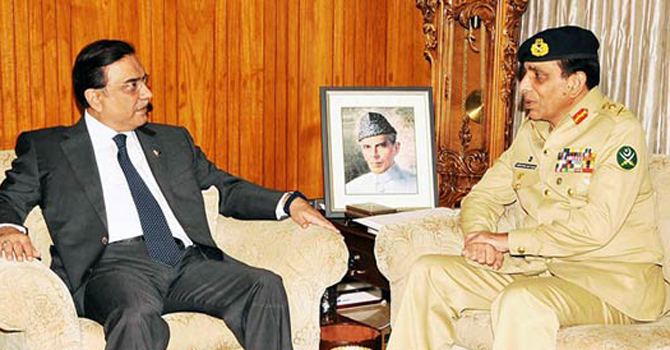
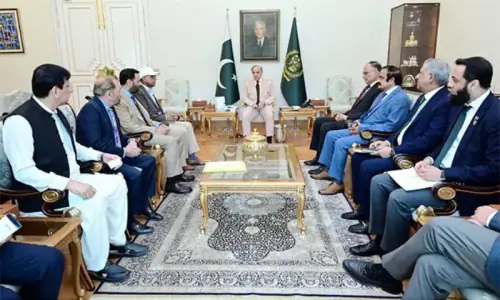
WASHINGTON: Pakistan’s three key leaders, the president, the army chief and the foreign minister, will be visiting the United States this month amidst renewed efforts to revive an important partnership in the war against terrorists, diplomatic sources said.
Foreign Minister Hina Rabbani Khar will set this process rolling with a three-day visit to Washington beginning Sept. 18.
She is expected to meet US Secretary of State Hillary Clinton and other senior officials of the Obama administration and explore the possibility of reviving the US-Pakistan strategic dialogue, which got derailed after the May 2 US raid in Abbottabad.
Relations between the two countries deteriorated further when another US air raid killed 24 Pakistani soldiers in November last year. In retaliation, Pakistan closed Nato supply routes to Afghanistan.
But relations began to improve in July when Secretary Clinton apologised over the Salala air raid and Pakistan reopened the routes.
Pakistan is now hoping to restart the strategic dialogue process and has urged the Obama administration to reactivate the non-military sector of this process, which includes economic support and energy assistance.
The foreign minister is also expected to push for a meeting between President Asif Ali Zardari and US President Barack Obama on the sidelines of the UN General Assembly in New York later this month.
Pakistan would like to announce the revival of the strategic dialogue process during or after the meeting. President Zardari is expected to arrive in New York on Sept. 24 to attend the UN General Assembly.
Dates for Army Chief Gen. Ashfaq Pervez Kayani’s visits have not yet been finalised but he is likely to come after the president.
During Gen. Kayani’s visit, defence establishments of the two countries will try to revitalise the ties between the two militaries. They worked very closely with each other during the cold war but have developed serious differences since the Abbottabad raid.
Although relations between the two militaries also have improved since July, serious differences over some issues remain unresolved.
The Americans continue to blame Pakistan for sheltering the Haqqani network and for allowing it to raid targets inside Afghanistan. They also want Pakistan to release Dr Shakil Afridi, who has been jailed for his role in helping the CIA trace Osama bin Laden in Abbottabad.
On Thursday, the Pakistani and international media reported that Pakistan is also deporting all foreign staff of Save the Children Fund for running a fake vaccination campaign for tracing bin Laden.
But on Wednesday, intelligence agencies of the two countries also took a major positive step when they agreed in Islamabad to provide safe passage to Pakistan-based Taliban leaders for participating in peace talks.
Pakistan is also believed to have informed the Americans that it would not resist US efforts to designate the Haqqani network a foreign terrorist organisation.
Secretary Clinton is expected to inform Congress by Sunday if the State Department is willing to place the network on its list of terrorist organisation.
Such a designation will also require Pakistan to help implement the restrictions that the US places on the Haqqani network. The failure to do so will put Pakistan on a list of states that sponsor terrorism and will have very serious consequences for the country.