“Equality, justice and fair play to everybody” were the ideals on which Quaid-i-Azam M.A. Jinnah expected Pakistani democracy to be built. These drove his devotion in his last decades to achieving the birth of Pakistan as an independent state, because he feared that India’s Hindu majority were incapable of treating its Muslim minority either justly or fairly.
As Pakistan’s first governor general, he insisted that every member of its civil and military services serve all its people while keeping in mind Islam’s greatest ideals of “brotherhood, equality and fraternity”. Opposed as he was to Hinduism’s caste system and the plight of its untouchables, Jinnah insisted on the need for Pakistan always to safeguard minorities “to whichever community they may belong … Their religion … will be secure. There will be no interference of any kind with their freedom of worship…. They will be, in all respects, the citizens of Pakistan without any distinction of caste or creed.”
This passionate faith in universal human rights was based as much on his devout belief in Islamic equality and justice as it was on his secular appreciation of English common law. “Remember that the scrupulous maintenance and enforcement of law and order are the prerequisites of all progress”, Jinnah told his new nation. “The tenets of Islam enjoin on every Musalman to give protection to his neighbours and to the minorities regardless of caste and creed.”
He felt most proud of having “achieved Pakistan ... without bloody war and practically peacefully by moral and intellectual force and with the power of the pen,” cautioning his followers not “to besmear and tarnish this greatest achievement for which there is no parallel in the history of the world”.
Jinnah was also enlightened enough to “sincerely hope” that Pakistan’s relations with neighbouring India would always be “friendly and cordial”, knowing as he did that “we can be of use to each other and to the world.”
Yet just a few months after their mid-August birth as independent dominions, India and Pakistan were at war over Kashmir.
Jinnah wished that conflict could swiftly be resolved, calling for “all-out efforts to restore peace and maintain law and order in their respective states … we should bury the past and resolve that, despite all that has happened, we shall remain friends. There are many things which we need from each other as neighbours and we can help each other in diverse ways, morally, materially, and politically and thereby raise the prestige and status of both dominions. But before we can make any progress, it is absolutely essential that peace must be restored and law and order maintained in both the dominions.”
Shortly thereafter Jinnah’s fatally weakened lungs gave out, and less than 11 months later he was dead. The Kashmir conflict has tragically continued to plague India and Pakistan. A quarter-century after its birth, Pakistan lost its eastern wing with most of its population, following another war with India that gave birth to Bangladesh Must Jinnah’s fondest dreams and highest hopes for Pakistan — justice and the rule of law — remain buried with him?
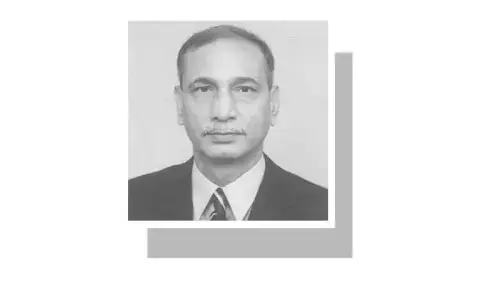
The writer is professor emeritus in Indian and Pakistani history at the University of California, Los Angeles, and the author of Jinnah of Pakistan.