0
0

WASHINGTON: The United States on Thursday exempted China and Singapore from sanctions over purchases of oil from Iran hours before a deadline, saying that major economies were united in pressuring Tehran.
The United States, however, did not grant exemptions to smaller-scale importers such as Pakistan and Afghanistan, meaning that banks from those countries could face punishment if they handle transactions for Iranian oil.
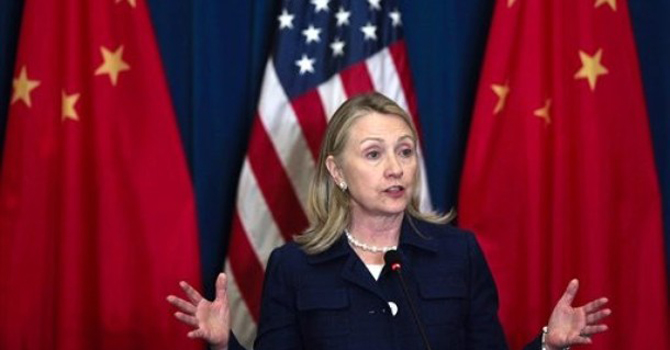
Secretary of State Hillary Clinton ruled that China and Singapore had “significantly reduced” their crude oil purchases from Iran, granting them exemptions on the final day before sanctions take effect.
Under a law aimed at pressing Iran over its nuclear program, the United States will bar financial institutions that buy oil from Iran, essentially forcing them to choose between Tehran and the world's largest economy.
Clinton credited the threat of sanctions with severely cutting Iran's crude oil exports and estimated that it cost the country some $8 billion in lost revenue each quarter.
The world's “cumulative actions are a clear demonstration to Iran's government that Iran's continued violation of its international nuclear obligations carries an enormous economic cost,” she said in a statement.
Numerous countries initially voiced concern about the US law. China and India had been among the most outspoken, initially protesting that their energy-hungry economies should not be beholden to US domestic law.
But US officials boasted that countries with vastly different relationships with the United States - from close ally Japan to sometime competitor China - all decided in the end that it was best to cut imports from Iran.
Clinton exempted members of the European Union and Japan in March and on June 11 did the same for India, Malaysia, South Africa, South Korea, Sri Lanka, Turkey and Taiwan. The exemptions are for a renewable 180-day period.
The United States held extensive talks with China and Singapore as the deadline loomed.
A US official praised a recent Chinese statement that its oil imports from Iran fell 25 per cent between January and May from a year earlier and that more reductions were due this year.
“I think there's an understanding on the Chinese side of the seriousness with which we're going forward with this,” the official told reporters on condition of anonymity.
The official highlighted effects of pressure including a cutoff in fuel supplies to Iran Air and shipping companies' reluctance to call on Iranian ports.
But Representative Ileana Ros-Lehtinen, the Republican chairwoman of the House Foreign Affairs Committee, criticized the Democratic administration, saying that China remained the single biggest purchaser of Iranian oil.
“The administration likes to pat itself on the back for supposedly being strong on Iran sanctions. But actions speak louder than words, and today the administration has granted a free pass to Iran's biggest enabler,” said Ros-Lehtinen, a staunch critic of Beijing and Tehran.
Israel and some Western officials fear that Iran is pursuing a nuclear weapon. Israeli Prime Minister Benjamin Netanyahu has not ruled out a military strike, leading the Obama administration to seek economic pressure on Iran to avoid war.
Iran's clerical regime has engaged in protracted talks with global powers and insists that its sensitive nuclear work is for peaceful purposes.
“I urge Iran to demonstrate its willingness to take concrete steps toward resolving the nuclear issue during the expert-level talks scheduled in Istanbul” on Tuesday, Clinton said in the statement.
“Failure to do so will result in continuing pressure and isolation from the international community,” she said.
A US official said that the administration has exempted all “significant” buyers of Iranian oil. But Clinton has not made exceptions for smaller-scale importers such as Iran's neighbors Pakistan and Afghanistan.
The countries will not face sanctions as a whole, but their financial institutions will now be subject to bans in the United States if determined that they have dealt with Iran's central bank to arrange the purchase of oil.
Singapore has said that it imported practically no oil from Iran in May.