0
0

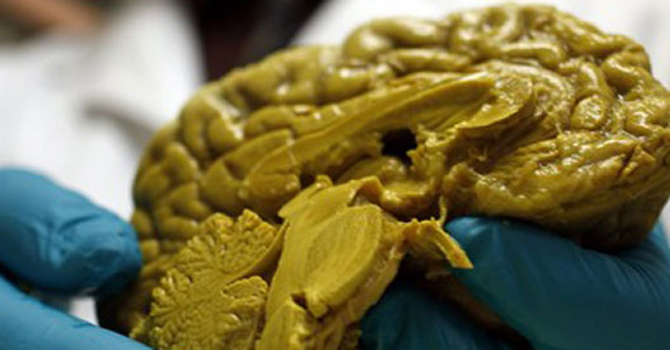
PARIS: Scientists claimed Tuesday to have pinpointed the genes most responsible for schizophrenia in a breakthrough they say will allow better diagnosis and treatment of the debilitating mental illness.
In a study involving genetic information from thousands of schizophrenia patients as well as healthy controls, the researchers said they identified hundreds of genes that can show who is most at risk.
“We broke the genetic code for schizophrenia, identifying many of the genes involved and how they work together to produce the illness,” study author Alexander Niculescu of the Indiana University School of Medicine in Indianapolis told AFP.
“By better understanding the genetic and biological basis of the illness, we can develop better tests for it as well as better treatments.”
Such tests could be used to determine whether children in families with schizophrenia were at risk of developing the illness, said Niculescu.
“If they are determined to be at higher risk, then they would be followed more closely by doctors, told to avoid stress, alcohol and drugs, treated with counselling, nutritional supplements (like Omega-3 fish oil capsules) and even anti-psychotic medications early on to prevent the development of full-blown illness.”
The findings are published in the Nature journal Molecular Psychiatry.
Schizophrenia patients typically hear voices that are not real, tend toward paranoia and suffer from disorganised speech and thinking. The condition is thought to affect about one in every hundred people.
Niculescu said that after pinpointing the genes involved in schizophrenia, the research team tested their findings in other patients outside the study group “to show that the results were reproducible and have predictive ability”.
Genetic studies in psychiatry often tended to produce initial excitement, he said, “but are then not reproduced in independent populations, which is the most important proof that a finding is solid and real.”
The team also used brain data from mice put on drugs to mimic schizophrenia.
“Some of the genes and biological mechanisms we identified can be used for new drug development,” said Niculescu.
It could also be used to redirect drugs currently used to treat other disorders.
Niculescu stressed that “genes are not destiny”.
“The environment plays a role as well. The genes we identified play a role in brain connectivity, so can lead to more creativity in certain individuals or clinical illness in others, depending if you have too many of these genetic mutations, in the wrong combination and in a stressful environment.”