The Indian air force had been carrying out reconnaissance flights over West Pakistan during December, 1971, along the 2,430-km border. No sooner had the East Pakistan operation been launched than Pakistan got reports about Indian intentions on West Pakistan, especially the November 9 CIA report which cautioned Nixon and Yahya Khan that India wanted “to change the borders of West Pakistan too and destroy the Pakistan Army”.
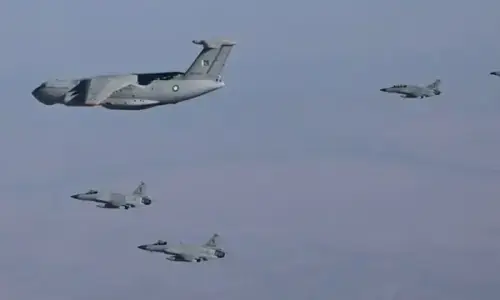
In a bid to frustrate such plans, Pakistan launched pre-emptive air strikes on Indian bases nicknamed Operation Changez Khan on the evening of December 3, 1971. Indian air bases at Amritsar, Agra, Srinagar, Pathankot, Jodhpur, Ambala, etc., were bombed. This led India directly into attacking the western wing which it wanted from the day the crisis in East Pakistan had began. India retaliated immediately and from the night it bombed Pakistan airfields and vital installations. The Indo-Pakistan war of 1971 had begun. Pakistan was now engaged on two fronts. While Indian air force attacked Pakistani installations every day, the Indian navy launched an attack on the Karachi port — the lifeline of Pakistan. Called Operation Trident the Indian navy used missile boats which damaged Pakistani destroyer PNS Khyber and a minesweeper PNS Muhafiz on the night of December 4 and 5.
Pakistan Navy suffered another loss when its submarine PNS Ghazi sank in the Bay of Bengal, where India had enforced a naval blockade of East Pakistan. Here India’s only aircraft carrier Vikrant was deployed not only to carry out a naval blockade of Bay of Bengal but to undertake air attacks inside East Pakistan. This also made East Pakistan navy ineffective. India too suffered a loss of a frigate INS Khukri near Karachi on December 9.
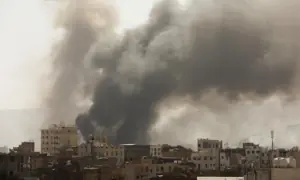
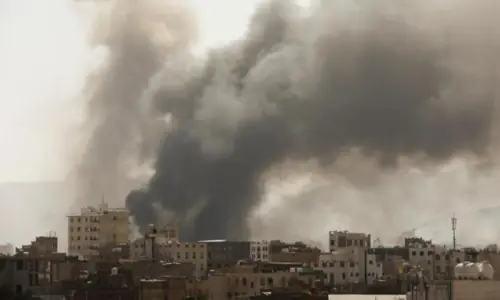
After the first round of air force and naval attack on Karachi on December 4, India wanted to cripple Pakistan by blocking the Karachi seaport. Pakistan Navy retaliated by bombing Okha harbour in Gujarat and its fuel reserves, but three days later the Indian navy undertook another operation against Karachi titled Operation Python on the night of December 8 and 9, and sank three merchant navy ships but the loss of oil reserves at the port was severe. All 22 fuel tanks were ablaze for three days. After December 8, Karachi seaport virtually stopped operating. Trade stood still. Besides the damage caused to the naval facilities at Karachi harbour, the attacks caused serious damage to civilian life and material. In their air attacks the Indian pilots missed their targets and the heavy explosives fell upon the civilian population like in the neighbourhoods of Gulbahar, Agra Taj Colony, and the like. This created panic among the citizens and many moved houses. The people from upcountry living in Karachi rushed to their hometowns. The naval and air attacks on Karachi continued till there was a ceasefire after Dhaka fell.
After the December 3 situation, the Indian air force bombed the air bases in Punjab and Kashmir and the infantry pushed through Sindh, Punjab and Kashmir. Here the Indian army stayed till the final withdrawal truce. As the war had flared up, world leaders regained new efforts for considering ways to stop it and bring the parties to the negotiating table.
Indira Gandhi, with large armaments on both fronts without declaring war on Pakistan, had written a letter to Nixon on December 5, claiming that war had been thrust upon her. She asked the US president to exercise his influence on Pakistan to stop fighting and “…to deal immediately with the genesis of the problem of ‘East Bengal’ which has caused so much trial and tribulations to the people not only of Pakistan but of the entire subcontinent”.
The next day (December 6), Gandhi spoke at the Indian parliament and announced the recognition of East Pakistan as Bangladesh. This happened when the UN Security Council which had begun its session on December 4, was still discussing ways and means to stop fighting. After three days of deliberations the United States moved a resolution demanding immediate ceasefire and withdrawal of the troops. The resolution was quickly vetoed by the Soviet Union, defeating this belated attempt.
On December 8, the day the UN General Council adopted a resolution with a majority of 104 votes, Nixon and Kissinger did not seem satisfied with the developments as they apprehended that Indian invasion of West Pakistan would mean total Soviet domination of the region. To show sympathy with Pakistan, the United States on the same day sent planes and military supplies through Iran, Jordan and Saudi Arabia, and encouraged China to increase arms supplies to Pakistan.
They also ordered to send the Seventh Fleet Enterprise and other naval forces into Bay of Bengal, for, according to the US State Department, Foreign Relations, 2005 report, preventing a “Soviet stooge supported by Soviet arms” from overrunning an ally. The Soviets in turn sent 16 ships in two groups of gunboats, cruisers, destroyers and a nuclear submarine, but apparently combat was not their mandate.