5
5

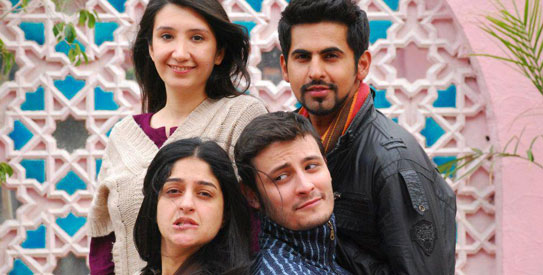
ISLAMABAD: What does it take to be part of a world class effort? Endless trips from Lahore to Islamabad and a sense of displacement might be Osman Khalid Butt’s answer.
Osman is one of the most recent additions to the cast of Taming of the Shrew – one of the 37 plays being produced by teams from 37 countries to be performed in London’s Globe to Globe festival in May as part of the 2012 Cultural Olympiad.
Being done under the purview of the theatre company Theatrewalay and Kashf Foundation, the production is very much Lahori and a new experience for the rising ‘pretty boy’ 26-year-old Khalid Butt who has made himself distinguished in the Islamabad art circles but is new to the Lahore experience.
Hardly deterred by the somewhat foreign nature of the experience, he is all praise for the experience of working with seasoned artists like Nadia Jamil, Omair Rana, Salman Shahid, and director Haissam Hussain.
And this might be the recipe for success in the international forum this quirky and professional group of thespians is preparing for.
“I want this to be the best play among the 37 countries,” declared Haissam Hussain, the current director of the play who bags plenty of direction experience in television.
But what does it take to attain such quality? A quest for perfection by each person involved, but also: “The trump card of this play is that even if a character appears for just five minutes, he will be memorable,” was Osman’s answer.
Adapting a Shakespearian play to an entirely different culture, however, is no doubt a challenging task. It has been set in Lahore in the 70s at the time of Basant and given a festive feel.
“How have you ensured that you can pull off its translation and adaptation to suit our culture successfully,” I asked the director.
“Look, the story of this play is very Pakistani. A man wants to marry his two daughters. The younger is likable and pretty but the older one is stubborn and the man will not let his younger daughter marry until the older one is out of the way. What is not Pakistani about this story,” asked Haissam in reply.
“The first time I walked into rehearsal and saw a scene, my jaw dropped because it was done so well and translated so perfectly to the Pakistani context,” declared Osman.
Like him, the other actors and director also had high praises for the script. However, the play’s multicultural and international audience means that the play has to be equally entertaining for those who understand Urdu and those who do not.
Maria Khan, the stage manager and one of those members who have seen the play evolve over its year-long preparation period put it simply:
“When we started, it was a pretty serious project. We would go to rehearsals and come back. It was not a part of our reality. But now, it has become a part of our lives. Slowly the characters have come to life so that I see Kirans (lead female character) and Rustams around.”
Even though this is the only production among the Globe’s 37 that does not have a source of funding covering all the expenses, the cast’s enthusiastic efforts struggle on with austerity as they strive to find sponsors.
“This is an intelligent comedy. Witty, engaging, no fluffs – it challenges the audience and I guarantee that it is not predictable. You will not guess what is going to happen,” assured Maria.
And what more can one really expect from a play?