0
0

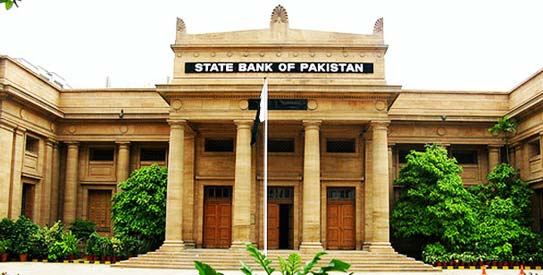
The State Bank of Pakistan’s Annual Report 2010–11 provides conclusive evidence that market-based monetary policy is causing serious harm to the national economy, and return to credit planning is urgently necessary.
The SBP is dimly aware of the inefficacy of its inept policies. It admits that, “in spite of active monetary management FY11 turned out to be yet another year of double digit inflation and (exceptionally) low growth. Both inflation and growth targets were not met.”
Indeed inflation in FY11 exceeded the target for the SBP’s original year by about 30 per cent and it has failed to hit its original inflation targets for the last six years.
The central bank remains committed to the Voodoo economic dogmas which ascribe inflation and money supply targeting as the sole monetary policy objective – this despite the overwhelming evidence of the failure of market based monetary policy in that lowering inflation does not as of itself lead to a realisation of potential output growth anywhere in the world.
The State Bank failed on its own terms – it has failed in achieving its inflation rate targets for six consecutive years. Average inflation rose from 10.1 in FY10 to 13.9 per cent in FY11. There is no attempt in the SBP report to estimate the extent to which rise in prices was due to the flood of summer 2010. Instead the report notes that, “we believe that a double digit increase in prices was inevitable anyway.” According to the report “prices of items for which production and supply remained unaffected by the floods also rose appreciably.” The bank provides no estimates of the extent (if any) to which this was due to rising world commodity prices.
The bank holds the government responsible for rising inflationary expectations but again no empirical evidence is presented to sustain this claim. The percentage of commodities experiencing double digit inflation increased from 29 in November 2009 to 55 per cent in July 2011. In how many of these cases can we attribute the rise in prices to government deficit financing, to the withdrawal of subsidies, to supply constraints, to effect of the floods? No empirical analysis is presented by the SBP to address this issue. Its blaming the government for accelerated inflation – and its refusal to acknowledge the failure of market based monetary policy – amounts to little more than conjecture. In any case the State Bank regards “removal of subsidies as necessary.”
Parenthetically, it may be noted that FY 11 inflation estimates have been artificially lowered by changing the CPI base year from FY 01 to FY 08, lowering the weight of the food sub-sector from 40.34 to 34.83 per cent in CPI. The net effect is to reduce year on year inflation estimates for FY11 by about seven per cent.
Reducing inflationary pressure is neither an SBP nor a government policy priority. Both have set an inflation target of 12 per cent for FY12. Senior SBP officials have six figure monthly salaries and are least bothered about the continuing double digit inflation. The report is entirely silent about the devastating impact of double digit inflation or poor income groups although it recognises that, “income inequality has increased during 2006–11” and the income of the poorest 40 per cent of the population has recorded negative annual income growth during FY08-11 while “the income of the rich segment of the population has grown higher than average.”
In previous reports the differential impact of inflation on income groups had been presented (SBP report FY10), why not in the current report? Because improving the income distribution pattern has been taken off the agenda of the government and the SBP.
A reading of the monetary policy chapter in the FY11 report gives the impression that the only policy instrument currently used by the SBP is variations in the policy rate. It did of course use OMOs but for some (not so )mysterious reason, no mention at all is made of these and there is literally nothing on money market interventions and trends in the FY11 report, again unlike previous reports where the SBP money market operations were described in detail.
The SBP raised the policy rate from 12.5 in July 2010 to 14 per cent in November 2010 and held it at that level during the rest of FY11. It admits that “despite monetary tightening the inflationary outlook continued to worsen.” What then is the justification for raising the policy rate or holding it at a higher level than any other country in South and South East Asia during FY11.
In a footnote, it says: “if the SBP had not continued with monetary tightening annual inflation would have been significantly higher.” Why should we believe this? No evidence is presented in the report that increase in the policy rate lead to an across the board increase in money market rates and loan rates and this had a significant negative impact on price growth.
As noted earlier, the report paradoxically contains no discussion at all of the SBP’s money market operations. The report shows that sales of government TBs by the SBP significantly exceeded purchases during FY11 in the secondary market but in the primary market SBP injections exceeded absorptions. Rate of return on both absorptions and injections rose but well below policy rate levels throughout the year and rates of return continued to rise during the second half of FY11 when the policy rate was held constant. An examination of monthly data shows that movements in KIBOR and call money rates were erratic and close correspondence with changes in REPO and reverse repo rates is weak.
Moreover, there is little evidence of a close correspondence between movements in the policy rate on the one hand and bank deposit and advance rates on the other during FY11 which were not stablised when the policy rate remained unchanged. No evidence whatever is presented on the relationship between movements in the structure of interest rates and prices.
Empirical research at CBM shows that pass through of the interest rate channel of policy rate shocks to price and output is almost non-existent before 18 months and extremely subdued even thereafter. It is the bank’s inability to show that variations in policy rates have any impact on prices and output which accounts for the total absence of any discussion of its money market operations from the FY11 report. The report claims that, “increasingly within the SBP, there was realisation that activities are largely constrained by supply side factors.”
The SBP report attempts to estimate the gap between actual and potential output and finds that since FY05 actual GDP has been well below potential GDP in each year since 2006. This is due primarily to the catastrophic fall in fixed investment that Pakistan has been experiencing.
According to the report, “the investment to GDP ratio has fallen by nine percentage points in four years and stood at 13.4 per cent in FY11, the lowest level since 1974. The capacity built-up in the past is no longer being utilised. It seems the economy has settled down to a low growth high inflation environment stagflation.”
The State Bank boasts that its “policy stand contains the demand supply gap.” But this containment is achieved by the SBP suppressing investment and saving and the consumption of the poor whose income declined by almost two per cent in FY11.
The marginal saving rate had fallen to as low as three per cent in FY11 compared to almost 20 per cent during 2001–08.
The contribution of investment to aggregate demand fell from an average of about 20 per cent during 2001 – 08 to just 3.7 per cent in FY11. Real investment has fallen now for the third consecutive fiscal year and public investment (PSDP) has been drastically reduced to insignificant proportions.
All sectors of the economy have experienced negative investment growth during FY11. Production of capital goods has fallen by almost 40 per cent and import of capital good has declined by nearly 20 percent in FY11 although aggregate imports grew by 16.5 per cent that year. Most alarmingly investment has fallen sharply in the leading edge telecommunications sector. Total foreign direct investment fell by 27 per cent in FY11 and is now at its lowest level for six years.
I agree with the SBP’s assertion that a cheap money policy would not remove supply side constraints and boost investment. As long as market based monetary policy is in vogue, it will continue to have disastrous macroeconomic consequences. This is because money supply has been endogenised by market based monetary policy. In countries which practice market based monetary policy, money supply is no longer a policy variable under the effective control of the central bank. Money supply level (and the price of money) is determined by profit maximising financial institutions in domestic and foreign markets. In such an economy, the central bank is forced to adopt a passive accommodative role, playing second fiddle to money market forces. This was demonstrated by Luigi Passanetti and Nicholas Kaldor more than half a century ago and the current ineptness of the European Central Bank graphically illustrates this same point.
Several econometric studies at CBM and PIDE have shown that money supply has been endogenised in Pakistan. It has been endogenised deliberately by switching over from credit planning to a market based monetary policy regime. The State Bank no longer reveals its broad money (M2) targets. But M2 growth has been out of control since at least FY08. In FY11, M2 grew by 15.9 per cent. Today reserve money is only 30 per cent of broad money and the net foreign assets (NFAs) of the SBP to Mo ratio is 31 per cent.
This means that SBP directly controls only about 21 per cent of broad money, eighty percent of aggregate money supply is provided by those who supply the domestic and foreign assets of the banking system– the government, private bank sector borrowers, foreign donor government and multilateral agencies.
Net foreign assets over which SBP has lost all control due to the phasing out of controls on both current and capital account transaction grew by 43.1 per cent in FY11, when M2 grew by 15.9 per cent only. NDA grew by 13.1 per cent only and the share of net foreign assets in M2 rose from 15.8 per cent in FY10 to 27 per cent in FY11.
The NFA growth was almost entirely due to “flows from multilateral institutions logistic support (funds for participating in the American war on terror) and other foreign grants.” NFA of scheduled banks contracted by 0.2 per cent in FY11. There was a significant decline in scheduled banks’ placements in NOSTRO accounts as exporters and importers switched from the increasingly expensive Exports Financing Scheme (EFS) financing to foreign currency loans. NOSTRO accounts declined by over Rs20 billion in FY11.
The decision to phase out subsidies and support programme is reflected not only in rising EFS loan rates but also in the decline in lending to public sector enterprises and commodity operations financing. On the other hand, government borrowing for budgetary support dominated NDA growth. The government borrowed more than a trillion rupees (Rs590.2 billion from SBP and Rs424.0 billion from the scheduled banks) from the banking system.
This borrowing is becoming increasingly expensive as the government is unwisely shifting from the SBP to commercial financing sources, exacerbating inflationary pressure. An increase in government borrowing is a welcome step when conditions of economic stagnation exist and the Voodo economics inspired lament of the State Bank against expanded deficit financing is entirely misplaced. The issue is not how much the government borrows but what it does with the borrowed money.
The real question is: why has total development expenditure of the government fallen from Rs414.3 billion in FY10 to Rs302.7 billion, in FY11 (a fall of about 27 per cent) when borrowings from the SBP rose from Rs330.4 billion in FY10 to Rs590.2 in FY11 (a rise of 79 per cent). The money being borrowed by the government is being wasted and as long as the State Bank adheres to market based monetary policy it can do nothing to check this waste.
There is no doubt that the People’s Party government shares the SBP’s commitment to Voodo economics. The federal finance secretary is a member of the SBP’s board of directors – and he has written no note of dissent to the report refuting the State Bank’s persistent (often spurious) complaints against the government which are spread throughout every chapter of the report. The State Bank insists on imposing bouncing limits on governments then why does it not insist on bouncing limits on waderas, the land mafia and industrial oligopolists?
The government’s endorsement of the Voodo economic policy paradigm is reflected in the 58 per cent fall in credit extended to public sector enterprises in FY11 and in the net retirement of commodity finance loans which declined by Rs16 billion during FY11. This is described by the SBP “as one of the few positives during the year,.” while food shortages built up especially in Sindh). Wheat procurement fell short of target and government continues to refuse to disburse subsidy receivables to procurement agencies.
———————————————————————————————————————————————————
The private sector is a major victim of market based monetary policy. The credit to GDP ratio has fallen from 28.6 in FY08 to 17. 4 per cent in FY11. Pakistan continues to suffer from a prolonged investment strike; 94 per cent of the bank credit extended during FY11 was for working capital and trade financing Fixed investment loans fell from Rs62.1 billion in FY10 to Rs11 billion in FY11. Loans were heavily concentrated in sugar industry, reflecting the political influence of the ruling waderas. Credit concentration has increased and SME sector loans have been squeezed out.
A significant feature of the 2011 report is its almost total silence over the performance of the banking sector. This is again due to the deteriorating performance of banks. Non-performing loans have sky rocketed during FY11 with the NPL to loan ratio increasing from 12 per cent in FY10 to 15 per cent in FY11 The NPL to advance ratio exceeds 27 per cent in the case of credit cards and 15 per cent in the case of personal loans. The provisions to NPL ratio has declined from 73.2 per cent in FY10 to 69.7 per cent in FY11 – it was as high as 87 per cent in FY07. The NPLs volume has risen from Rs173.2 billion in 2006 Rs580 billion in FY11 – a cumulative increase of over 225 per cent.
Return on assets in the banking industry remained a miserable, 1.4 per cent in FY11 and the capital adequacy ratio did not improve despite the fact that the spread between the weighted average rate of return on loans and deposits remained as high as 8.93 per cent. While CPI inflation averaged 13.9 bank, depositors received an average rate of just 4.5 per cent. Interest spread was particularly high for Islamic and foreign banks.
The exploitative character of banks is illustrated not only by the extremely low rates paid to depositors but even more graphically by their advances policy. Thus in 2011, small depositors (with deposit accounts of less than Rs1 lakh each) deposited a sum of Rs789.9 billion but received loans worth only Rs83 billion. As against this, the largest depositors whose accounts worth more than Rs10 million each) had total deposits of Rs1.924 trillion while they received Rs2.573 trillions in loans.
Thus the rich received Rs694 billions more than their deposits and the poorest bank clients received Rs706.9 billion less than their total deposits. Thus over the years deposits of the poor bank clients are methodically transferred to finance the rich. Every year the scheduled banks are used as a mechanism for transferring financial resources from the poor to the rich worth hundreds of billions of rupees. This exploitation has continued unaltered over the last two decades and as long as market based monetary management remains in place this institutionalised victimisation of the poor will continue to flourish.
Market-based monetary policy is a disaster. It is an instrument for subversion financial sovereignty of the country. It transforms the central bank into a neocolonial currency board. The State Bank has lost control over money supply, the level of which as well as the structure of interest rates is determined to ensure profit maximisation by deposit taking institutions and by the preferences of foreign constituents. The financial system no longer remains an instrument of national development. Savings and investments levels fall partly because the profit maximising financial institutions cater to existing profit maximising opportunities rather than realising the long-term economic potential of the economy. Credit becomes very heavily concentrated in the hands of the rich and the banking system becomes an instrument for the vicious exploitation of the poor.
The report discusses sectoral supply constraints in detail but its analysis can identify no monetary policy initiative that can be taken to relieve these constraints. This is because market based monetary management leaves no room for any monetary policy initiative to address supply side constraints.
Market-based monetary policy must immediately be abandoned and strict and comprehensive credit planning be reinstituted. Credit planning was highly successful during 1978–91 when the SBP itself determined differential interest rates, fixed banks credit limits and strict credit controls on both capital and current account were in place. We must immediately: Abolish the money market; nationalise all financial institutions; revert to full-fledged credit planning with determination of credit limits and credit cost by the SBP; and introduce stringent capital controls on both current and capital account transactions. These steps are necessary to restore Pakistan’s sovereignty and to re-establish the SBP’s control over money supply and price of credit.
The writer is the Dean, College of Business Management.
*The Author is Dean College of Business Management.