0
0

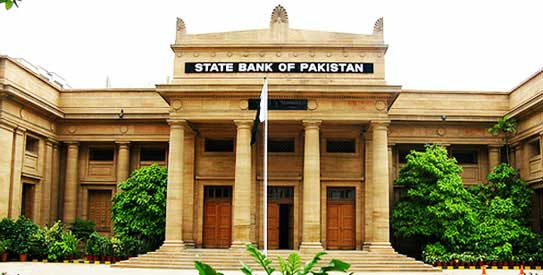
KARACHI: The country’s economy may face more crisis in 2012 amid record domestic debt and falling foreign exchange reserves with steep devaluation of local currency.
The State Bank’s latest information shows government’s domestic debt for budgetary borrowing reached record Rs857 billion in first six months and may touch Rs1.5 trillion if it continues to borrow at the same pace till the end of the current fiscal year.
For market watchers and analysts, the situation is alarming from all angles, including the fiscal and external fronts.
They said the domestic borrowing for the fiscal year 2011 was half a trillion rupees while the current account was surplus by $268 million which is now negative $2.104 billion in five months of this fiscal year.
The imbalances on external front put enormous pressure on exchange rate, particularly in the wake of drying up of foreign inflows, including loans and aid.
“Emergence of weakness in the external account along with SBP restoring the forward cover facility and impact of IMF’s loan repayment of $1.2 billion on foreign exchange reserves exerted pressure on the rupee towards the later half of the year,” said a research report issued by the Topline Securities.
Overall, the local currency depreciated by 4.9 per cent against the greenback in 2011 with 4.5 per cent devaluation coming in the second half of 2011 alone.
The foreign exchange reserves which were $18.3 billion in July fell to $16.7 billion in the last week of December.
“Depreciation against dollar is the order of the day for the entire regional currencies. Indian rupee lost 18.3 per cent against the greenback while Bangladesh, Sri Lanka and Pakistan lost 3-5 per cent in 2011,” said Anwar Jamal, a currency expert and dealer.
“Pakistani rupee will remain under pressure in 2012 as dollar demand will remain high due to shortage,” he said.
Analysts said the energy crisis continued to mar country’s economic growth while fiscal indiscipline eroded any hope for better performance of economy, including revenue generation.
The shortage of revenue has attracted more taxes on gas and petroleum products which inflated the entire economy and forced the State Bank to stop further easing of monetary policy.
The State Bank slashed the policy interest rate by 200 basis points in 2011 believing that inflation would continue to fall but it started gaining weight and remained above 11 per cent.
“The energy shortage and fiscal indiscipline were subsequently reflected in the central bank monetary policy stance that instigated the monetary easing process slashing policy rate by 200 basis points, but have recently halted the process as weakness on the external account has emerged,” said Mohammad Sohail, CEO of Topline Securities.
The State Bank recently reported that the government’s borrowing from commercial banks in the first half of the current fiscal year surpassed the borrowing it made during the entire fiscal year 2011.
This borrowing has eliminated the private sector from this cash market, forcing them to close down or limit their economic activities.
Analysts said the heavy-weight textile industry witnessed a mixed year, ranging from a sharp fall in cotton prices from its all time peak levels to energy crisis. Cotton prices peaked in March 2011 resulting in windfall gains for the textile chain during the first half of 2011. However, since then prices have tumbled to Rs5400 per maund (down 58 per cent from its peak) due to growth in cotton output.
“Gas shortage in the country, especially during the ongoing winter season, has put more burdens on the sector. Hence, the textile sector has so far underperformed in the local bourse by a massive 19 per cent,” said a research report of JS Securities.
It said since the start of the year, the country has faced acute gas shortages resulting in massive production losses or reliance on expensive alternate fuel, such as diesel.