0
0

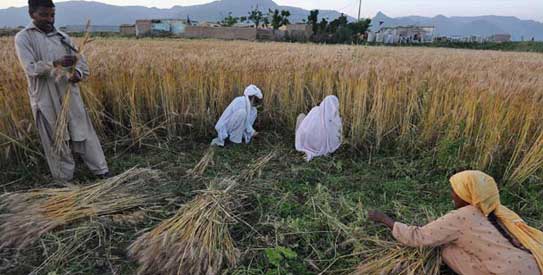
The recent monsoon rains have played havoc with the lives of the poor peasants of Sindh compelling them to abandon their hearth and home and take refuge in relief camps.
A middle-aged peasant Lagasht Meghwar in a relief camp of Matiari district’s Katchi community says: “We arrived at this camp from Tando Jan Mohammad after having been uprooted by heavy monsoon rains, with no other option left with us. We hope to return to our native village soon after the situation improves.”
Till then, he said, his family would have to remain dependent on relief provided to it for survival.
Many peasants like Meghwar have ended up in so-called relief camps which offer virtually nothing. Others had to move to different districts after their villages were inundated and their livestock, the source of their livelihood, lost in the deluge. Loss of cattle on the eve of Eidul Azha is a huge financial loss for them.
Whatever animals have been left with them are dying of diseases, they say.
Their children remain without clothes exposed to vagaries of weather and prone to waterborne diseases and infections. These ‘haris’ are also facing risk of malaria and dengue fever under the open sky and shabby camps amidst accumulated filthy rainwater.
This marginalised community is more vulnerable in the present situation; even otherwise poor peasants do not have access to health or civic facilities.
It was the same peasantry which was uprooted by super floods last year. A large population was affected as flashfloods which inundated whole of the riverine area on both sides of River Indus besides devastating settled areas of seven right bank districts.
These peasants, at that time too, had ended up in relief camps. Those belonging to non-Muslim communities like Kohli, Bheel and Meghwar had complained of discrimination.
Many farm workers’ families — hit by last year’s floods - didn’t have computerised national identity cards (CNICs). They could not claim monetary help of Rs20,000 given by federal government through Watan Cards. The government plans to issue Pakistan Card to rain-affected people again. But the issue of non-availability of CNIC is still there.
Farm workers say that they work for their landlords on crop-sharing formula. Under this formula, the landowner hands over specified acre(s) of his land to different families of peasants for cultivation of crops. The ‘haris’ take care of the crops till their maturity. They share the expenses of inputs including seed, fertiliser and pesticides.
“We pay cost of tractor used for ploughing lands while the landowners pay land tax and water charges,” says Meghwar. He had cultivated nine out of 76 acres of Mir Naseer Khan Talpur’s farmlands in Tando Jan Mohammad of Mirpurkhas district on crop-sharing basis. But rains made him suffer heavy losses.
He had cultivated tomato, cotton and chilly on three acres each of the nine acres. “We will not get a single penny this time. Still we have to share the cost of cultivation expenses. Landowner will not forego it,” he says.
Meghwar is not the only one; many others would have to share the same fate. According to Ali Asghar Kalhoro, he lost crops on 18 acres. He had grown sugarcane on 15 acres, rice on two acres and cotton on one acre in village Haji Manthar Kalhoro, Matiari.
“I think we would have got Rs200,000 out of cane’s per acre yield,” he says. His house has also suffered major damage due to rains. He says he will not earn anything. “We spent Rs50,000 per acre on cane cultivation. Our landowner is not supporting us as he himself is in financial trouble,” he says.
The landowners have suffered enormous losses in cotton, rice and sugarcane, the major kharif crops, due to heavy rains. But given their financial position they will still be in a position to sustain losses as compared to their tenants. Only a few landlords will come forward to offer monetary support to their peasants. These are testing time for farm workers.
A progressive farmer, Nadeem Shah of Matiari, claims that landowners like him keep all records of their peasants. Each peasant is responsible for per acre yield out of the land given to him for cultivation.
“We make additional payment to peasant women for harvest of crops like cotton. This payment is not to be adjusted towards expenses of crop as it is an incentive for farm workers,” he says. But, he argues, landowners have sustained huge losses too.
Lands remain submerged under four to five feet of rainwater in most of the affected districts that produce wheat.
The saline water and rainwater drains are flowing at full capacity making the process of de-watering of lands difficult.
The government has not made arrangements to drain out rainwater from agricultural lands. As long as water is standing in the fields, prospects of wheat sowing in this Rabi area remain murkier. Many families of peasants may miss Rabi crop cultivation.