0
0

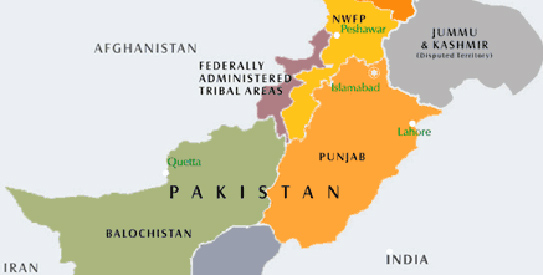
THE federating units have been provided with the much-needed energy as well as space by the latest NFC award and the 18th amendment to integrate more vigorously their respective economies for speeding up modernisation of farming and agro-based industrialisation.
And it is an opportune time for the developed industrial/urban centres to lead growth in the country’s backward regions.
The issue of integration is of particular importance to Sindh whose capital, Karachi, a leading industrial, commercial and financial centre, is capable of radiating growth in its immediate hinterland. This is demonstrated, for example, from a dozen wind power plants being set up in the Gharo-Jhumpir wind corridor by the city’s investors.
Karachi’s resources and professional expertise could prove an asset in the overall socio-economic development of the province and in bridging the wide gap in rural-urban incomes. The city investors can set up a wide range of facilities like silos, cold storages, sprinkle irrigation system, modern dairy farms etc to boost agricultural and livestock outputs and save harvests from damage. Interestingly, many poultry farms have been shifted from Karachi to the interior of the province to cut costs. Also urban dwellers are now more actively engaged in livestock trading than ever before.
So far the port city has been more exposed to the domestic and international markets and less to its immediate hinterland.
With the flight of capital abroad almost drying up, investors have no option but to look at the avenues for capital spending in the domestic market and particularly within the provincial boundaries to economise on transportation costs. It is an era of devolution.
But there are two or three major impediments in what may be described as ‘agriculture manufacturing’. Traditionally, there has been a net transfer of resources from rural to urban areas and this has deprived the countryside of the required resources to invest in modernisation of farms and increase productivity of crops. However, the recent wheat support prices ( serving as a benchmark) and high international prices of primary commodities have helped agriculture move towards a correction course.
But substantial gains in growers’ incomes have also been eroded by abnormal rise in prices of farm inputs like fertiliser. It is often forgotten by stakeholders that without a sound agriculture, the country’s economy cannot prosper. There has to be an equitable distribution of income among all segments for a harmonious development of the provincial/ national economy.
Equity has to be at the centre of economic development to avoid boom and bust cycles.
For the past two years, crops have been damaged seriously by floods and heavy downpours. In absence of modernisation, agriculture is enormously exposed to the vagaries of Nature.
In case of Sindh, however, the integration of the provincial economy becomes a more complicated issue by politics and economics pulling in opposite directions because of the multi-ethnic character of the city’s population. The ‘ethnic self-assertion’ often tends to shed the ‘ spirit of collectivism’, degenerating into the worst form of violence. The situation is worsened by the criminal elements within the fold of political parties. In the absence of ‘unity in diversity’, the ethnic divide is a lag in the modernisation of rural Sindh and a fetter in further development of the port city of Karachi. When Sindh suffers, Pakistan does not escape its impact.
What is lacking in various vocal ethnic segments is the will to co-exist on the basis of ‘live and let live’ and to settle controversial issues on the basis of ‘give and take.’ The political divide is an impediment in developing a viable provincial economy. All ethnic groups, parties and individuals need to refrain from saying and doing things that create mutual hatred for each other. Otherwise, this would take the province and the country towards a perilous course. Political parties need to get rid of undesirable elements within their fold on a voluntary basis.
While ethnic communities like the Pathans permanently settled in Karachi and the Urdu- speaking Sindhis cannot have any effective say in the conduct of provincial/federal affairs, there are numerically strong enough to be eligible to be treated as important cultural minorities for managing their local affairs in areas where they constitute the majority. Whatever rights the Sindhi-speaking seek for themselves cannot be denied to Urdu-speaking Sindhis and Pathans and vice-versa. For this, the first thing is that people of Karachi, rural Sindh and the rest of the country are not denied local self-governance.
Economically self-reliant, politically autonomous districts and federating units can lay a strong foundation for a self-reliant sovereign Pakistan. The administrative, political and fiscal autonomy of various tiers of government should be determined by rights and responsibilities required to resolve problems in their respective jurisdictions and changing functions over time. To improve their service delivery, all tiers of the state should be accountable to each other.