0
0

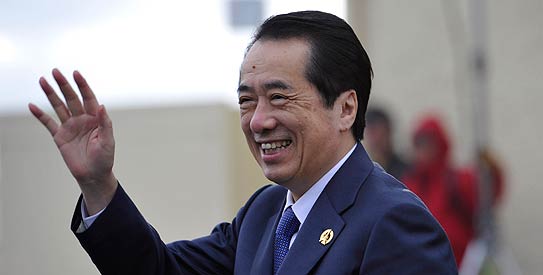
TOKYO: Japan's embattled Prime Minister Naoto Kan said Tuesday that the first phase of efforts to bring the crisis at the Fukushima Daiichi nuclear plant under control is on schedule and near completion.
Kan's government and Tokyo Electric Power Co. (TEPCO), operator of the Fukushima plant, have worked to bring its crippled reactors to a state of stable cooling in July and cold shutdown by January.
“The first step will be mostly completed by today on schedule,” Kan said in parliament Tuesday. “We are now at the point to enter the second step.”
Kan added: “We are starting to see a tremendously critical condition heading towards a certain level of settlement”.
Japan is expected to later Tuesday officially announce the completion of the first stage now that a water circulation system has been established to stabilise cooling operations at the plant.
“I don't say I scored full marks, but my cabinet has coped with what it should do in a solid manner and made progress,” said Kan.
Efforts to stabilise the plant have continued since a 9.0 magnitude earthquake triggered a tsunami on March 11, knocking out its cooling systems and triggering reactor meltdowns as the plant spewed radiation into the environment.
A key challenge was how to deal with massive amounts of highly radioactive water that accumulated as a result of emergency efforts to inject water into reactors to cool melting fuel inside.
Workers have installed systems that remove radioactive substances from the polluted water before recycling the decontaminated liquid to cool reactors 1 to 3, although the process has been troubled by further leaks and other setbacks.
Inert nitrogen gas is meanwhile being injected into the three reactors to prevent hydrogen explosions.
Tens of thousands of people remain evacuated from homes, business and farms in a 20 kilometre (12 mile) no-go zone around the plant, but food safety worries have emerged after contaminated beef was found to have been shipped around the country and probably eaten.
More than 600 beef cattle that had been fed with contaminated straw were sent to meat processing centres mainly from Fukushima but also from other prefectures between March 28 and July 6, Jiji Press news agency said.
On Monday, Fukushima officials told a news conference that they detected radiation levels about 520 times the government-designated limit in straw used at farms outside the exclusion zone.
Japan is expected to soon announce a ban on all cattle shipments from Fukushima prefecture.