0
0

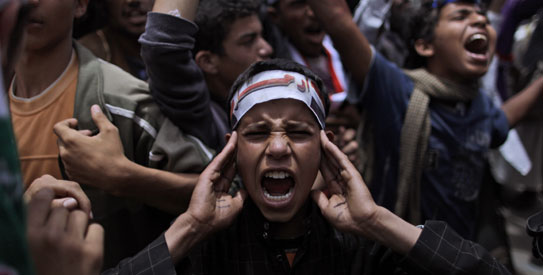
DUBAI: Uprisings sweeping the Middle East and North Africa could eventually boost regional economies, but for now many countries there face a tough path dealing with entrenched unemployment, soaring prices and industries strained by the unrest, the International Monetary Fund said Wednesday.
The Washington-based body is urging Mideast leaders to do more to create jobs for a wider segment of the population while tackling deep-seated corruption. Doing so would begin to address the economic grievances that have fueled protests across the region.
“The unfolding events make it clear that reforms, and even rapid economic growth cannot be sustained unless they create jobs for the rapidly growing labor force and are accompanied by social policies for the most vulnerable,'' the fund said.
Forecasts by the IMF suggest the political turmoil is taking an economic toll.
It predicts the overall economy in the Middle East, North Africa, Afghanistan and Pakistan will grow by 3.9 percent this year. That's the same rate as last year, but nearly a percentage point less than its 2011 forecast issued just six months ago. It's also slower than the IMF's estimate of 4.4 percent for the world as a whole.
The total regional figure, detailed in a semiannual report released in Dubai, hides big divisions among the region's haves and have-nots.
The IMF said countries that have to import their oil, including several hit by violent unrest, face a difficult economic year. It expects their economies will grow by a meager 2.3 per cent even as food and fuel prices push higher.
Many of the Mideast’s oil importers, including Egypt, Tunisia and Syria, are also coping with a slump in tourism and investment as a result of popular uprisings at home. That along with growing levels of debt gives leaders in those countries, some in a state of political transition, even less financial room to maneuver.
The combination of those financial pressures, if not dealt with quickly, “could undermine confidence and derail the pursuit of any new social agenda,” the IMF warned.
The economic outlook is far brighter for Saudi Arabia and the region's other, mostly wealthy oil producers.
Surging crude prices, while painful for drivers and higher output are expected to more than double the size of exporters' surplus coffers by $380 billion. The IMF expects their economies will grow 4.9 per cent in 2011.
The IMF report includes oil exporters Algeria, Bahrain, Iran, Iraq, Kuwait, Oman, Qatar, Saudi Arabia, Sudan, the United Arab Emirates and Yemen, and oil importers Afghanistan, Djibouti, Egypt, Jordan, Lebanon, Mauritania, Morocco, Pakistan, Syria and Tunisia.
Libya was left out of the economic growth forecasts because of the ongoing fighting there.