0
0

KABUL: As Afghanistan prepares to start transferring control of security from international to Afghan forces, one small area of responsibility has already been handed off to local people.
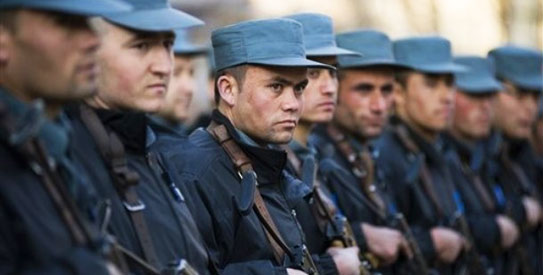
For the past year and a half, a factory on the outskirts of the capital Kabul has been manufacturing the blue uniforms worn by the local police force — the first time they have been produced domestically.
The Nato Training Mission (NTMA), set up to prepare the Afghan army and police to take over when international combat forces withdraw in 2014, is pouring tens of millions of dollars into the project every year.
It provides financial support and business advice to 14 companies making uniforms, boots and other equipment such as tents and sleeping bags, and — perhaps most importantly — signs the order forms for what they produce.
The money is a mere drop in the ocean for the NTMA, which has a monthly budget of around one billion dollars.
US Air Force Captain Danilo Dingle, who is in charge of the programme, says its aims go far beyond just providing clothing for the military.
“The aim is rebuilding infrastructure, trying to help women in this process. They also try to develop competition,” he said.
The goal is an ambitious one — Afghanistan’s economy, which is dominated by agriculture, has been battered by decades of war.
The rough value of goods produced per person per year is $1,000, placing it among the 20 lowest-ranked countries in the world, according to the CIA World Factbook.
Safi Apparel, one of eight companies making clothing for the forces, produces 60,000 uniforms a month for the national police.
Afghan police numbers have expanded rapidly in recent months as they prepare to take charge of security, alongside the national army, across Afghanistan by 2014 as part of a process due to start in July.
In a workshop in the eastern suburbs of Kabul, 225 women are hard at work, stitching and folding police uniforms.
Awa, 19, works nine hours a day for just $110 a month. It is her first job and she says the money is welcome, although even when combined with her father’s salary, it is not enough to support her parents and six siblings.
The fabric for the uniforms is still being imported from other countries, but general manager Abdul Saleem says the establishment of the factory is part of much-needed efforts to revive Afghanistan’s economy.
“Production of military uniforms is a basis for future production for the international market,” he says, adding that the factory plans to start producing other outdoor gear such as parkas and scarves within three months.
Security at the facility is tight — the entrance and exit to the factory are heavily secured to prevent people from smuggling out uniforms that could be used by insurgents posing as police to mount an attack.
A little further to the east of the capital lies the Arrow Boots Factory, which produces combat boots for the Afghan army.
Everything from the gleaming new Chinese machinery to the materials, most of which come from the United States, Italy and Pakistan, is imported, and the factory is still in a test phase.
But the American military, which is funding the project, hopes it will help to boost Afghan civil society against the Taliban and other insurgents by strengthening the country’s fragile economy.