



 0
0

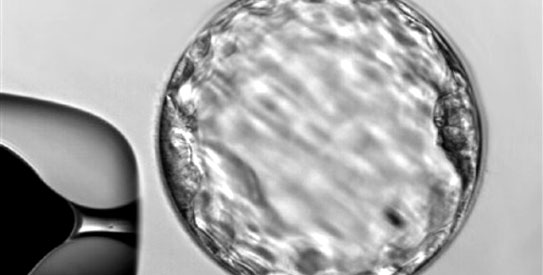
LONDON: Doctors in Scotland working with British biotech company ReNeuron have treated the first patient in a pioneering clinical trial to test whether stem cell therapy can help patients disabled by stroke.
The trial is the first in the world to use neural stem cell therapy in stroke patients, its organisers said on Tuesday, and external experts said it was grounds for “cautious optimism”.
Keith Muir of the University of Glasgow’s Institute of Neuroscience and Psychology, the principal investigator, said the first patient had undergone a successful surgical procedure and been discharged from hospital.
The procedure involves injecting ReNeuron’s neural stem cells into patients’ brains in the hope they will repair areas damaged by stroke, thereby improving both mental and physical function.
Unlike U.S. company Geron’s clinical trial in patients with spinal cord injuries, which started last month, the Scottish study uses stem cells derived from human foetuses rather than embryos.
Foetal stem cells do not have the same flexibility to turn into different tissue types as embryonic ones.
Scientists commenting on news of the trial said it was important to guard against raising expectations of miracle cures for thousands of patients in the near future.
“The current trial will require extensive tests for efficacy and safety,” said Darren Griffin, a professor of genetics at Britain’s Kent University, who is not involved in the study.
“Nevertheless there is room for cautious optimism.”
In total, 12 patients will get ReNeuron’s ReN001 cell therapy between six and 24 months after having an ischaemic stroke – caused by a blockage of blood flow in the brain – and their progress will be followed for two years in the trial.
If the first study is successful, researchers plan to pursue accelerated clinical development in later-stage clinical trials, focusing initially on more severely disabled stroke patients.
Stem-cell technology is viewed as a highly promising new area of medical science, but it has proved controversial, in part because some cell lines are derived from embryos or foetuses. Other research teams are also working with adult stem cells.
“It’s far too early to know if the treatment will be successful, but the very fact that the trial is now underway is a milestone for UK stem cell research,” said Anthony Hollander, a professor of rheumatology and tissue engineering at Bristol University.
ReNeuron had initially hoped to test its stroke treatment in the United States but switched its efforts to Britain in 2008 following delays at the U.S. Food and Drug Administration regulator. – Reuters


























