0
0

KARACHI Political parties in Pakistans biggest city must help stop violence between rival ethnic-based factions, a provincial minister said on Monday, after days of bloodshed in which at least 40 people have been killed, Reuters reported.
DawnNews reported that at least 47 people have been killed in the two days of violence; also schools and colleges will remain closed for the second consecutive day.
Earlier, the citys police chief Waseem Ahmed told AFP that we have confirmed reports of 32 people killed since Saturday in Karachi, adding that some of the 55 people injured in the violence had been shot.
Karachi, Pakistans commercial capital and home to its main port, has a long history of political, ethnic and religious violence and the clashes have raised fears of a return to the bloodshed that plagued the city in the 1990s.
The violence is between the citys majority community of Urdu-speakers, most descendents of migrants from India at the time of the partition of India in 1947, and ethnic Pashtuns from northwest Pakistan.
Rivals fought gun battles and burned shops and cars in several parts of the city of 15 million people on the weekend.
More disturbances erupted on Monday and hospital officials reported another twelve deaths.
The violence remained centered around the western parts of the city such as Orangi Town, Baldia Town and adjoining areas, with streets mostly deserted by early evening. Witnesses reported that mobs continued to torch houses, shops and vehicles, with lawmen being unable to stop the violence despite a heavy presence.
Provincial interior minister Zulfiqar Mirza told the provincial assembly police and paramilitary rangers had been deployed in all sensitive areas.
Police and rangers are patrolling the areas but the political parties should also play their role to calm the situation, Mirza said.
Police have been told to shoot trouble-makers on sight and they have banned pillion riding on motor bikes.
Mirza said 20 people had been killed but according to a tally of reports from police and hospitals, the death toll was at least 47.
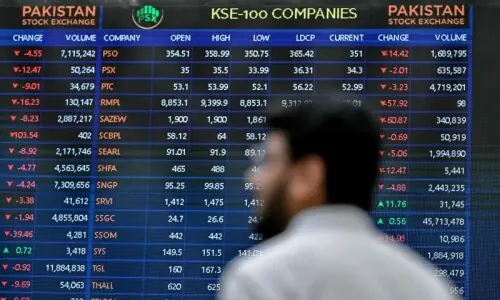
All schools and colleges in the city were shut on Monday and public transport was thin. But operations at the countrys main port was normal, a port official said, while financial markets and banks were open.
BUY GUNS
Tension has been rising since leaders of the Urdu-speaking community began saying Taliban militants, most of whom are ethnic Pashtun, were gaining strength in the city.
A political party representing Urdu-speakers, who are known as mohajirs, or refugees, has been the dominant political force in the city since the 1980s.
A large number of Pashtuns and members of other Pakistani ethnic groups have flocked to Karachi over the years in search of work. Pashtuns dominate the citys transport network.
Taj Haider, a senior member of the ruling Pakistan Peoples Party, said trouble had been brewing for some time.
It is not sudden. It was going on for a while. They were asking people to buy guns because Taliban were coming, Haider told Reuters, referring to the Muttahida Qaumi Movement, or MQM party.
Faisal Sabzwari, an MQM member of the provincial assembly, said the violence stemmed from frustration over rising crime.
For a few months criminal activity against innocent people has increased. Incidently, most of the criminals belonged to a particular ethnicity, Sabzwari said.
Taliban people are involved, he added.
Pashtun politicians say the MQM uses fear of the spread of the Taliban as an excuse to treat Pashtuns unfairly.