BRITAIN’S relations with Saudi Arabia and other wealthy Gulf states are coming under strain because of mounting nervousness over the changes the Arab Spring has brought to the Middle East.
Billions of pounds worth of exports and thousands of jobs could be at risk in rows with Saudi Arabia and the United Arab Emirates over a British parliamentary investigation and the role of Islamists in a changing political landscape.
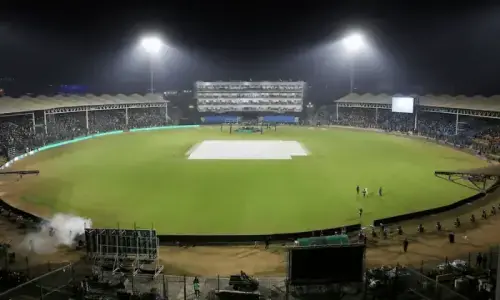
In a report on human rights by the Commons foreign affairs committee (FAC) published yesterday, MPs criticise the government for failing to boycott the Formula One Grand Prix in Bahrain earlier this year.
They express concern that “political and strategic factors” coloured the decision not to list the kingdom alongside other states held responsible for abuses. “We find it difficult to discern any consistency of logic behind the government’s policy in not taking a public stance on the Bahrain Grand Prix but implementing at least a partial boycott of the 2012 Uefa Football Championship matches played in Ukraine,” the FAC said.
Saudi Arabia and the UAE, which together accounted for some £8bn of UK exports in 2011, have both voiced criticism of British policy and hinted at reviewing their relations. UK trade with the six members of the Gulf Cooperation Council (GCC) is worth over £17bn.
On Monday, Saudi officials told the BBC that their country was “insulted” by a separate FAC decision to investigate UK relations with their country and Bahrain. The Saudi ambassador, Prince Mohammed Bin Nawaf Al Saud, warned that Riyadh would “not tolerate or accept any foreign interference in the workings” of the GCC, which comprises Saudi Arabia, Bahrain, Kuwait, Qatar, the UAE and Oman.
In the UAE, a campaign is under way to boycott British trade on the grounds of alleged support for an opposition group linked to the Muslim Brotherhood. Victories for the Brotherhood in Egypt and Tunisia and its rising influence elsewhere have jangled nerves all over the Gulf.
Britain has softened its hostility to Islamist parties and welcomed the new governments in Cairo and Tunis.
In London, the Foreign Office minister, Alistair Burt, told an Abu Dhabi conference that the UK valued investment opportunities in the UAE but he made no mention of the call for a boycott.
In Whitehall, the Saudi statement was seen as “a shot across the bows” to ensure that the government takes Saudi concerns seriously. “We are not naive or starry-eyed,” said an FCO spokesman. “We are realistic and we will judge people by their actions and not their words.”
Mike Gapes, a member of the FAC, said: “I am very surprised by this prickly Saudi reaction. I don’t know whether this is a misunderstanding or there is some other agenda.”
On Bahrain the FAC said it was hard to find any “consistency of logic” in ministers’ approach. Bahrain should have been included by the FCO on its list of “countries of concern” in the wake of the “brutal” suppression of anti-government protests last year.
Saudi Arabia led a GCC force that intervened to help end them.
Bahrain complains that it is facing Iranian-backed subversion, while the opposition accuses it of human rights abuses. Britain came under pressure to support calls for a boycott of the Formula One in April amid fears that it could be a catalyst for a renewed crackdown. Cameron refused, arguing “Bahrain is not Syria” and that reforms were under way. — The Guardian, London