0
0

• Says signing ceremony in Geneva will be hosted by Pakistan
• Praises role of CDF Munir, regional allies in peace process
• Iranian delegation led by its ambassador witnesses proceedings, given standing ovation
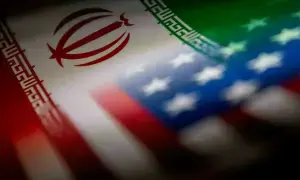
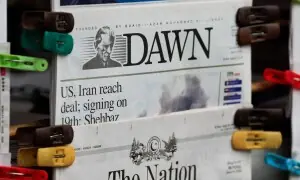
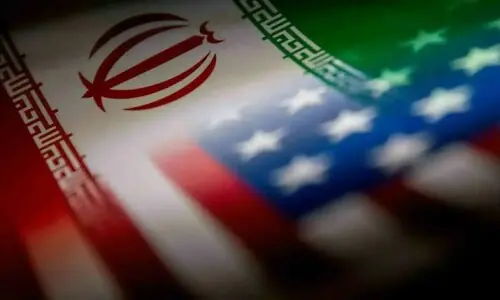
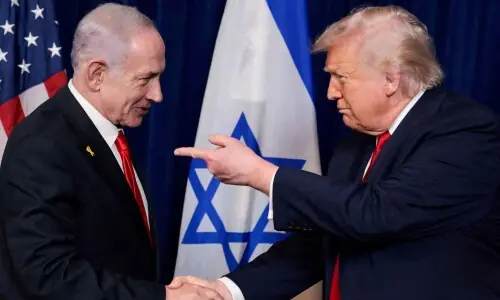
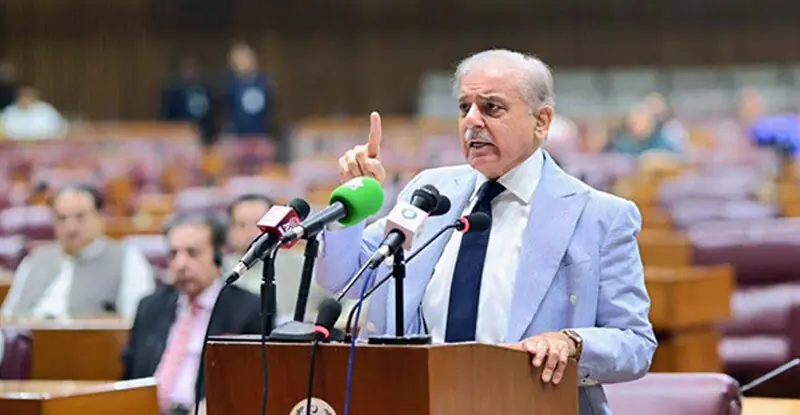
ISLAMABAD: The National Assembly’s budget debate on Monday was largely overshadowed by the US-Iran peace agreement, as Prime Minister Shehbaz Sharif used his speech to update lawmakers on the details of the historic geopolitical breakthrough.
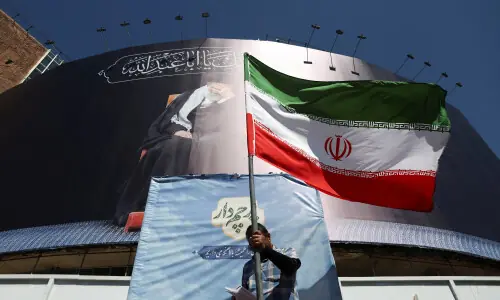
The lawmakers hailed Pakistan’s civil and military leadership for facilitating dialogue between the two countries and praised the resilience of Iran’s leadership and people during the four-month conflict.
Amid loud desk-thumping and in the presence of an Iranian delegation led by Ambassador Dr Reza Amiri Moghadam, Prime Minister Shehbaz Sharif informed the House that the agreement would be formally signed in Geneva, Switzerland, with Pakistan hosting the ceremony.
“The [signing] ceremony of this historic agreement will be held on Friday, June 19, in Geneva [Switzerland], and, by the grace of God, it will be hosted by Pakistan,” he said.
Earlier, members of the House gave a standing ovation to the Iranian delegation upon its arrival in the chamber.
The premier said the agreement provided a framework for ending the conflict, lifting the US blockade of Iran and reopening the Strait of Hormuz.
“Both sides have declared the immediate and permanent termination of military operations on all fronts, including in Lebanon,” he said.
In his speech, PM Shehbaz paid tribute to the leadership and people of Iran for demonstrating courage and steadfastness during the conflict, saying a new dawn had emerged after months of diplomatic efforts.
“After three months and 16 days of tireless efforts, the US and Iran have announced an immediate and permanent end to military action, including in Lebanon,” he said.
The prime minister congratulated the nation and thanked Almighty Allah for the success of efforts initiated by Pakistan’s civil and military leadership in facilitating the first phase of dialogue between Tehran and Washington.
“This is not an agreement between two countries, but the success of peace and dialogue — a diplomatic success,” he remarked, while commending the leadership of both the US and Iran.
He said leaders on both sides had displayed patience and restraint throughout the negotiations despite difficult circumstances.
The premier thanked PML-N President Nawaz Sharif, President Asif Ali Zardari, PPP Chairman Bilawal Bhutto-Zardari and other political leaders for their support.
He also paid tribute to Qatar’s Emir Sheikh Tamim bin Hamad Al-Thani for his “positive role” in the peace process and acknowledged the cooperation of Saudi Crown Prince Mohammed bin Salman, Turkiye’s President Tayyip Erdogan and Chinese President Xi Jinping.
In addition, he thanked the UK, European Union member states and other friendly countries for their contributions to the diplomatic effort.
The prime minister declared that a “historic milestone” had been achieved and said Pakistan’s role in the peace process would be remembered in history.
PM Shehbaz also lauded Chief of Defence Forces and Chief of Army Staff Field Marshal Asim Munir, saying he had “worked day and night to extinguish the flames of war and restore peace”.
The premier also acknowledged the contributions of Deputy Prime Minister and Foreign Minister Ishaq Dar, Interior Minister Mohsin Naqvi and officials of the Foreign Office.
Sadiq, Asif hail efforts
At the outset of the sitting, National Assembly Speaker Ayaz Sadiq praised Pakistan’s role in facilitating dialogue between Iran and the US at a time when fears of a wider regional conflict were growing.
He described Pakistan’s efforts as a historic diplomatic achievement that had helped break a deadlock lasting nearly five decades.
Defence Minister Khawaja Asif congratulated Iran’s leadership for its “steadfastness and bravery” in guiding the nation through difficult circumstances.
He said the diplomatic success was the result of close cooperation between Pakistan’s civil and military leadership. “There is no doubt we are passing through historic times,” he said.
Mr Asif remarked that Pakistan could have achieved many more milestones had such cooperation existed between Rawalpindi and Islamabad over the past 75 years.
He also noted that Pakistan continued to face two major challenges at home: economic revival and the fight against terrorism.
Referring to the broader Muslim world, he said that if similar unity was displayed elsewhere, “the day is not far when the Palestinian cause can be resolved as well, and the Muslims of Gaza can get justice”.
Thanking the US leadership for moving towards peace, he said Washington had acknowledged the grievances Iran had faced for decades.
Concluding his remarks, the defence minister urged Muslim countries, particularly Gulf states, to remain united and support the people of Gaza and Lebanon.
PPP lawmaker Ghulam Ali Talpur said the Iranian leadership and people had shattered the myth of a superpower despite what he described as intense propaganda against the Islamic republic.
Opposition welcomes accord
Speaking from the opposition benches, PTI leader Sardar Latif Khosa welcomed Ambassador Moghadam and praised Iran’s stance during the conflict.
However, he cautioned that the agreement would only be secured once it was formally signed.
“There is still many a slip between the cup and the lip,” he said, adding that he hoped the agreement would be successfully finalised.
Calling Israeli Prime Minister Benjamin Netanyahu a “terrorist”, Mr Khosa accused him of destabilising the region, and urged Gulf states not to provide military bases to foreign powers
Later, lawmakers from both treasury and opposition benches opened their budget speeches by praising the Pakistani and Iranian leaderships for their roles during the conflict and subsequent peace process.
The NA will continue the budget debate on Tuesday (today).
PM felicitated
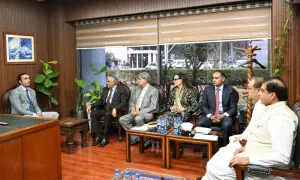
Later, lawmakers from both houses of parliament met with PM Shehbaz to laud his successful efforts in securing global and regional peace.
They included MNAs Agha Rafiullah, Ijaz Hussain Jakhrani, Zulfiqar Bhindar, Ali Jan Mazari, Samar Haroon Bilour, Mir Dostain Khan Domki, Nadeem Abbas Rabera, Dr Sadaf Ihsanullah, Chaudhary Usman and Muhammad Idrees, who separately called on the prime minister.
Published in Dawn, June 16th, 2026