Europe battles Covid surge as WHO warns of 700,000 more deaths


 1
1

COPENHAGEN: Europe remains “in the firm grip” of Covid-19 and the continent’s death toll could top 2.2 million this winter if current trends continue, the World Health Organisation warned on Tuesday.
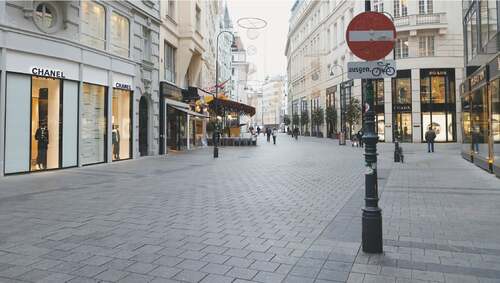
Europe is battling an upsurge in the pandemic that saw Austria return to lockdown this week while Germany and the Netherlands are poised to announce new restrictions.
Another 700,000 Europeans could die by March 1, the WHO said, in addition to the 1.5 million who have already succumbed to the virus.
It expects “high or extreme stress in intensive care units (ICUs) in 49 out of 53 countries between now and March 1, 2022”.
Europe’s return to the pandemic’s epicentre has been blamed on sluggish vaccine uptake in some nations, the highly contagious Delta variant, colder weather moving people indoors again and the easing of restrictions.
In the European Union, 67.7 per cent of the population is fully vaccinated.
Europe’s return to pandemic’s epicentre blamed on sluggish vaccine uptake in some nations
But rates vary widely between countries, with low levels in many eastern countries. Only 24.2 per cent of Bulgarians are fully vaccinated, compared to 86.7 per cent in Portugal.
According to WHO data, Covid-related deaths in its European region of 53 countries increased last week to nearly 4,200 a day, doubling from 2,100 deaths a day at the end of September.
It said evidence was growing that vaccine-induced protection against infection and mild disease was declining.
Several countries, including Greece, France and Germany, are moving towards requiring a third booster shot for someone to be considered fully vaccinated.
Chancellor Angela Merkel has warned that Germany is not doing enough to curb its “highly dramatic” fourth wave of the pandemic.
With intensive care beds swiftly filling up and its weekly incidence rate at an all-time high of 399.8 new infections per 100,000 people, Germany’s worst-hit regions have ordered new shutdowns, including the closure of Christmas markets.
The US State Department has urged Americans not to travel to Germany and neighbouring Denmark because of surging Covid cases.
Austria meanwhile closed shops, restaurants and festive markets on Monday, the most drastic restrictions seen in Western Europe for months.
Challenging winter ahead Israel, which is part of the WHO’s European region, on Tuesday rolled out vaccinations for children aged 5 to 11, one of only a handful of countries to inoculate minors that young.
About half of its recently confirmed cases were among those below the age of 11, it said.
And France’s fully vaccinated Prime Minister Jean Castex went into isolation late on Monday following a positive test, after his daughter caught the virus.
The regional director for WHO Europe, Hans Kluge, said Europe and Central Asia “face a challenging winter ahead”. He called for a “vaccine plus” approach, consisting of a combination of vaccinations, social distancing, the use of face masks and hand washing.
The WHO said face masks reduce Covid incidence by 53 per cent according to a recent study, and “over 160,000 deaths could be prevented (by March 1) if universal mask coverage of 95 per cent was achieved”.
But the prospect of a winter under renewed restrictions has sparked unrest in several countries.
Belgium, the Netherlands and France’s Caribbean islands of Guadeloupe and Martinique were on Tuesday still reeling from violent protests against new anti-Covid measures.
Dutch police arrested at least 21 people during a fourth night of clashes, which Prime Minister Mark Rutte labelled “pure violence” by “idiots”.
His Belgian counterpart Alexander De Croo called violence at a 35,000-strong protest in Brussels “absolutely unacceptable”.
Published in Dawn, November 24th, 2021