A third consecutive parliament and provincial assemblies have elected a third president in little over a decade since a return to civilian government in Pakistan.
To the extent that the election is a democratic milestone and has not been marred by allegations of misconduct or rigging, the new president, Arif Alvi, and the presidential electoral college ought to be congratulated.
In a post-18th Amendment landscape, the presidency is a wholly ceremonial office, but Mr Alvi has pledged to be a more visible president for the full federation. After the underwhelming term of the outgoing president, Mamnoon Hussain, and the intense politicisation of the presidency during Asif Zardari’s term, perhaps Mr Alvi will be able to strike a better balance.
As a symbol of the federation, the presidency can draw attention to areas of the country that are either less prominent in the national discourse or ignored by the political class. At all times, the president must remain above the political fray, but a judicious use of the presidential platform can help highlight causes that truly bind the nation.
The poll also completes a full round of elections to the provincial assemblies, the National Assembly, the Senate and the presidency this year. The PTI is now firmly installed in three provinces and at the centre and will need to quickly pivot from campaign mode to governing. Prime Minister Imran Khan has sketched an ambitious domestic reforms agenda, but thus far few strategies and road maps have been revealed.
Certainly, much will depend on the path that Finance Minister Asad Umar chooses: austerity mandated by the IMF could dash many of the government’s plans on the expenditure side. But if reforms are to be enacted, the beginning of a government’s term is when there is significant political capital to spend.
A quick, though not hasty, rollout of a reforms agenda will also give the PTI governments at the centre and in the provinces enough time to assess whether the results are satisfactory and make changes before electoral considerations once again come into play a few years down the road. After a controversial election year, much will depend on whether or not the PTI governs in a forward-thinking manner.
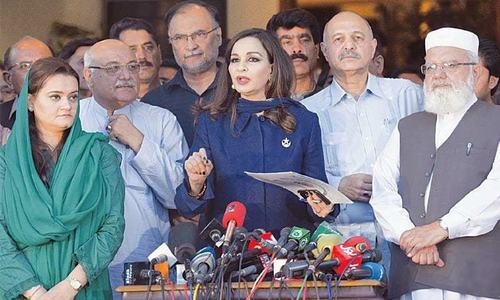
For the combined opposition, the presidential election is yet another indication of confusion and uncertainty in its ranks. The PPP and the PML-N will need to decide relatively soon if they can work together in opposition or if separate paths are preferable.
The opposition has an important parliamentary role, but for the opposition to help strengthen democratic institutions, there needs to be consensus and coordination. The PML-N and PPP are entitled to choose their own paths; for the sake of the democratic project, they should make their choice clear now.
Published in Dawn, September 5th, 2018