International push aims to protect endangered heritage from militancy with $100m fund


Representatives from dozens of countries began meeting in Abu Dhabi on Friday to discuss the creation of a $100 million fund to protect and restore heritage sites threatened by extremism and conflict.
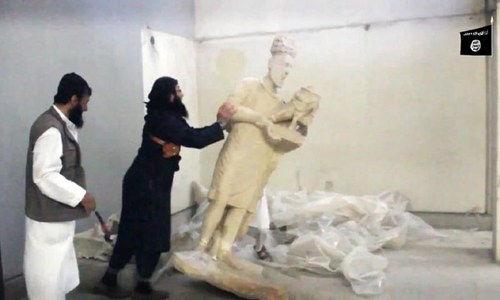
The two-day conference reflects growing international alarm over the destruction of ancient artefacts by the militant Islamic State (IS) group using sledgehammers, bulldozers and explosives.
It opened with calls by its Emirati, French and United Nation initiators for joint action to safeguard cultural treasures in danger.

“To succeed, we need to work together... united for heritage,” Unesco Director Irina Bokova told participants.
Protecting heritage “is inseparable from protecting human life,” she said, describing its deliberate destruction as a “war crime”.
The chairman of the Abu Dhabi Tourism & Culture Authority, Mohamed Al-Mubarak, said the international initiative “will help change the course of history.”
On the eve of the meeting, five Nobel prize winners launched an appeal for urgent action to safeguard world heritage sites, pointing to the irreparable damage wreaked in Iraq, Syria, Afghanistan and Mali.
“Part of our history has been lost forever, with the goal of fanaticism being to undermine our hope for the future,” said the statement from Aung San Suu Kyi, Kofi Annan, Ellen Johnson Sirleaf, Orhan Pamuk and Mario Vargas Llosa.
Unesco says 55 out of a total of 1,052 heritage sites around the world are listed as World Heritage in Danger.
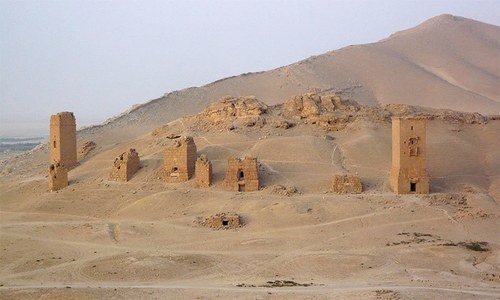
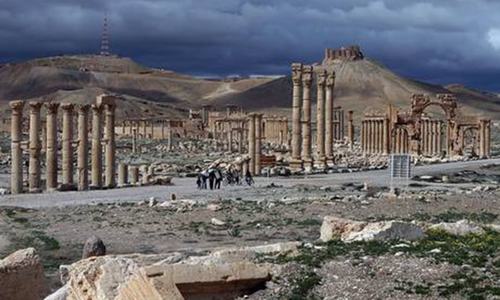
They include the Crac des Chevaliers castle and the ruins of Palmyra in Syria, the archaeological remains of the Bamiyan Valley in Afghanistan, the old city of Sanaa in Yemen, and Timbuktu in Mali.
The conference aims to create “a broad coalition of partners connecting the dots between the security, humanitarian and cultural issues with so many organisations and governments” taking part, said Bokova.
Delegates from around 40 countries, including more than a dozen heads of state or government, among them several Gulf monarchs, are attending the gathering, which is based on an initiative led by France and the UAE.
French President Francois Hollande and Abu Dhabi Crown Prince Sheikh Mohammed bin Zayed Al-Nahyan, whose countries will be key contributors to the fund, will make closing speeches on Saturday.
'Refuge zones'
Former French culture minister Jack Lang, who heads the Paris-based Institut du Monde Arabe, said the conference “will launch concrete action” such as the creation of a fund to help cover the cost of transporting, safeguarding and restoring affected monuments — including using 3D reconstruction.
France will contribute $30 million to the fund, Lang has said.
It will be formed as an “independent legal entity”, according to a preparatory document that says it will likely be established in Geneva from 2017.
The conference also aims to establish “refuge zones” around the globe for endangered works of art, according to organisers.
The proposed partnership would include governments, public institutions, private groups, non-governmental organisations and experts.
A French official described the initiative as the “cultural counterpart” of the international military and political war on terrorism.
Hollande, who has called for “asylum rights for artefacts”, last month announced that a safekeeping facility is to open in northern France in 2019.
In addition to housing the Louvre Museum's stored collection, it could also be a refuge for endangered artworks.
France is expected to make the proposal during the Abu Dhabi conference.
The Louvre Abu Dhabi, whose delayed opening is now expected in 2017, “could also become a refuge zone” for threatened artefacts, a French official said.
Hollande will visit the Louvre Abu Dhabi on Saturday as well as Al-Dhafra airbase near the Emirati capital from which French warplanes have been flying missions targeting militants in Iraq and Syria.