Songdo, South Korea is not a place that would normally spring to mind as a venue for an Indo-Pak confrontation. Last week, however, the boardrooms of the Green Climate Fund (GCF) witnessed a fascinating spectacle involving the two South Asian states. What was at stake this time? 39 million dollars and the livelihood of 700,000 of the poorest and most vulnerable people of our country.
Formed in 2010 and a centrepiece of the United Nations Framework Convention on Climate Change, the GCF is the primary global vehicle to finance climate change-related interventions in developing countries.
In Songdo, where it is based, the GCF board met last week to review and approve 10 projects worth $800 million that would help millions of poor people adapt to the risks of climate change.
Among these projects was one submitted by Pakistan — a crucial first for our country given that we are one of the most at-risk places when it comes to climate change.
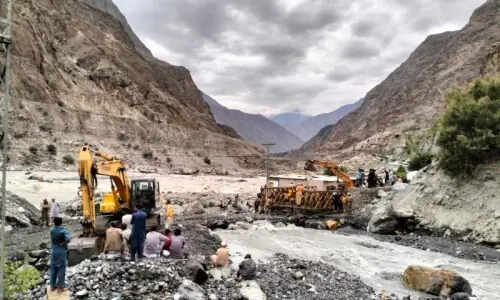
Supported by the United Nations Development Program, the project is meant to reduce risks and impact of flooding outbursts from glacial lakes in communities in Gilgit-Baltistan and Khyber Pakhtunkhwa.
Also read: Climate change - The perfect storm
The GCF’s independent technical committee concluded that the project would provide protection to more than 700,000 people, and gave it the go-ahead.
But not before significant drama and tension, as India attempted to have the decision derailed.
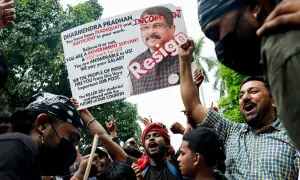
In a waffling set of attacks, Indian board member Dinesh Sharma, a Special Secretary in Indian Ministry of Finance, put forth several contradictory reasons for his opposition to the Pakistani project:
The science on glacial melt was weak and hence the project itself was weak; the project risk assessment, he felt, proved that there would be no impact (he was unable to clarify what he meant by ‘no impact’); and that somehow the mitigation work in Pakistan — mostly the installation of early warning and other sensory systems and capacity building of communities — could increase the risks that Indians on the other side of the border were exposed to.
The more Mr Sharma insisted that he was challenging the project on technical rather than political grounds, the more isolated he became. As his objections grew, the true nature of his hostility became more and more obvious to everyone on the board, even though he kept on insisting that his position was only meant to safeguard the credibility of the GCF. His position backfired and ended up generating significant sympathy for Pakistan from developed and developing countries alike.
A robust project meant that the Pakistani board member did not even need to respond directly to Indian concerns. In fact, it were other board members who spoke up in Pakistan’s defence, which was a testament to the country’s case and conduct at the meeting.
Ultimately, group pressure from the entire board, including the South African co-chair, led to the Indian representative being isolated and having no choice but to go with the consensus in the room and approve the project.
And just for the record, this is not propaganda from a Pakistani patriot; the evidence is available in the documented recordings of all the proceedings on the GCF website.
For more context: Combating climate change - why it matters
As someone who has worked and collaborated extensively with my Indians counterparts in this field, it was sad to see India's opposition when there was no need for any.
As two developing countries, Pakistan and India have generally collaborated on climate change issues. But it seems that after having whipped up a hysteria against its neighbour in order to deflect attention from the very real challenges it faces in Kashmir, the Indian government has become a victim of its own narrative on Pakistan.
Since New Delhi cannot actually take the kind of military action it says it can take against Pakistan, the Indian government will use any trick in the book to try to isolate Pakistan otherwise.
After the hyperbole over 'surgical strikes', cancellation of the SAARC summit, and the Bollywood and kabaddi boycotts, it seems that the next platform of this campaign was the boardroom of the GCF.
Does India really need to take Indo-Pak politics into the realms of the global efforts against climate change? Clearly, the rest of the world does not think so.
For Pakistan there is a lesson in this as well. Songdo shows us that we are not isolated and that with a clear position, the right preparation and effective lobbying, the international community will back us where we are right.