33
33

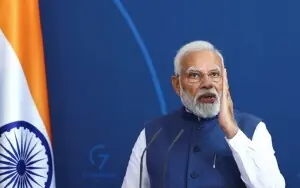
A DAY after insinuating that India may use water as a weapon against Pakistan, Indian Prime Minister Narendra Modi has made another unfortunate, though perhaps less surprising, decision: his government will boycott the Saarc summit scheduled for November in Islamabad. Disappointingly, it was followed by Bangladesh’s decision to do the same. Mr Modi’s participation in the head-of-government summit has long been a subject of speculation, with Indian High Commissioner to Pakistan Gautam Bambawale suggesting only weeks ago that Mr Modi may in fact visit Pakistan. Unhappily, his suggestion was immediately contradicted by the external affairs ministry in New Delhi and then the Uri attack plunged bilateral ties to a new low. Yet, Saarc by its very definition is not about bilateral ties, notwithstanding the Pak-India relationship dominating that forum since its creation in 1985. And while Saarc has not come close to realising the aspirations it represents, it is still a symbolic forum representing the shared dreams of the region and very much worth defending.
Now that the 19th Saarc summit is likely to be either postponed or cancelled, barring a last-minute change of heart by India, it is worth recalling that Pakistan and India have been here before. In 1995, the eighth Saarc summit was scheduled to be held in New Delhi at a time when Pak-India tensions were soaring and the insurgency in India-held Kashmir was at its peak. Benazir Bhutto, then the prime minister of Pakistan, opted not to attend the summit, but she did not try and sabotage it. Instead, she sent the then president Farooq Leghari to represent Pakistan and emphatically state this country’s position on a range of issues. That was a sensible, statesmanlike decision. Twenty-one years later, the Indian prime minister has rejected the statesman’s path and instead opted to shut down an avenue of cooperation and dialogue.
Unhelpful as Mr Modi’s decision is, Pakistan must resist the urge to respond petulantly and negatively. The Indian leader made an unexpected stopover in Lahore on Christmas Day last year, and lobbying by other countries may encourage Mr Modi, and Bangladesh, to reconsider pulling out. In the meantime, Pakistan should receive in good faith the evidence from the Uri attack that India offers and investigate the matter to the extent that the law permits. India has been wrong to immediately and without any proof accuse Pakistan, or even just citizens of this country, of involvement in the Uri attack. But Pakistan would be wrong to automatically disregard any evidence that India subsequently provides simply because India made accusations first and collected evidence later. It is in the interest of this country that Pakistani soil not be used for attacks in other countries or even IHK. If India has evidence, it should responsibly hand it over to Pakistan, and Pakistan should investigate it in a fair manner.
Published in Dawn September 29th, 2016