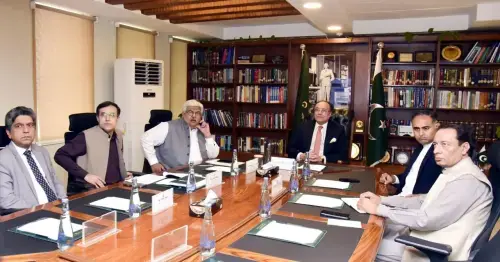
ADVISER to the Prime Minister Sartaj Aziz and his inter-ministerial panel are right to point out that no immediate impact is likely on Pakistan from the recent UK referendum fallout. But it would be a mistake to take comfort from this assessment.
Britain’s exit from the European Union has not even started yet. The real game will begin after activation of Article 50 of the EU treaty which triggers the withdrawal process.
Given the enormity of the event that is getting under way, it would be short-sighted to continue in the belief that the crisis will never land here.
Perhaps Mr Aziz should recall the year 1998, when Pakistan was hit by sanctions and our foreign currency accounts were frozen.
The official narrative at the time was that the decision was inevitable and triggered by nuclear sanctions. But there was more to the story. The great Asian financial crisis had just swept the world, and Pakistan was standing on increasingly weak legs with the heavily leveraged position of its foreign currency deposits.
The economic emergency that appeared to break upon us so suddenly was not born out of a single event; it had been years in the making.
Due to thinking that refuses to focus on anything beyond the immediate, the country landed in the middle of a massive crisis with the government completely unprepared and reacting in panic. It took years to dig ourselves out of the consequences of that decision.
The story repeated itself in 2008. Warnings about several weaknesses in the economy — the current account deficit, inflation and runaway domestic debt — had been sounded for well over a year. But the government of Pervez Musharraf was in denial, saying that the crisis developing in the Western world would have no impact on Pakistan, and the weaknesses being pointed out by the people were imaginary.
Once again, when the crisis landed with its full ferocity, the stock market had to be frozen and an emergency appeal made to the IMF as reserves plummeted and the banking system began seizing up.
One more time, it took years to emerge from the consequences of the decision to freeze the stock market and to rebuild reserves.
Instead of repeating that there will be ‘no immediate impact’ on Pakistan, the government should learn from the past and at the very least start brainstorming with relevant bodies, such as the State Bank and stakeholders in the external sector, on the sources of vulnerability that exist in our economy, and how best we can anticipate the shape of the challenges the crisis will present as it plays out in the months ahead.
Let’s not repeat the mistakes of the past.
At least this time we should take a more proactive approach in dealing with the inevitable fallout. Many other countries are doing exactly that.
Published in Dawn, June 29th, 2016