6
6
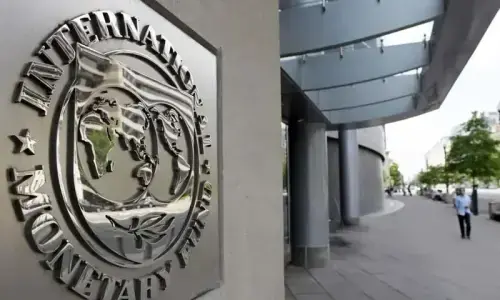
ISLAMABAD: The Asian Development Bank (ADB) hopes to overcome by 2020 the challenges of building a $10-billion gas pipeline through Afghanistan’s most violent areas, by making sure it benefits Afghan contractors and communities, a bank official said.
Shareholders of the Turkmenistan, Afghanistan, Pakistan and India (TAPI) project agreed on Thursday to invest $200 million in studies and engineering for the pipeline, looking to link gas-rich Turkmenistan with eager markets in Pakistan and India.
Originating at the giant Galkynysh gas field in Turkmenistan, the TAPI pipeline, which involves the four countries’ own energy companies, would carry 33 billion cubic metres (bcm) of gas a year.
But current plans route the underground pipeline through one of Afghanistan’s most violence-wracked provinces, Helmand, where the insurgents hold sway.
“I agree ... we’re going through some of the toughest territory in Afghanistan,” said Sean O’Sullivan, the Central and West Asia director general of the ADB, a transaction adviser for the project.
“The challenge is there. There’s no doubt about it, but I am sure it’s doable.” He added, “I think if it happens, it will be quite an unprecedented example of regional cooperation, particularly in a region that finds it difficult to cooperate.”
The ADB would be able to capitalise on lessons it has learnt from other infrastructure projects in Afghanistan, including building power transmission lines from Uzbekistan to Kabul and a setting up a railway in the north, O’Sullivan said.
Under current timelines, the pipeline could be operational by 2020, he told Reuters in a telephone interview this week.
Key to the TAPI’s success would be spreading jobs among Afghan communities, rather than bringing in foreign contractors.
“Usually we in ADB would say, ‘Look, it’s a $100-million project,’ for example, and we’ll break it into two or three contracts and that would attract international bidders,” O’Sullivan added.
But for Afghan projects such as TAPI, O’Sullivan said, “We want to split it up into smaller parts that Afghan contractors are capable of doing, and hope to reduce the security risk by doing so.”
Turkmenistan, which sits on the world’s fourth-largest gas reserves, started building its section of the 1,814-km (1,127-mile) link, designed to ease its dependence on Russia and China, last December, but the three other countries have yet to begin work.
Turkmen state energy firm Turkmengas is the main shareholder of TAPI Pipeline Company Limited, the joint venture set up to carry out the project. Other investors are Afghan Gas Enterprise, Pakistan’s Inter State Gas Systems Ltd and GAIL (India) Ltd.
Published in Dawn, April 9th, 2016