ISLAMABAD: Just days after its unanimous adoption by the provincial legislature, the Punjab Protection of Women against Violence Act (PPWVA) 2016 — which contains remedies for victims of violence — has landed at the door of the Federal Shariat Court (FSC).
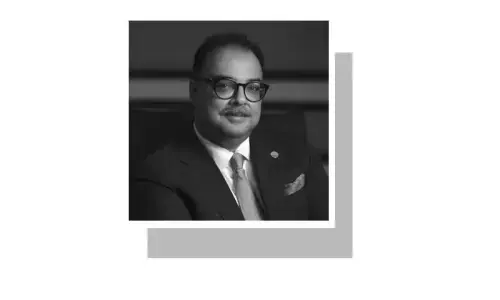
Mohammad Aslam Khaki, a Supreme Court lawyer and professor of Islamic law, on Thursday challenged different provisions of the law and asked the Federal Shariat Court to consider declaring the law — especially Section 7(d, e) of the act — repugnant to Islam, the Holy Quran and Sunnah.
Section 7(d,e) of PPWVA deals with GPS ankle or wrist trackers that may be placed on men to monitor their movement round the clock.
On Feb 24, the Punjab Assembly had passed the law that envisaged rehabilitation and justice for women who fall victim to domestic abuse, emotional or psychological violence, verbal abuse, stalking and cybercrime.
Dr Khaki regretted in his petition, punctuated with verses of the Holy Quran, that the section was against Islamic provisions since it was unilateral and gender-biased.
“The section is based on the NGOs’ slogan that the man is always guilty,” the petition regretted, adding that the law did not contain any mechanism for filing a complaint against a woman for causing mental and psychological trauma to her husband.
The petition purported that a number of cases had been observed where women would abuse their husbands and get into conflict with his family, leading to heated debate between spouses that can sometimes result in violence by the husband.
This section, the petition contended, was against the dignity of man and hence against Islam and the constitution. To substantiate, the petition quoted the following verse from the Holy Quran: “We bestowed dignity on the children of Adam and provided them with rides on the land and in the sea and provided them with a variety of good things and made them much superior to many of those whom we have created.”
To resolve any dispute, the petition suggests, the approach should be counselling and guidance for the wife as well as the husband, rather than punishing the man and not the woman.
Dr Khaki was of the view that the law would create a gap and would foster conflict among families rather than deterring violence.
In case of a conflict between spouses, the petition argued, arbitration procedures had also been provided in the Holy Quran, which should be applied and strengthened instead of making the conflict a legal matter.
Section 7(e) of the act, which asks for expelling the accused husband from the house, is also damaging for the family, particularly when there are children involved, or there is a joint family, the petition maintained.
It would be more appropriate, in case of a conflict, that the wife should be promptly paid a handsome amount as maintenance, including the rent and be given option to live with her parents or siblings, as provided under different laws.
However, the petitioner conceded that expelling the husband for one or two days was fine.
The petition argued that the Punjab Protection of Women against Violence Act was passed without proper debate and research and needed revisiting, especially since a number of scholars had criticised certain clauses of the act as being against Islam.
To curb violence against women, it would be more effective if the defendant was also inflicted the same violence as per the Islamic principle of Qisas, the petition suggested.
Published in Dawn, March 4th, 2016