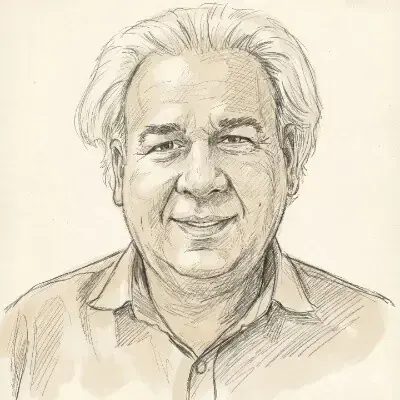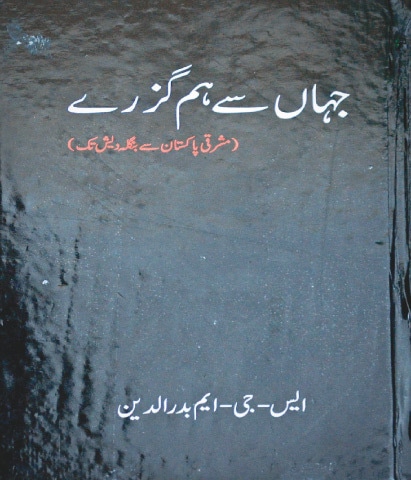
KARACHI: A book titled Jahan Se Hum Guzrey — Mashriqi Pakistan Se Bangladesh Tak by the late S.G.M. Badruddin, former editor of Morning News and former editor of the Economic & Business Review (EBR) pages at Dawn, was launched at the Karachi Press Club on Wednesday evening.
Dawn Readers’ Editor Muhammad Ali Siddiqi, who presided over the launch, talked about one important aspect of his colleague Mr Badruddin’s life when the latter led the EBR pages of Dawn. Giving the background of how the idea for the business weekly came about and the late journalist’s pivotal role in it, he said after Zulfikar Ali Bhutto’s arrival as the prime minister on the political horizon of the country, no fewer than three editors of Dawn were changed. The ship was finally steadied during Ahmad Ali Khan’s editorship (1973-2000). Khan Sahib, as the legendary editor was fondly known, used to think a lot on an issue before taking a decision, he said, and advised media persons of the present times to think before asking a question or writing a piece.
Mr Siddiqi said during Gen Ziaul Haq’s dictatorship, it had become difficult to criticise government policies. Khan Sahib came up with the idea to take out the EBR in which government’s economic policies would be criticised, and since economic policies reflected political policies, the job would be done without ruffling feathers. Mr Badruddin was asked to lead the EBR and “it was a great success”, he said. Subsequently, he added, other newspapers, too, took out their business pages.
When Mr Badruddin was editor of Musawaat and Mr Bhutto’s judicial murder was about to take place, the paper’s circulation was the highest in the country, Mr Siddiqi said. It was a struggling period for Mr Budruddin, because he was even put into jail with other journalists, as aptly described in Ahfazur Rehman’s recent book.
Mr Siddiqi said the book Jahan Se Hum Guzrey gave a detailed account of Mr Badruddin’s professional and personal life.
Prof Sikander Mehdi reminisced about the time when he was a student in Dhaka and had spent some time with Mr Badruddin. He remarked that the making of Bangladesh was not inevitable, but had been turned into an inevitable event. He said since the late journalist stayed at his [Mehdi’s] house for some time, he had seen him from close quarters, and therefore could say that the dilemma (alamia) that the country was faced with before the Dhaka Fall was the same dilemma that Pakistan was faced with today. “We know what’s going to happen in the future, but we can’t stop it from happening,” he bemoaned.
About the salient features of the book, Prof Mehdi said Mr Badruddin had pointed out interesting things in it. For example, Muslims had already arrived in Bengal before Islam came to Sindh. He also mentioned that in Bengal, the kurta was called ‘Punjabi’. When asked why it was called Punjabi, they (Bengalis) replied that because they embraced them (galey se lagate hain). There’s a chapter on stranded Pakistanis in the book as well, he said.
Journalist Babar Ayaz said Mr Badruddin was a hard working, saintly person (darvesh sift). While working for Dawn he never sought any favours from the editor. He used to work so hard that he (Ayaz) and Shaheen Sehbai would be amazed and try to stay back and help him out in taking out the business pages, he said. When he was with Musawaat, Gen Ziaul Haq objected to what got published in the paper, to which Mr Badruddin responded that it was the Peoples Party’s newspaper and would publish the party’s policy, he said. This invited the wrath of the dictator and he was imprisoned, he said. When Benazir Bhutto first came to power, she asked Mr Badruddin as to what she could do for him. The journalist, true to his selfless nature, instead requested her to do something about two other journalists who were jobless at the time.
Prof Dr Tauseef Ahmed Khan said Mr Badruddin belonged to that generation which was born in united India, witnessed the inception of Pakistan and then saw it break into two. He was influenced by the Progressive Movement, joined journalism and became editor of Musawaat and Morning News, he said. He worked as a journalist in difficult circumstances in Dhaka and never compromised on objectivity and impartiality, he said.
Prof Khan narrated quite a few incidents indicating the late journalist’s objective approach to his profession and his courageous interaction with the likes of General Azam Khan (governor of East Pakistan) and Sher Ali Khan (minister for information in General Yahya’s tenure). He said when Mr Badruddin published the six points given by the Awami League he was criticised by some military commanders and a section of the press; but if he hadn’t done that, he would have been unfair to history.
M. Anwar Shahid conducted the programme.
Mr Badruddin passed away on Nov 23, 2006 at the age of 89.
Published in Dawn, December 17th, 2015