ISLAMABAD: The Supreme Court has asked the government to explain why the health condition of people in general and that of children in particular is deteriorating by the day.
Taking suo motu notice of reports about the alarming number of deaths of children, especially in rural areas, caused by pneumonia and diarrhoea as well as the increasing number of patients with fatal diseases like hepatitis C, Chief Justice Anwar Zaheer Jamali ordered federal Health Secretary Ayub Sheikh and health secretaries of the four provinces on Friday to explain why the governments had turned a blind eye to the disturbing health situation in the country.
The court’s attention to the state of affairs in the health sector was drawn by Sheraz Mehmood Qureshi, a resident of Mansehra, through an application addressed to the chief justice.
The applicant enclosed with the application two columns which had appeared in an Urdu daily – one written by Orya Maqbool Jan on Nov 13 and the other by Javed Chaudhry on Nov 19.
After going through the application the chief justice ordered the court office to convert it into a suo motu petition and issue notices to the federal and provincial health secretaries. They are required to submit comments on the contents of the columns.
The case will be taken up in the third week of December.
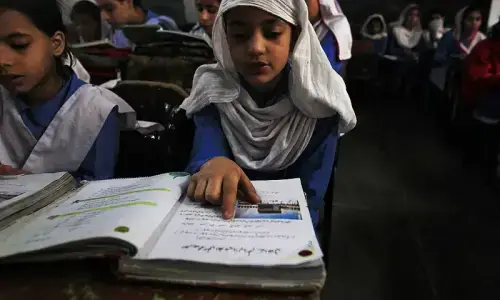
One of the columns pointed out that pneumonia and diarrhoea had claimed the lives of 144,000 children in 2014, pushing Pakistan as the third country in the world in terms of child mortality. The mortality of children due to the deadly diseases is more than the deaths reported in incidents of terrorism.
The columnist regretted that even financially weak countries like Ethiopia, Angola, Kenya, Sudan, Uganda, Nigeria and Tanzania were far better than Pakistan in terms of child health. The primary reason for the large number of deaths of children in Pakistan, he said, was lack of basic health facilities in villages and towns, but the worsening situation did not appear to be a national priority.
The writer criticised federal government’s fixation with elitist development schemes by ignoring the issue of providing healthcare in the country.
At a press conference last year, Dr Tabish Hazir, head of paediatrics at Pims’ Children Hospital, had said that pneumonia claimed the life of a child every 30 seconds.
The other column pointed out that Pakistan was the second country in the world, after Egypt, where eight to 10 per cent of the population, or two million people, were hepatitis C patients, because of sanitation problems, extensive use of pesticides, abundance of quacks and excessive use of antibiotics.
The columnist deplored the expensive treatment with expensive imported medicines. Such medicines will cost less if produced locally. A decision to produce such medicines in the country has been taken in principle, but some vested interests have kept it on hold. He requested Prime Minister Nawaz Sharif to intervene and order the department concerned to issue licences to local manufacturers to produce the medicines.
Published in Dawn, November 28th, 2015