197
197


INDIAN Prime Minister Modi’s visit to the UAE, and the joint communiqué issued afterwards, should be nothing less than a wake-up call for Pakistan.
Both countries have agreed to enhance their economic cooperation and set specific targets, including bringing UAE investment into Indian infrastructure up to $75 billion and raising their bilateral trade by 60pc in five years.
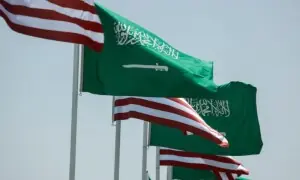
The communiqué also goes to some lengths to “condemn efforts, including by states, to use religion to justify, support and sponsor terrorism against other countries”, dilating upon this commitment with a specificity and sweep that almost betrays a sense of relish with which the words were written. The language is being widely interpreted to be pointed towards Pakistan.
Know more: Modi steps into Pakistan-UAE breach
By itself, the growing closeness between India and the UAE would be cause for little more than some alarm. But given the diplomatic moves under way in the region it highlights how the conduct of foreign policy is changing in profound ways.
India has already received overtures from Iran for expanding its economic beachhead at Chabahar port, giving access to Iran and Afghanistan as well. It has obtained American support for its Look East policy, building a Trilateral Highway through Myanmar to Thailand, as well as greater connectivity with ASEAN countries.
The main artery of the Bangladesh-China-India-Myanmar (BCIM) corridor is almost ready as an all-weather road, linking Yunnan province in China with West Bengal. In short, India is on the move in the region, keeping countries as diverse as the UAE, Iran, China and the United States on board as it spins a web of connectivity from the Middle East to Southeast Asia.
This should be enough to wake Pakistan’s foreign policy community up to the fact that their game has changed fundamentally. Lingering territorial disputes are no longer the driving force behind foreign policy. Instead, the foreign interests of states are now, more than ever before, viewed through an economic lens. States can be rivals in one sphere and partners in another.
The game is no longer about pushing a single-agenda item, but the meticulous placement of pieces on an increasingly complex and interconnected chessboard. For Pakistan, remaining wedded to an old foreign policy template developed in the early Cold War years — which saw friends and masters in its search for a big brother who would help solve problems in return for a geopolitical alliance — is no longer a viable option.
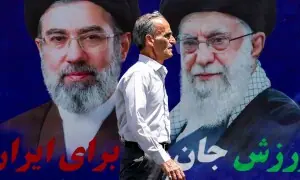
Maturity is the need of the hour in Pakistan’s foreign policy, as a thaw with Iran opens up opportunities to the west, and the possibility of building an economic partnership with India to the east — however remote it might seem at the moment — remains a viable foreign policy goal. It’s time to emerge from the old world, and recognise the changes happening in our region before it’s too late.
Published in Dawn, August 20th, 2015
On a mobile phone? Get the Dawn Mobile App: Apple Store | Google Play