A recent survey conducted by the Punjab government on the contamination of vegetables reveals a threatening picture of what we, as a nation, consume, and the urgency required to resolve the issues.
According to the survey, 51 samples of 16 vegetables were collected from nine divisional headquarters and tested for 22 metals. They were found to have been contaminated with toxic metals like cadmium, chromium, lead, nickel etc.
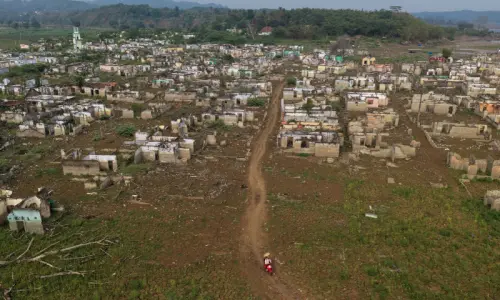
In Punjab, 98 tehsil municipal areas produce 504m gallons of wastewater daily, and out of them 66 use the same water for agriculture purposes, and 28 dispose their wastewater into canals, rivers and their tributaries; only four have some kind of wastewater disposal system.
Thus, an overwhelming amount of the wastewater finds its way into agriculture. The provincial water treatment capacity is woefully inadequate. Punjab has only oxidation ponds in the southern part of the province. Thus, its most populated areas (major cities) like Lahore, Faisalabad and Gujranwala don’t have any treatment plants. If the situation remains unchecked, the slow poisoning would only help create a generation of physically and mentally handicapped citizens.
Mercifully, the government has moved quickly and formed two committees headed by the provincial agriculture minister Farrukh Javed. And it is bringing in together all relevant departments — public health, local governments, industries, irrigation, education and information.
A comprehensive term of reference followed, and every department has been assigned a specific task. So far, so good. The crucial question, however, is how quickly the data is collected and the policy — backed by required legislation — is developed and implemented. The provincial agriculture minister, a practicing doctor, would exactly know the range of diseases these contaminated vegetables are causing.
An overwhelming amount of wastewater from urban centres finds its way into agriculture in Punjab. The provincial water treatment capacity is woefully inadequate
At the local level, people living around drainages where industries are throwing toxic waste have long been complaining about diseases; the media has been full of news based on different studies prepared by various non-governmental organisations. Slowly, they have started affecting vegetable supplies to the cities, and the extent of the problem is detailed in the survey. So far, the issue is limited to the surrounding of main cities, where households and industry produce huge wastewater that finds its way into agriculture.
At the international level, tolerance for any kind of contamination in food is zero. Whereas the maximum residual limits (MRL) were measured in parts per million (PPM), they are now quantified as parts per billion (PPB), or sensitivity, and the measure scale is growing by 1,000 times. The world has created computerised coding to study any residual impact, making it impossible to let any minutely impacted, leave alone contaminated, vegetables pass through their borders.
No national company has been able to develop a share in the world market without first correcting its domestic market. Concepts like traceability were developed for backward integration of the entire supply chain to farms, practices and inputs. Water being a major input at the farms has to come under the scrutiny; the international community would do it, if we don’t.
The government needs to collect data on vegetables and fruit farms fed by this untreated toxic water. There is nothing wrong with wastewater per sey; it is rather beneficial and sold in rural areas. The municipal committees make huge money on it because it contains organic materials.
The only problem is where the toxic material finds its way into the food supply. In order to check the process, industries, especially those using conventional heavy metal-based inputs, provide the starting point: what have they been doing with their waste. The other major source is heavy metals-based insecticides, pesticides and herbicides.
Once done with data-collection, the government needs to divert this water to non-eatable crops like cotton and put up water treatments plants that remove toxicity from the water before it makes its way into the fields.
Published in Dawn, Economic & Business, January 19th , 2015
On a mobile phone? Get the Dawn Mobile App: Apple Store | Google Play