AMMAN: Muslims marched on Friday in Middle Eastern and African cities against a new sketch of the Holy Prophet (PBUH) published by French magazine Charlie Hebdo.
The largest march was held in the Jordanian capital Amman amid tightened security.
In Zinder, Niger’s second city, protesters smashed the entrance door to the French cultural centre and set fire to its cafeteria, library and offices, while three churches were torched. “We’ve never seen that in living memory in Zinder,” an administration official said. “It’s a black Friday.”
Saudi Arabia’s top religious body says sketch will serve interests of extremists
As protesters expressed their anger, with those in Dakar and Mauritania torching French flags, Qatar and Bahrain warned that the cartoon could fuel hatred.
In Algiers, 2,000 to 3,000 marchers chanted “We are all Mohammad (PBUH)”.
Around 100 protesters rallied in Istanbul in response to a call by a group calling itself the Fraternal Platform of the Prophet’s Companions.
The crowd in Amman, including members of the Muslim Brotherhood and youth groups, set off from Al-Husseini mosque holding banners that read “insulting the Prophet (PBUH) is global terrorism”.
The controversial image has angered many Muslims as depictions of the Holy Prophet (PBUH) are forbidden in Islam.
Qatar condemned what it called the “offensive” cartoon, which was also reprinted by several European papers in a show of solidarity with the victims of last week’s attack on offices of the French weekly.
“These disgraceful actions are in the interest of nobody and will only fuel hatred and anger,” the foreign ministry warned, describing them as a “violation of human values of peaceful coexistence, tolerance, justice, and respect among people”.
Bahrain’s foreign ministry echoed the warning, saying publication of such cartoons “will create fertile ground for the spread of hatred and terrorism”.
Charlie Hebdo’s latest cartoon is disgraceful and no more than an attempt to provoke Muslims and mock their beliefs, it said.
Both Qatar and Bahrain had sent representatives to a massive march in Paris on Sunday in support of free speech, alongside French President Francois Hollande and many other world leaders.
Jordan’s King Abdullah II, who also attended the weekend march against terrorism, on Thursday said the latest issue of Charlie Hebdo was “irresponsible and reckless”.
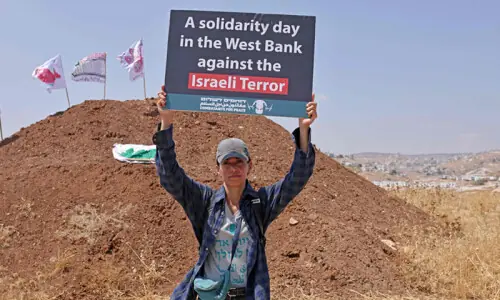
Hundreds of Palestinians demonstrated at Jerusalem’s Al-Aqsa mosque compound on Friday, some carrying banners reading “Islam is a religion of peace”.
Israeli security forces, which control access to the compound — the focal point of months of Jewish-Muslim tensions — said Friday prayers passed off without incident, and there were no initial reports of violence linked to the demonstration afterwards.
In Khartoum, hundreds of demonstrators poured out of the Grand Mosque and marched across the adjacent square, chanting “Expel the French ambassador, victory to the Prophet of God”, a correspondent said.
One banner in Arabic said: “The French government should apologise and the French government must stop insults to religious figures”.
In Lebanon’s northern flashpoint city of Tripoli, people staged a march chanting “Allahu Akbar”.
In Baddawi, on the northern outskirts of the city, prayer leader Sheikh Mohammed Ibrahimi addressed worshippers and said: “May God punish this newspaper and those who back it”.
A protest against the cartoon in Tehran was cancelled, with no official reason given, as senior Iranian cleric Ayatollah Ali Movahedi Kermani told worshippers its publication amounted to “savagery”.
In Tunis, worshippers at El-Fath mosque interrupted prayer leader Noureddine Khadmi as he delivered a sermon saying: “We are all against insults made against our Prophet but it is not a reason to kill”.
Charlie Hebdo journalists “deserved to be killed because they insulted our Prophet many times,” the worshippers cried out.
Saudi Arabia’s top religious body, the Council of Senior Ulema, also criticised the new cartoons that it said “have nothing to do with the freedom of creativity or thought”.
Its secretary general Fahd al-Majid warned that publishing such images would only “serve extremists who are in search of excuses for killing and terrorism”.
Published in Dawn, January 17th, 2015
On a mobile phone? Get the Dawn Mobile App: Apple Store | Google Play