0
0


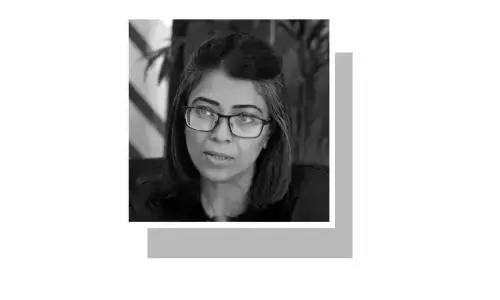
KARACHI: “Any creative process will come to a full circle only as a result of the audience’s interpretation and their participation,” said Saima Zaidi, a communications designer who enjoys an impressive academic career as an educator in the visual studies.
Ms Zaidi’s comments on the importance of the audience with regards to art were part of a panel discussion assessing commercial success of artistic venture and whether or not the audience is actually part of this equation. Held at the T2f on Sunday, the purpose of the discussion was simple; “does the audience matter in determining success of an artistic endeavour?”
Ms Zaidi has taught at various art schools in the country and has very illustrious publications to her credit, one of which is Mazaar, Bazaar, a study on Pakistan’s design and visual culture.
Giving examples from the book, she emphasised how “designers are operating through people” as it allows their creative work to come alive.
She said a piece of art must belong to the audience for it to be called a piece of art.
With the aid of a slideshow, Ms Zaidi spoke about how visual intervention in the public sphere is essential to get the artists’ message across.
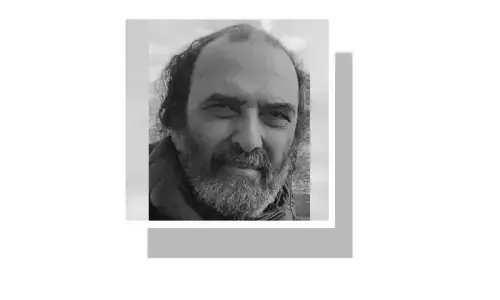
Experimental filmmaker Rumman Zia took the debate forward and highlighted how “art is a function of communication and response.”
As part of this process, criticism from the audience is very important as it allows the artist to develop his ideas further and inculcate more creativity.
However, for Rumman the audience is not the main driving force behind his creative endeavours and as a result of this he can remain true to his work. “Art is a catharsis and its goal is to help me discover myself and do better,” he elaborated.
Most artists, he believes, place too much importance on pleasing audiences and so produce work that is not of a high standard. “Mediocrity and plagiarism is rewarded at the expense of talent and art,” he lamented.
The moderator of the session, director and playwright Zain Ahmed, who also heads Napa Repertory Theatre, detailed the varied trajectory of the creative arts in Pakistan and how political instability has had an unfortunate impact on it.
He also raised the issue of restricted space to practice art and the necessary audience accessing that space, with a distinct division between the two on the basis of language.
Urdu poet, Fatema Hassan agreed with this dichotomy.
She said: “As our native language is being neglected, so is our culture and as a result our creative output is being compromised.”
She believed art should be a process of making man more civilised and therefore should leave a mark on man’s life. However, it is not reaching a wider audience and so its purpose is let down.
Curator and owner of Canvas Gallery in Karachi, Sameera Raja depicted a bleakly realistic impression of the creative process as being consumer driven and based primarily on commerce. However, for her this is not necessarily a bad thing for the industry.
The audience is at the hub of any creative output as “though the creative process may not require the participation of the audience, for it to be called a piece of art an audience needs to acknowledge it.”
The debate then moved on to the importance of state institutions that offer patronage to artists. Though there was a difference of opinion with regards to their presence being a positive or negative influence, what was similar in the thread of the discussion was the need for not just education but also awareness with regards to art in Pakistan and the need to encourage a diverse range of voices to flourish.
Published in Dawn, December 22th, 2014