0
0
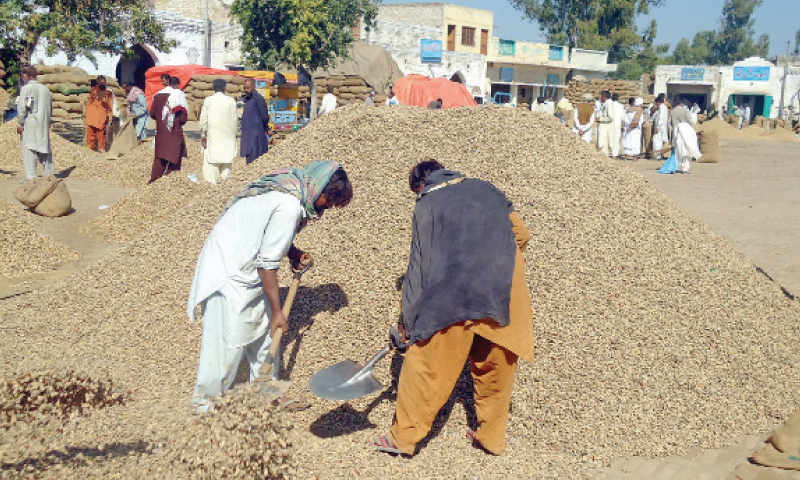

CHAKWAL: The Potohar region, which is the major grower of peanuts in the country, is likely to face 40 per cent less yield this year, officials in the agriculture department here told Dawn.
Peanut is considered the sole cash crop in the pluvial region of Potohar. The farmers depend heavily on this crop as it heals their economic worries. The region alone contributes about 65 per cent of the total peanut production in the country. But this year, the tide of climate change, with too many rains in some parts and drought in other, affected the crop.
“It would be premature to determine the overall production but it is feared that there would be up to 40 per cent less production,” said Dr Arifullah, an agriculture officer.
The district is the largest peanut producer in the Rawalpindi division. Interestingly, peanut is only cultivated in two tehsils of the district - Chakwal and Talagang. Consisting of a hilly terrain, the area of Kallar Kahar and Choa Saidan Shah is not feasible for peanut growing. The Talagang tehsil contributes 70 per cent peanut production while 30 per cent peanut is cultivated in the tehsil of Chakwal. The agriculture department had set the sowing target on 77485 acres in the district - 42000 in Talagang, 34985 in Chakwal and 500 in Kallar Kahar. “The average yield is 600 kg from one acre but this year 30 to 40 per cent less production is being estimated,” added Dr Arifullah.
The tehsil of Chakwal witnessed heavy rains during the monsoon season but Talagang witnessed lower rains than average. As a result, in the Chakwal tehsil the rains affected the crop while in Talagang it faced a drought-like situation.
“Peanut was cultivated normally in both tehsils but in Chakwal it was damaged due to the heavy rains while in Talagang the lower-than-average rains affected the crop,” said Mohammad Yasin, the district officer agriculture Chakwal.
The villages in Talagang, which used to send a large quantity of peanuts to the grain market, have no production this year. “I cultivate peanut on 12 acres and in past years used to get bumper yields. But this year the yield has been badly affected by drought,” said Ghulam Shah, a progressive grower in the Thoa Mahram Khan village of Talagang.
“About 80 per cent less than average yield is being witnessed due to the drought-like situation in Talagang,” said Zaffar Iqbal, a farmer in the Akwal village.
In the villages of Chakwal, the plants of peanuts look healthy but due to the heavy rains they grew taller instead of getting spread in the soil. “It rained heavily when there was no need for it,” added Nazar Abbas, a farmer in the Mangwal village of Chakwal.
The harvesting of peanut is on its peak in the district but in some parts it is being disrupted by unusual rains which are also affecting the quality of the peanuts.
“Due to less production, the rate is good this year,” said Ali Javed, a trader at the grain market. “The price of peanut is Rs3000 to Rs5000 per 40kg.” However, he feared that if peanuts were imported from Indian the price of the local produce would be affected. “There are rumours that peanuts would be imported from India. If it happens, the price of Pakistani peanuts would decrease which would affect the farmers,” he added. The traders said the government should ban the import of peanuts from India.
Published in Dawn, November 10th, 2014