9
9


What transpired recently during a Model United Nations event at the International Islamic University Islamabad can best be described as a storm in a teacup.
The presentation of a mock Israeli cultural stall at the event resulted in a noisy protest from the Islami Jamiat-i-Talaba, Jamaat-i-Islami’s student wing; as things started to heat up, participants of the MUN reportedly had to flee the campus for fear of attracting the ire of hardliners.
The stall was set up as part of cultural activities designed to represent the nations participating in the conference. Yet such has been the outcome of the controversy that a dean and a student adviser at IIUI have been suspended, while the Higher Education Commission has also weighed in, warning all varsities against “...any activity that in any manner challenge[s] the ideology and principles of Pakistan, and/or perspective of the government of Pakistan”.
While the debate over what exactly constitutes the ‘ideology of Pakistan’ is a lengthy one, it is a matter of concern that the HEC has warned universities against any activity that questions the government’s line.
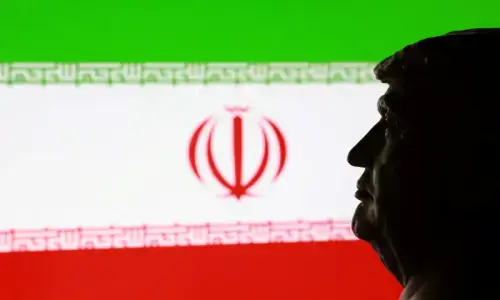
Israel clearly has few friends in Pakistan, due largely to the atrocities that state regularly unleashes against the Palestinian people, and the high level of sympathy for the Palestinian cause in this country. Yet with regard to the MUN events, the issue here is not of Israel’s brutality or even recognising the state at the cost of Palestinian rights. Rather, the fracas at the IIUI has illustrated the shrinking space for debate in institutions of higher learning and the power hard-line groups have to shut out other points of view.
The Model UN is an internationally recognised system of training students in the art of diplomacy as practised at the global level. Part of international diplomacy includes having to deal with actors or states one doesn’t always agree with or even recognise.
As an observer, while speaking to this paper, rightly pointed out, a debate on the Arab-Israeli issue cannot take place unless both sides are represented. If young men and women in Pakistan are to be properly groomed in international relations, such short-sighted approaches must be abandoned.
Overall, universities must have an atmosphere of academic freedom free from fear so that young minds can debate different ideas, however unpalatable. Already higher education in Pakistan suffers from many ills; eliminating the space for debate will quickly turn the sector into an academic wasteland.
Published in Dawn, October 31st, 2014