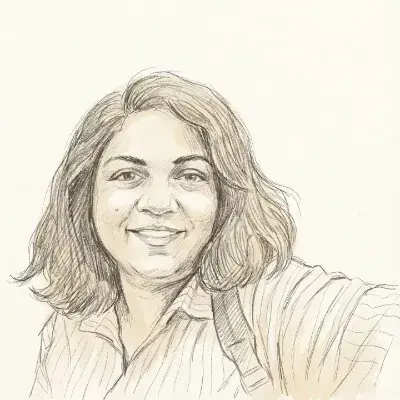
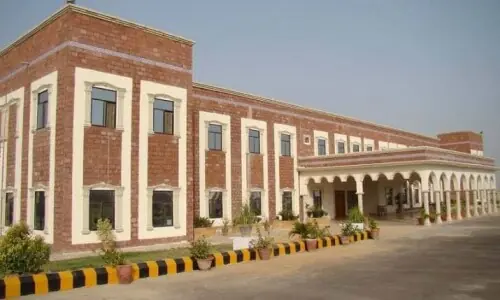
KARACHI: “Do not accuse, do not excuse,” said postcolonial thinker and scholar Prof Gayatri Chakravorty Spivak during her keynote address on the problem of higher education in the subcontinent at the daylong ‘Postcolonial higher education conference’ organised by the Habib University here on Saturday.
She is a professor at Columbia University who has also worked for feminism across the spectrum and beyond a single issue. Prof Spivak has authored several books and her latest include Other Asias and An aesthetic education in an era of globalization.
“Freedom after independence has remained a question mark due to globalisation and generalisation,” said Dr Spivak, placing the question of postcoloniality at the heart of modern knowledge. “I have behind me 50 years of institutional teaching and this is the beginning of my 50th year in the profession, but I am still learning to learn how to teach every new group of people I face. All are not the same and hence cannot be treated in the same manner,” she said.
“There are all kinds of colours included in my spectrum that starts from six elementary schools in West Bengal to the Columbia University,” she said. “To teach I have to go beyond knowledge and learn from people I am teaching in order to understand how they are to be taught.
“Today, I see that in the Western world they have come up with the solution for every problem by giving money. Giving money or equipment without training does not qualify as humanistic. They try to change minds and desires but what they really need to do is learn from the people they have cognitively damaged. All my life I have not tried changing minds. If I did that, I would have only bodies, no minds. There is nothing wrong with money or capital but the people being given it should also know how it is to be used for their own benefit,” she said.
“In higher education we and the West are folded together not be interpolated. The values and way of thinking of others cannot be thrust upon us. The greatest roads are found beyond the class divides and the class apartheid needs to be broken. It’s called resistance, which begins by putting yourself on the line. Like I say, student doesn’t have to listen to everything his or her teacher teaches. In fact, the teacher is the student’s servant,” concluded the professor, who has engaged and transformed disciplines and theoretical paradigms across the humanities and social sciences both for the North and the South.
Prof Spivak’s speech followed papers by director of the National College of Arts Dr Nadeem Omar Tarrar, associate professor and chairperson at the English department at Foreman Christian College University Dr Nukhbah Langah, Dr Nasir Abbas Nayyar of Oriental College Lahore of Punjab University and historian Dr Syed Nomanul Haq.
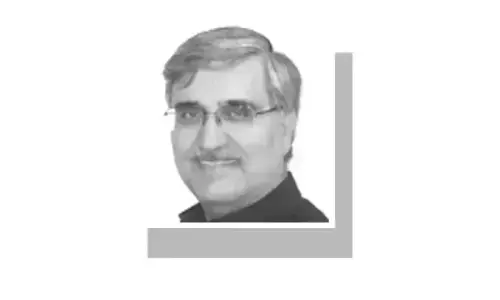
Dr Tarrar’s paper analysed the traditional civil society in Punjab through anthropological discourses of ethnology and folklore, which began to empirically take shape with the annexation of Punjab in 1849.
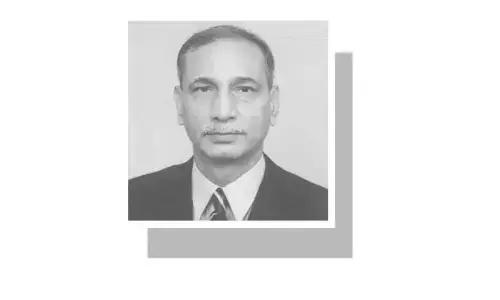
Dr Nukhbah Langah focused on the suppression of the Seraiki language through higher education in Pakistan, and the repercussions of such education policies on regional identities.
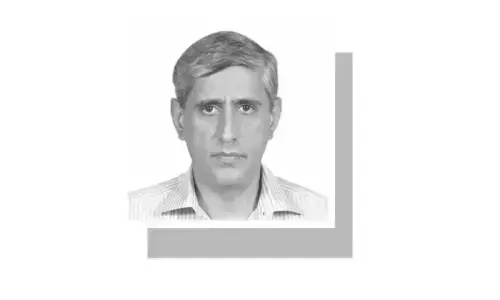
Dr Nasir Abbas Nayyar spoke on the crisis of Urdu research in postcolonial perspective and Dr Syed Nomanul Haq talked about the language factor, alienation and control in education.
The other highlight of the conference came in the form of its finale, a panel discussion moderated by Dr Asif Aslam Farrukhi with Kishwer Naheed, Fahmida Riaz and Attiya Dawood on poetry and feminist futures.
Fahmida Riaz spoke about the legacy of women in Urdu literature, and what feminist poets inherited from it. About the trials and tribulations of feminist poets, she said: “The only outcome of hurting a poet is another verse.”
Attiya Dawood, whose feminist poetry and other writing has been translated into several languages, talked about the changes she had seen over the years due to the rise and spread of feminism. There were several poetry recitals to support the poets’ views during the discussion.
Published in Dawn, October 26th, 2014