“They came marching, guns blazing. I saw Noor Muhammad Kamboh drop after he was hit by a bullet. I rushed towards him, but then I pulled up — to save my life….”
Mohammad Ashfaq broke down as he recalled details of how the 55-year-old lost his life virtually at the doorstep of his home in the village (Chak 15/4 L), some three kilometres from G.T. Road on Tabrooq-Shahpur Road in Okara on Thursday afternoon.
“They had brought truckloads of armed troops — as if they were here to fight the enemy, or they had come to conquer Kashmir.”
The military action was preceded by the blockage a week or so earlier of water channels irrigating military farms inside the Okara Cantonment by some lessees. These tenants were protesting against the farm management’s “arbitrary” decision to hike their lease rent from Rs17,000 an acre to Rs22,000 and evict those who disagreed with these terms.
“The troops were sent to reopen closed water channels,” a policeman posted at the Okara Cantonment police station told Dawn on Friday. “When they reached there, the villagers pelted stones and fired shots at them. Warnings were given but the villagers didn’t stop. [Finally] the troops retaliated with fire and chased the protesters back to the village.”
The villagers say this is the army’s version, while the policeman confirmed that until Friday afternoon the police had not visited the site of the incident. “No shot was fired from our side. We didn’t carry arms; we never do,” said Noor Nabi, a spokesman for the Anjuman-i-Mazaraeen, an organisation fighting for the rights of tenants of military farms since 2000. He confirmed two men were killed and many others injured.
According to the villagers and local journalists, District Police Officer Babar Bakht Qureishi had worked to defuse tensions for the last one week since the farm management raised the rent. The army took five people in custody on Wednesday, later freed on the DPO’s intervention.
“The lessees had agreed to raise the rent to Rs19,000 per acre on the DPO’s intervention. But, apparently, this was not acceptable to the military farms management,” said a local journalist.
Hasan Ahmed, in his early 20s, was hit by a bullet from behind as he ran for cover. He died near the spot Noor Kamboh was killed. “As they went back, they took the bodies with them. When we approached the military for the return of the bodies they asked for written assurances that we would not initiate any [legal] action,” claimed Bashir Ahmed Sial, Hasan’s father.
The villagers said the troops forced entry into the homes to round up every man they could find inside. “They didn’t care who was in their way. They hit us with their rifle butts,” said a daughter of Noor Kamboh, showing her wounds.
There were many other women with bandaged heads and limbs and bruises. Many men had bullet wounds to show. Many houses were damaged. The villagers said the doors had been unhinged, roofs breached and window grilles pulled out for forced entry into homes. Empties could be seen strewn in different parts of the village with walls pockmarked by firing.
“Do we not have any rights? If the military thought some of us were responsible for blocking water — which we didn’t need to do as the canal was already dry — they could have gone to the police and let them investigate. How can they send 1,100 men to fire at and kill us? Just because we’re poor and powerless, they can do anything with us,” said Mohammad Siddique, whose lease contract was cancelled.
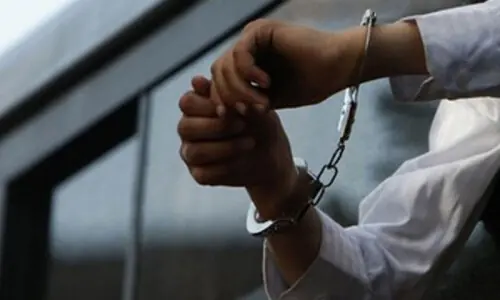
The DPO and the SHO of Okara Cantt weren’t available in their offices for comments. Both were said to be in a meeting with the military commander at his office. A policeman at the police station said the 63 men rounded up during the action were still in the military’s custody and the bodies were at the CMH Okara for autopsy. “Neither the military nor the villagers have approached us for registering a case,” he said.
On Saturday afternoon, SHO Mohammad Ali told Dawn the military had gotten a case registered against 150 villagers on murder and several other charges.
The FIR says 100-125 people armed with firearms, clubs and batons attacked an army [patrolling] team near the village. A rapid response force was called out. Meanwhile, the attackers opened fire on the patrolling party, resulting in injuries to a havildar and two sepoys. At this, more personnel of the response force were called out and the patrolling party retaliated in self-defence. It adds Hasan, who was targeting the army with a Kalashnikov, received a bullet injury and died on the spot, but Noor Kamboh was killed by the attackers.
Noor Nabi said the registration of a case by the army against an unspecified number of villagers and eight Anjuman leaders was a mockery of the law. “They aren’t returning the bodies of the two men,” he said. “They are trying to suppress evidence about the dead and injured they took away with them. The police are helping them.”
Published in Dawn, July 6th, 2014