ISLAMABAD: Pakistan’s water crisis is now at par with terrorism in terms of being an existential threat to the country’s security.
This was the major concern raised by respondents, interviewed for Islamabad based think tank Jinnah Institute (JI)’s latest research report “Pakistan’s Water Discourse: Attitudes on Water Management Practices”, launched on Friday.
The Jinnah Institute report collated perceptions of a wide range of policy stakeholders on the political economy of water management practices in Pakistan.
According to the report, insufficient water storage capacity has greatly impacted the availability of water, while public debate on developing new infrastructure has stalemated in recent years.
The limits of state capacity in addressing water-related challenges, underpinned by inadequate social infrastructure, lack of political consensus and financial constraints have been cited as the major roadblocks by a majority of respondents.
On the subject of climate change and disaster management, the report found that while government bodies had learned critical lessons in recent years, early warning systems were still not in place.
Some water experts warn that Pakistan should prepare for an "environmental disaster", with the country’s seasonal monsoons shifting away from traditional catchment areas toward Afghanistan.
This trend has multiplied the potential for flash floods and erratic rainfall.
Annual water availability per capita has fallen drastically since Partition, from approximately 5000 cubic metres to nearly 1500 cubic metres, impacting marginalised communities and women the most.
In the absence of progressive water pricing systems, domestic water wastage in cities is rampant.
On the subject of trans-boundary water sharing, a majority of interviewees felt that the Indus Waters Treaty (IWT) had stood the test of time and largely served to protect Pakistan’s interests.
However, they also expressed a dire need for a framework or treaty with Afghanistan to prevent future conflict between the two countries on the Kabul River.
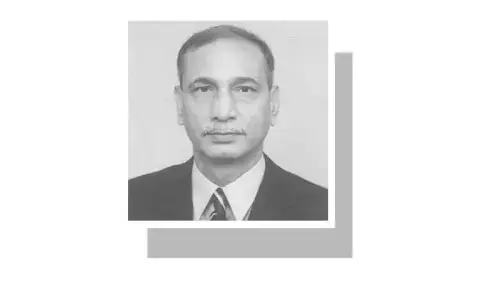
Former Amb. Shafqat Kakakhel spoke at the event and said the report supplements and aids a rich body of documentation.
Environmental lawyer Ahmad Rafay Alam presented the findings of the report.
Former WAPDA Chairman Shamsul Mulk also spoke at the event and suggested that all objections on river flow data between provinces should be taken up in the Council of Common Interests (CCI).